


The data center sector in Brazil is experiencing a period of significant investment, with projected investments of R$ 500 billion by 2030, driven by a pipeline of projects that promises to more than quadruple installed capacity.
The expectation of expanding the current capacity from 730 megawatts (MW) to 3.2 gigawatts (GW) focuses on artificial intelligence (AI) data centers — which have higher added value and greater attractiveness for external investment than cloud data centers.
The construction of at least five AI data centers has already moved beyond the planning stage, in Eldorado do Sul (RS), Maringá (PR), Uberlândia (MG), and Rio de Janeiro. The only one outside the Southeast-South axis is the Casa dos Ventos project in Caucaia (CE), an investment projected to exceed R$ 200 billion with contributions from CIC, China's main sovereign wealth fund, and Patria Investimentos. There is no official confirmation, but everything indicates that it will be used by ByteDance , owner of TikTok.
Part of this optimism regarding AI data centers in Brazil is due to two factors. One of them involves the country's competitive advantages. Among them are our energy matrix, which is 90% renewable; the low cost of energy compared to other Latin American countries; and the idle capacity of the Brazilian electricity grid, which produces more energy than it consumes.
The other decisive factor was the approval, in September, of the Special Tax Regime for the Data Center Area ( Redata ), through Provisional Measure 1,318. The program, which reduces the cost of capital by 50% by exempting taxes on IT assets, is already stimulating large-scale projects (500 MW to 1.5 GW), with benefits valid until December 31, 2026.
Amid the market's enthusiasm, the question remains: will the electricity sector be able to meet the demand for energy that quadruples in just five years? The problem lies not in generation, but in the grid, since AI data centers require continuous load, more substations and transmission lines — the construction of which takes four to five years, twice the time it takes to install a data center.
Irregular demand on the electrical system, low in the morning and high at the end of the day, exacerbates power cuts in renewable energy from centralized sources (wind and solar), a phenomenon known as curtailment . With data centers operating 24 hours a day, seven days a week, the risk of the system experiencing multiplying problems is significant.
The good news, however, is that the unexpected explosion of data centers with their billion-dollar investments should stimulate a revolution in the Brazilian electricity sector to keep up with and absorb this demand, through adjustments that have long been neglected due to the political interests of groups operating in the electricity system.
Donato Filho, CEO of the consulting firm Volt Robotics , estimates that parallel investments of R$100 billion to R$120 billion are needed by 2030 to improve the electricity sector and adapt the grid. He warns that without comprehensive reform accompanied by planning, differentiated tariffs, and new service markets, the sector's bottlenecks are likely to worsen.
Intermittent power lines and curtailment are key issues. Since about 50% of generation outages occur in the morning, increasing the load on data centers during this time helps absorb excess energy. "If we can shift consumption from the end of the day to the morning, we solve both problems: curtailment and the data center load requirements," says the expert.
To ensure low latency and continuity, Donato Filho suggests a mix with solar power generation in the morning, wind power at night, as well as thermal power plants, hydroelectric plants, and energy storage batteries during peak hours.
Meanwhile, the consultant advocates for dynamic tariff signals and a specific tariff for data centers. "Data centers require hourly contracts, not annual ones, as is the norm in the market," he states. "Furthermore, smart tariff models, with cheaper energy rates in the morning, for example, can shift residential consumption away from peak hours, freeing up space for data center load and reducing the need for peak dispatch."
The low cost of generating energy in Brazil, ranging from R$180 to R$250 per megawatt-hour, depending on where the data center is being installed, is below the international average – the equivalent of between R$350 and R$400 per megawatt-hour. "That's why Brazil is competitive," says Donato Filho.
In other words, the location of data centers also matters. Hyperscale data centers, such as those of AWS and Google – used in training neural networks and AI models – can be located in isolated areas, favoring regions like the Northeast of Brazil, which has abundant renewable energy and submarine cables for international data traffic.
Low-latency applications, in data centers located close to consumers to ensure quick responses for frequently used data and AI inference, such as ChatGPT, are concentrated in the South and Southeast regions, where demand is higher and the network is more robust. Approximately 60% of AI projects follow this model, with a preference for the South-Southeast regions due to their proximity to major consumption centers.
Value chain
From the investors' point of view, there is a consensus that the energy market will need to adapt to a more concentrated and continuous demand, distinct from traditional consumption.
Renan Lima Alves, president of the Brazilian Association of Data Centers (ABDC), explains that data centers are measured in IT power, since contracts and capital expenditures are based on revenue per kW. He states that a 100 MW AI data center costs the operator US$1 billion, while the big tech tenant invests up to US$10 billion. A 100 MW IT site consumes between 130 and 150 MW from the grid.
Redata's tax incentive is attracting big tech companies. "There are 75 data center projects mapped out," says Alves. "Filtering out those above 5 MW, there are 56 projects," he adds.
According to him, the production chain involves everyone from users and operators to equipment manufacturers, energy companies, and the construction industry, driving an ecosystem of skilled jobs associated with more than 230 companies.
The capital barrier means the sector is dominated by global data center operators (Ascenty, ODATA, Equinix), backed by private equity firms (Ares, Macquarie), sovereign wealth funds (GIC, CIC, Mubadala), and pension funds. Big tech companies (Amazon, Google, ByteDance) are end customers and tend to outsource construction and operation.
“The data center investment chain begins with sovereign and institutional funds, which guarantee long-term capital; then, private equity firms enter, structuring investment vehicles and capturing value in the expansion phase,” says Anderson Brito , head of investment banking at UBS BB .
According to him, local operators act as the operational end of the chain, but depend on a financial architecture in which global funds provide capital, private equity organizes governance, and banks structure infrastructure debt.
“Investment in data centers is seen as an integrated ecosystem, in which each link — sovereign wealth funds, private equity, operators, and energy suppliers — plays a specific role in reducing risk and increasing returns,” says Brito.
In this scenario, industry giants that already operate cloud data centers in the country admit that they are beginning to look at the AI market in Brazil with different eyes. This is the case of the American multinational Equinix — the largest data center company in the world in terms of number of sites, with a presence in 70 countries.
Equinix has eight data centers in operation in Brazil — five in São Paulo and three in Rio de Janeiro. In addition, a ninth data center is under construction in São Paulo, with a planned investment of US$110 million.
“The company plans to invest the equivalent of what it has invested globally over the next five years, which means almost doubling its current capacity,” says Eduardo Carvalho, CEO of Equinix for Latin America, in an interview with NeoFeed .
Although specific figures cannot be disclosed because Equinix is a publicly traded company, Carvalho assures that he is optimistic about the growth of the AI data center market, especially in Brazil and Latin America.
According to him, Mexico is a strong competitor due to its proximity to the US, but faces challenges with its energy transmission infrastructure. Chile is also growing, benefiting from lower temperatures that optimize energy consumption in data centers. "However, Brazil's abundance and clean energy matrix give the country a unique leading role," he states.
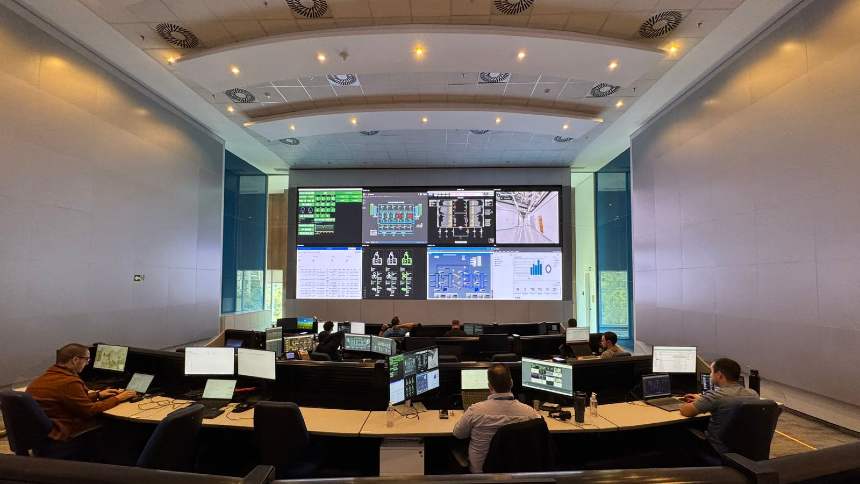
The five AI data center projects currently underway demonstrate the emerging strength of this market in Brazil. Energy demand could reach 9,400 MW, equivalent to the consumption of 16 million homes.
The Scala AI City project , in Eldorado do Sul (RS), envisions "server neighborhoods" and 1,800 MW of capacity, potentially reaching 5,000 MW by 2033. The R$ 3 billion project has already been approved for connection to the National Interconnected System.
RT-One has launched two projects — in Maringá and Uberlândia — each with 400 MW and R$ 6 billion, equivalent to the consumption of 1.6 million homes.
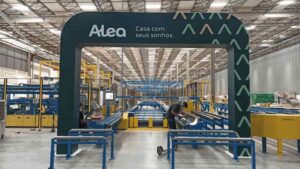
Elea Data Center , which operates nine cloud facilities, has launched four new AI projects in Jacarepaguá, Rio de Janeiro. The Rio AI City complex, in partnership with Axia (formerly Eletrobras), will have 1,500 MW, equivalent to the consumption of 6 million homes.
Italian Alessandro Lombardi, president of Elea, states that Brazil is competitive: “In the US and Europe, companies wait up to eight years for a connection to the electricity grid; in Brazil, this period does not exceed three years.”
He highlights the interest of big tech companies — including a memorandum of understanding with Oracle — and the potential for modular expansion. But he warns: “Without incentives, Brazil cannot compete globally.” According to him, the cost of cloud computing in the country is the highest in the world, with 86% of import taxes on equipment. “Redata is essential to attract investments in AI and data centers.”
Serafim Abreu Junior, CEO of NextStream – a company that operates 10 data centers in Latin America, distributed across five countries – sees risk in the delay in the approval of Redata. The Provisional Measure (MP) has been signed, but it needs to be processed and approved by Congress. The deadline for approval is February 26th.
"The voting on the provisional measure risks delays, as other groups want to include issues such as the Civil Framework for the Internet and the LGPD (Brazilian General Data Protection Law), making the process more complex," he warns.
NextStream is actively preparing for the boom . It owns a 43,000 m² plot of land for expansion next to its current campus in Tamboré (a site previously occupied by Telefónica), with a capacity of up to 72 MW.
Abreu Junior projects three growth vectors for the sector in Brazil: "Repatriating 60% of the Brazilian data currently processed abroad would double capacity to 1.5 GW," he says. Another vector would come from domestic growth of 15 to 20% per year, adding 500 MW. Finally, the export of AI workloads would bring in up to 1.5 GW.
However, the CEO of NextStream warns of bottlenecks in the energy supply in the Southeast.
“Although Brazil produces a lot of energy (especially in the Northeast and South), there is a major transmission challenge to get it to the Southeast, where demand is higher,” he says. “This generates disputes between operators to secure energy and expansions; the Ministry of Mines and Energy and the ONS ( National System Operator ) are working on reinforcements and new auctions, but progress is slow.”