


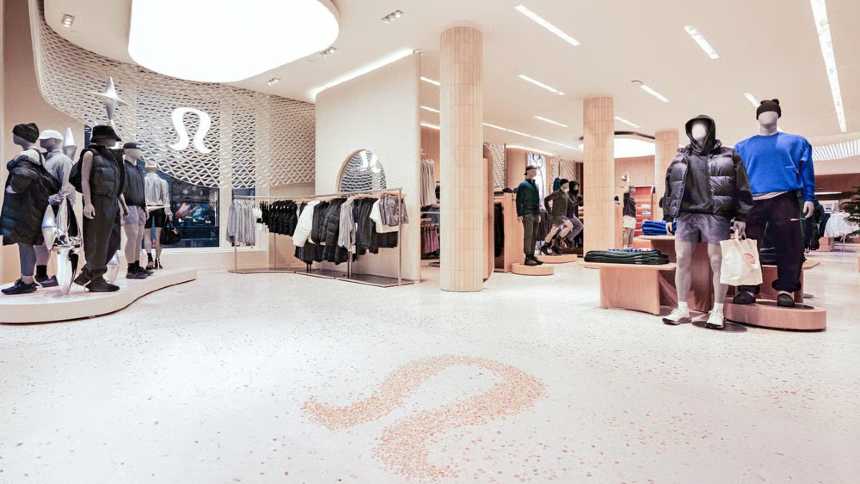
A Canadian sportswear brand founded in 1998, Lululemon gained fame from its yoga pants. But internally, the atmosphere at the company was never exactly zen. This was reflected in the turnover of three CEOs since its founder, Chip Wilson , left the helm of operations in 2008.
The company made another change in that position on the evening of Thursday, December 11, when it announced the departure of Calvin McDonald, the longest-serving executive after Wilson – he had been in the role since 2018.
In a statement, Lululemon emphasized that McDonald will officially hand over the reins on January 31, 2026. And that the executive – who will serve as a senior consultant to the company until March 31 – and the board of directors are working together to facilitate a “smooth transition.”
The brand also stated that the board is conducting a search for a new name for the position in partnership with an executive recruitment firm. And that Marti Morfitt, chairman of the board, will also assume the role of CEO to ensure the continuity of ongoing strategies.
As part of these measures, Meghan Frank, CFO, and André Maestrini, Chief Commercial Officer, will serve as interim CEOs after McDonald completes the transition process.
In the statement, Lululemon highlighted that the executive led the company through a period of "significant growth and innovation." It also noted that, under his leadership, the company tripled its annual revenue, expanded its portfolio to other categories, and increased its presence in more than 30 geographies.
“Serving as CEO of Lululemon has been the highlight of my career and I am incredibly proud of everything our team has accomplished over the past seven years,” McDonald said in the statement. “Together, we have transformed the sportswear market and the opportunity ahead is substantial.”
Morfitt, the company's chairwoman, added: "On behalf of the board and the entire organization, I want to thank Calvin for his visionary leadership, which has transformed Lululemon into one of the strongest brands in retail."
Speeches aside, the announcement of McDonald's departure seems to have pleased the market. The company's shares opened trading today on Nasdaq with a rise of more than 12%. And they were up 9.45% around 10:25 am (local time).
In 2025, however, Lululemon's shares are projected to depreciate by 46.4%, giving the company a market value of US$24.4 billion.
The announcement of the CEO's departure coincides with a new report from Bank of America. BofA raised its price target for Lululemon from $185 to $220 – the current trading value is around $205. Analysts maintained a neutral rating for the stock.
According to BofA, the increase in the target price reflects higher multiples among comparable companies: Lululemon is at 17 times the price-to-earnings ratio, above the previous multiple of 14x.
A bad year
The change in leadership at Lululemon comes amid more than a year of underperformance for the company. This scenario has prompted increasing calls for management changes from founder Chip Wilson, who remains the brand's largest shareholder.
Two months ago, for example, Wilson published a full-page ad in The Wall Street Journal highlighting that the company was in freefall and needed to stop following Wall Street at the expense of its clients.
However, the surge in the company's shares doesn't seem to be solely driven by the change in leadership. The announcement was accompanied by the company's earnings report for its third fiscal quarter, which ended on November 2nd, and which showed indicators above analysts' projections.
During this period, net revenue, for example, was R$ 2.57 billion, representing a 7% increase over the same period in 2024, and exceeding estimates that pointed to a figure of R$ 2.48 billion.
Earnings per share were $2.59, compared to projections of around $2.25. Net income, however, fell from $351.8 million a year ago to $306.8 million. And the revenue guidance for the fourth quarter, between $3.5 billion and $3.59 billion, came in below the market estimate of $3.6 billion.
The new indicators and projections come in a context where Lululemon has been struggling with issues such as the impact of tariffs, instability in Americans' wallets, and a product portfolio that has not pleased these consumers.
This scenario becomes even more serious as Lululemon, a pioneer in the athleisure segment, sees competition increasingly fierce in this space of casual sportswear, with the rise of names like Alo Yoga and Vuori.
To defend its territory, the brand has been expanding its business internationally and seeking to offer a wider assortment to customers, in addition to its traditional mix. This includes investing in categories such as footwear, coats, and casual pants.
Despite these changes, the business as a whole continues to grow, especially driven by international operations and store expansion. In the Americas, however, the brand's largest market, revenue continues to decline – sales fell 2% in the region this quarter.