

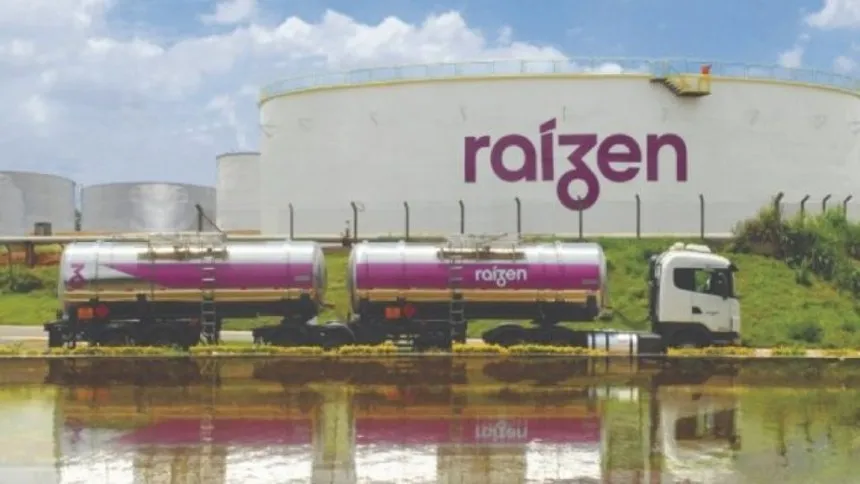
Raízen 's delicate financial situation has intensified market questioning about Cosan and Shell 's commitment to the company's future, given signals considered contradictory by analysts and investors.
Concerns increased after the release of the third quarter results for the 2025/26 crop year on Thursday evening, February 12th. The company reported a loss of R$ 15.6 billion, six times greater than in the same period of the previous year.
With leverage of 5 times and an impairment of R$ 11 billion on the balance sheet, the results point to an urgent need for capital, at a time when Raízen is not finding a favorable environment for its operations and investors are demanding a quick solution.
The situation was acknowledged by executives this Friday, February 13th, during the earnings conference call. According to them, Raízen has reached a "tipping point" where the operational transformation plan, by itself, does not solve the capital structure problem.
At the same time, they sought to convey confidence, stating that Shell and Cosan recognize the seriousness of the situation and will support the company with resources, even if the process takes longer.
“The process is being conducted by the company in conjunction with the controlling shareholders, who have committed to contributing capital, within a consensual, structural and definitive solution, so that the company can operate in the long term,” said Nelson Gomes, CEO of Raízen. “It is important to emphasize that this process, which began a few months ago, will still continue for some time.”
In the teleconference, Gomes did not detail how the controlling shareholders intend to address the situation or the size of the necessary injection of capital, highlighting that the company is proceeding with its operational transformation plan.
Raízen plans to continue selling assets , particularly its operations in Argentina , which could raise nearly US$1 billion. According to Gomes, the process is on schedule, considering the complexity of the transaction, and should be completed by the end of the year.
Raízen's CEO stated that the combination of capital injection and restructuring aims to reduce leverage to between 2.0 and 2.5 times, "so that the numbers add up," without committing to a specific timeframe. "This objective will be achieved through operational improvements, already underway, and a solution for the capital structure, with a reduction in debt," he said.
Executives emphasized that the company continues to operate and has sufficient liquidity, highlighting the R$ 17.3 billion in cash and cash equivalents, with no significant short-term maturities, which provides some peace of mind to navigate the difficult period in the sugar and ethanol market.
In the third quarter, net revenue fell 6.7% to R$60.4 billion, while EBITDA was negative R$4.4 billion. In adjusted terms, excluding non-recurring items, EBITDA was R$3.1 billion, a decrease of 3.3%.
“We don’t have an operational problem, but rather a challenge due to the current context,” stated Phillipe Casale, director of investor relations at Raízen.
The statements, however, were not enough to calm the market. Around 12:12 PM, Raízen's shares were down 4.48%, at R$ 0.64. In 12 months, the shares have accumulated a 64% drop, bringing the market value to R$ 883.3 million.
The assessment is that Raízen still faces significant uncertainty. According to Safra , which placed its recommendation under review, there is "significant uncertainty" regarding the company's cash flow, which could impact its operations.
"Although it does not involve immediate disbursement and can be reversed, this provision highlights the complexity of the company's financial position and the impact of the delay in adopting definitive measures to restructure capital, such as injecting resources and selling additional assets," says an excerpt from the report.
For XP Investimentos , the results make it difficult to define "how we should think about profits going forward, given the lack of updates on the balance sheet restructuring plan."