

While Tesla is still struggling to gain traction with its Cybercabs, as the company's robotaxis have been dubbed, another tech giant wants to accelerate its pace in this race.
Uber announced on Thursday, March 19, that it will invest up to US$1.25 billion over five years in the Californian automaker Rivian , in yet another example of a partnership forged by the transportation platform in this area.
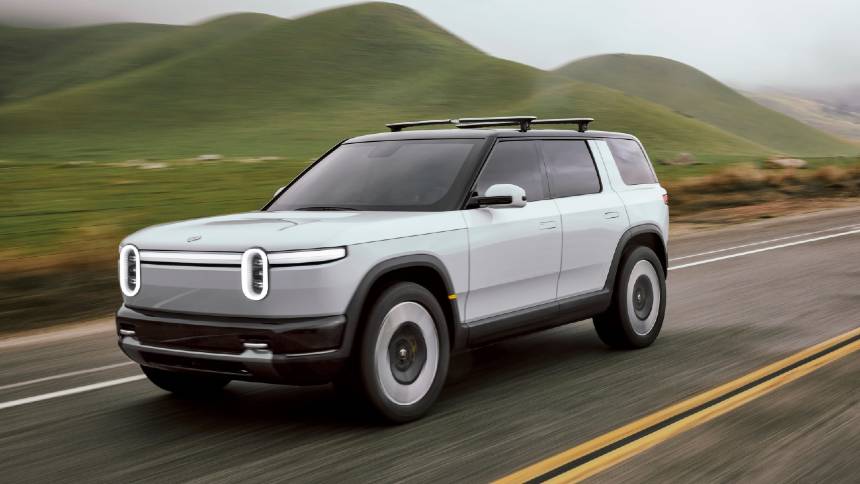
As part of the agreement, subject to the achievement of certain goals, Uber will acquire up to 50,000 units of the Rivian R2, an SUV from Rivian, which will be used on the streets in the company's robotaxi services.
Initially, the expectation is to deploy 10,000 fully autonomous robotaxis, with an initial investment of US$300 million. The first deployments of the service associated with this fleet are scheduled to begin in San Francisco and Miami in 2028.
The duo's projection is to reach 25 cities in the US, Canada, and Europe by 2031. And, in this roadmap, the partnership, which involves exclusivity with the automaker, also includes the option to negotiate the purchase of up to 40,000 additional vehicles to be included in the service starting in 2030.
In a statement, Dara Khosrowshahi, CEO of Uber, emphasized that he strongly believes in Rivian's approach, based on a concept that integrates vehicle development, the computing platform, and the software suite, maintaining end-to-end control and scalable delivery.
“This vertical integration, combined with data from our growing consumer vehicle base and experience in managing the complexities of commercial fleets, gives us the confidence needed to set these ambitious, yet achievable, goals,” the executive said.
Rivian founder and CEO RJ Scaringe added: “We are extremely excited about this partnership with Uber. It will help accelerate our path to Level 4 autonomy, creating one of the safest and most convenient autonomous platforms in the world.”
Access to this autonomous driving technology is essential for Uber to accelerate these services, since the company divested its autonomous car division in 2020. To this end, the company has been entering into a series of agreements to close this gap.
Last week, for example, Uber announced a partnership with Zoox , Amazon's self-driving car startup, to launch a robotaxi service in Las Vegas, with plans to expand to Los Angeles in 2027.
In July 2025, in another detour along this path, the company announced a US$300 million investment in Lucid, also an American company. Among other terms, the transaction involved a commitment to purchase at least 20,000 autonomous electric vehicles from the automaker.
At the same time, Uber also forged partnerships with Waymo, Alphabet's (Google's parent company) self-driving car startup, in other US markets such as Phoenix and Atlanta. The network of agreements also includes the Chinese company Baidu, focusing on China, Asia, and the Middle East.
What sets most of these agreements apart from what was announced on Thursday, however, is the fact that players like Waymo and Zoox also have their own robotaxi apps, unlike Rivian.
For Rivian, in turn, the partnership and investment come amid the company's bumpy road since its IPO in 2021, when it went public as "Tesla 2.0". Since then, the company has recorded losses and an 88% drop in its shares, according to the Financial Times.
With prices exceeding US$80,000, the brand's models have been well-received among wealthier California customers. However, despite this success, the company continues to struggle to achieve scale and projects selling only 62,000 units, and an adjusted loss of up to US$2.1 billion by 2026.
In this context, the development of autonomous vehicles for robotaxis only truly began to integrate into the company's strategy in 2025. The first mention of the category was made by the founder and CEO, Scaringe, at the end of last year.
The initial reaction to the agreement was positive. Listed on Nasdaq, Rivian's shares rose more than 7% in pre-market trading on Thursday. And they were trading up 4.09% around 10:30 am (local time), valuing the company at US$20 billion.
While Rivian sees robotaxis as a shortcut to begin solving its scalability problem, Tesla is still struggling to get its services up and running in this category. And this was one of the topics Musk addressed when releasing the company's fourth-quarter 2025 earnings report in January of this year.
Among other figures, Tesla reported a 3% drop in revenue for 2025, the first annual decline in its history, as well as a net profit of US$3.7 billion, representing a 46% decrease compared to 2024.
Despite these and other unfavorable indicators, Musk, as usual, took the opportunity to promote his company to investors, emphasizing that it is making significant investments for an "epic future."
With plans to invest over US$20 billion in 2026, more than double the US$8.5 billion invested in 2025, the billionaire emphasized that a key part of this journey will be focusing on advancing in areas such as robotaxis.
Currently, Tesla's ride-sharing service is only available in Austin, Texas. Musk stated, however, that he hopes to expand this offering to an area encompassing between a quarter and half of the United States by the end of 2026. The initial goal, however, was the end of 2025.
At the same time, he stated that he plans to begin production of Cybercabs in April. "We expect that, over time, we will produce far more Cybercabs than all our other vehicles combined," said the billionaire.