

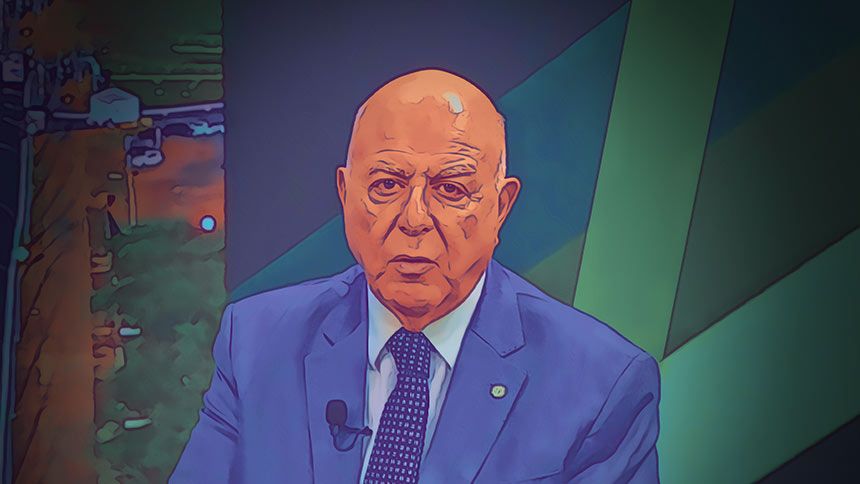
Brasilia - Amid the global race for access to critical minerals , also known as rare earth elements, the rapporteur of the bill regulating the subject in the Chamber of Deputies, Representative Arnaldo Jardim (Cidadania-SP), is already working with the Speaker of the House, Hugo Motta (Republicanos-PB), party leaders, and the government to ensure the text is voted on in the House plenary by the end of March.
The topic is on the agenda. During his trip to India, President Luiz Inácio Lula da Silva will seek to finalize a trade agreement between the two countries in his meeting with Prime Minister Narendra Modi on Saturday, February 21st. Dependent on China, the Indians want to diversify their suppliers of raw materials used in electric vehicles, smartphones, solar panels, and other products.
In an interview with NeoFeed , Jardim argued that Brazil should approve legislation comparable to that of the main global players in this mining sector in order to strengthen its position in this strategic competition, which has already taken on geopolitical dimensions with the direct dispute between the United States and China.
“I am working on a scenario so that we don’t take more than 30 days to vote on the bill. Now, President Hugo Motta needs to schedule the vote [in plenary]. I have already contacted all the leaders and made myself available. The European Union-Mercosur agreement can be resolved quickly, but the 6x1 scale is more complex,” says the congressman.
"I would like the priority to be voting on the critical minerals bill first, before voting on the PEC [to end the 6x1 work schedule]," he added.
Jardim reports on bill 2,780, from 2024, authored by Zé Silva (Solidariedade-MG) and other deputies – most of them from states with strong mining activity such as Minas Gerais and Pará.
The proposal, which had its urgency approved by the Chamber's plenary session in September of last year, establishes the National Policy for Critical Minerals, which regulates this exploration in Brazil and creates incentives and support for the production, processing, and transformation of these minerals within the national territory.
Since the end of 2025, the congressman has also been the rapporteur for the special committee on the subject, which has brought together a total of eight bills under consideration in Congress.
He is expected to present a new report on the matter soon, to be voted on in the Chamber's plenary session, but he told NeoFeed that the text is practically the same as last year's: specific environmental licensing, tax benefits, and the creation of a guarantee fund to finance mining projects and investments.
He also mentions that his opinion, which still provides for income tax exemption on the use of trademarks, patents and technological licenses, has been receiving government support, but admits that there is some resistance from the Ministry of Finance regarding the size of the tax incentives to be given to the critical minerals sector.
Below are the main excerpts from the interview:
Your bill regulating critical minerals in the country was ready for a plenary vote, but the year changed and now it's on hold. What is the priority order for this issue?
This issue is more relevant than ever and is growing in importance in relations between countries. And we see that there are several issues involved. It's an issue that is permanently at the center of tensions between the United States and China. But Brazil, whether through the initiative of the United States or the global race, wants to establish a front around this issue. And, at the same time, Brazil is already being sought out by other countries and blocs to discuss the matter.
Because of the minerals found in the territory?
Brazil has not yet had its entire geological territory surveyed, but even so, we know that it already possesses abundant critical minerals. China holds 43% of these minerals, Brazil 23%, and the third country with the largest volume does not exceed 6%. But the same issue unfolds for the entire set of critical minerals.
How is the coordination going to finally get the project approved?
I presented my first report, based on the project by Congressman Zé Silva, last year, but eight more projects were subsequently attached to it. And now I am again the designated and appointed rapporteur to present a new report on this set of projects. This report is being developed in collaboration with the Executive Branch and the private sector, research companies, and companies that work in the processing or transformation of minerals.
What has already been presented?
Last year, we presented the basic outlines of the report to the leaders' group, with some standards on certification and traceability. I also presented ideas on promoting and incentivizing minerals, so that we could process and transform [critical minerals] in Brazil. The intention is that Brazil will not be a commodity exporter in this case, but that these minerals will be processed here, adding value.
How are the negotiations going with President Hugo Motta? Is he committed to voting this year?
Last year, the processing of bills on sentencing guidelines and income tax exemptions meant that the matter [of critical minerals] was not put to a vote. Now I met with President Hugo Motta, who stated that the matter is a priority and has the support of the leadership group. And I hope that we will vote on the report soon so that we have transparent, secure, stable and innovative legislation, that is, both in terms of promoting research, which is a very important part (research funding), and in terms of innovative instruments.
"I met with President Hugo Motta, who stated that the matter is a priority and has the support of the college of leaders."
What would these innovative instruments be?
A concept that I find very innovative comes from international experiences in the mining industry, with so-called junior companies, such as those in Canada, which are companies that operate in the early stages of mining projects.
But is it feasible to approve your report in the first half of the year?
I'm working towards a scenario where we don't take more than 30 days to vote on the bill. Now, the PEC (Proposed Constitutional Amendment) on working hours has emerged, and many issues can hinder [the swift voting on the bill regarding critical minerals]. But now it's a decision by Hugo Motta and the party leaders, and President Lula himself has been systematically questioned about the topic during his international trips and has expressed his views on it. And I've already spoken with President Davi Alcolumbre [of the Senate] as well, and I felt that he will prioritize the matter. His idea is to deal with the bill quickly.
So what's missing?
The Speaker [of the House] Hugo Motta needs to schedule the vote [in plenary session]. I have already contacted all the leaders and made myself available. The European Union-Mercosur agreement will be resolved quickly. Now, the 6x1 work schedule is more complex. I would like that, before voting on the PEC [to end the 6x1 work schedule], the priority be to first vote on the critical minerals bill.
Are there any further changes that can be made to the text?
It's basically the same opinion from last year; the modifications will be minor. It includes activities such as mining and processing in the list of incentivized debentures. There are also some exemptions. And I'm maintaining the Guarantee Fund [to finance mineral projects].
And how has the coordination with the government been going? Do you have the support of the Executive branch, or are you already seeing some resistance?
The project has government support. I've been talking to the Ministries of Mines and Energy, Industry, Trade and Services, Finance, and also the Civil House. But there is some resistance, yes. The Finance Ministry is complaining. There are details to be adjusted. But it's a process where things work themselves out, and it's not possible to adjust the text 100% because otherwise it becomes unfeasible.
"I've been talking to the ministries. But there is some resistance, yes. The Finance Ministry is complaining. There are details that need to be adjusted."
What specific point in your report is the Finance Ministry complaining about?
The Treasury Department generally complains about tax incentives. They always have a conservative view, but not only in relation to critical minerals. It's a general view they have regarding all types of incentives.
Currently, the United States is intensifying its reaction to China in the dispute to secure access to these minerals, including seeking an exclusive partnership with Brazil. How do you view this American offensive? Is Brazil right not to accept this exclusivity?
Brazil should have legislation and, consequently, public policies that allow it to identify and find these minerals, extract them, process and transform them, and increase its geological knowledge. Our proposed legislation has a vision that the country should not only be an exporter, but also a processor and transformer [of critical minerals]. And I think we should also have access to and seek participation in technology to process and export to any and all interested countries. Currently, the Chinese are the ones processing rare earth minerals.
Would the solution be to establish agreements with other countries outside of the US-China dispute, similar to what Brazil sought to do with India during President Lula's trip?
Yes. We should be open to capital participation from many different countries, for example. Brazil should adopt a position of engaging with all countries, not just one specific one.
It's noticeable that there's a parallel movement even within Brazil. The state of Goiás has been seeking partnerships with the American government in this regard. What's your perception of this? Does the lack of regulation provoke this kind of "every man for himself" race?
I'm not familiar with that partnership, but it's the countries that make agreements. If the state has a partnership to attract a company, I don't know, it might be interesting, but the negotiation should happen between the countries. International agreements with subnational entities are not appropriate.
Amid this global race for critical minerals, do you think Congress is missing the mark a bit in regulating the issue?
We are still at the beginning of 2026. This topic gained more traction last year, and many countries still don't have defined legislation. The IDB [Inter-American Development Bank], for example, contacted us recently. They assigned us some consultants and brought us comparative legislation from other countries, and what we heard from them is that our proposed legislation is of comparable quality to the best in the world.