











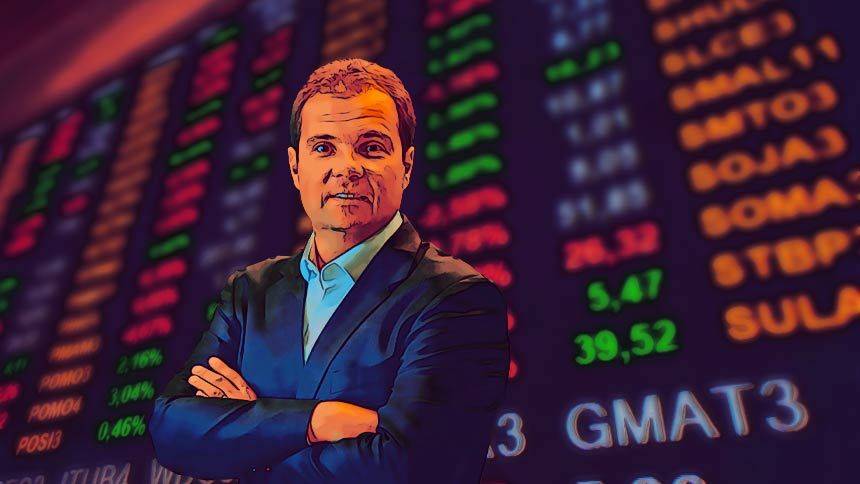
















The Brazilian stock market went from euphoria to caution in five months. From almost 200,000 points to the current 169,000 points, the lowest level since January of this year, the Ibovespa index has suffered from the withdrawal of capital from foreign investors in the B3 (Brazilian Stock Exchange). In May of this year, almost R$ 15 billion left Brazil, the largest amount since 2022. Even so, the balance is positive and is close to R$ 44 billion in 2026.
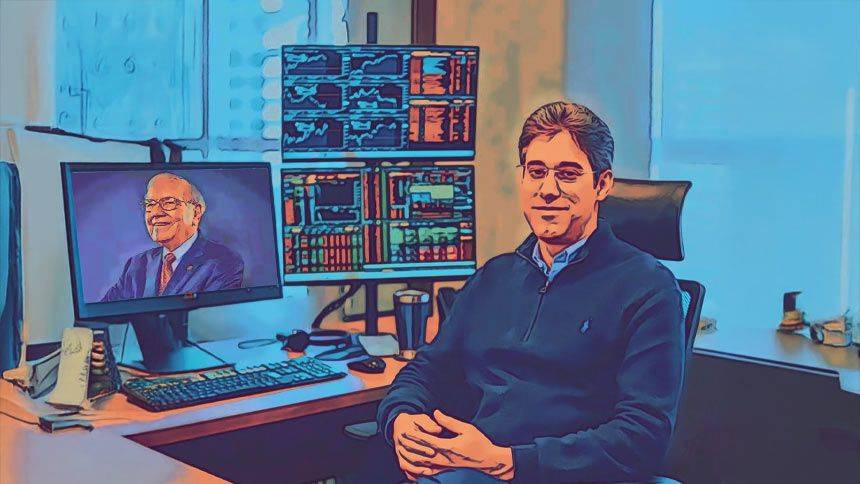
This movement, however, does not affect the vision of João Luiz Braga, partner at Encore Asset, an asset manager with approximately R$ 3 billion under management, who sees a scenario that goes beyond short-term fluctuations. “I am super optimistic about the stock market. I believe we are at the beginning of an excellent cycle,” Braga states on Café com Investidor , a program that is a partnership between NeoFeed and CNN Brasil, broadcast bi-weekly on CNN Money.
What is currently underway, in Braga's view, is the beginning of a cycle driven by an external factor: the gradual reallocation of global capital after almost two decades of concentration in the United States.
Braga explains this phenomenon with a metaphor he calls the "Olympic swimming pool theory." He describes the American market as a huge swimming pool where most of the global resources have been poured over the last 17 years. When a few buckets of this pool are removed and directed to Brazil, the impact is immediate.
The small size of the local market amplifies any entry move. Braga is convinced that Brazil is receiving the first buckets of the Olympic swimming pool — and that there's still a lot of water to flow under the bridge. "Little flow makes a big difference for us. That's the theory of the Olympic swimming pool," he says.
According to him, this process occurs in three waves. The first, at the end of 2024, came from investors who were already studying the country and took advantage of the drop caused by fiscal noise. The second, in January 2026, was formed by global smart money , which sought rapid diversification by buying indices.
The third group, which Braga considers the most relevant, will be composed of international managers who have returned to analyzing Brazilian companies and local firms. "This is the group that will invest in local managers, in domestic companies. It's the most lasting wave."
According to Braga, foreigners' perception of Brazil differs from domestic perceptions. He states that global investors observe the country with less political sensitivity and more international comparisons. "Foreigners are more afraid of the local reaction to fiscal policy than of fiscal policy itself," he says.
According to Braga, for this audience, the election is not the central issue. "For foreigners, the election matters less than the drop in interest rates." What matters, in his view, is the trajectory of reforms, the dynamics of interest rates, and the need for diversification outside the United States.
In Encore Asset's portfolio, this vision translates into a combination of domestic companies and commodity-linked positions. The biggest bet is Smart Fit , which Braga considers a case of consistent expansion in Latin America. "I foresee profits growing by more than 30% per year for the next three years, trading at nine times earnings. That doesn't exist," he says.
In this interview with Café com Investidor, which you can watch in the video above, Braga also talks about why he is pessimistic about agribusiness and shares the phrase he lives by.



