







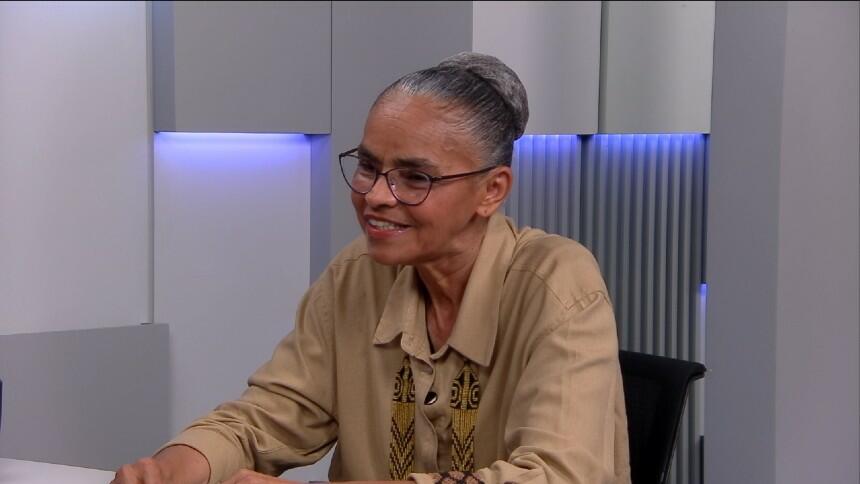
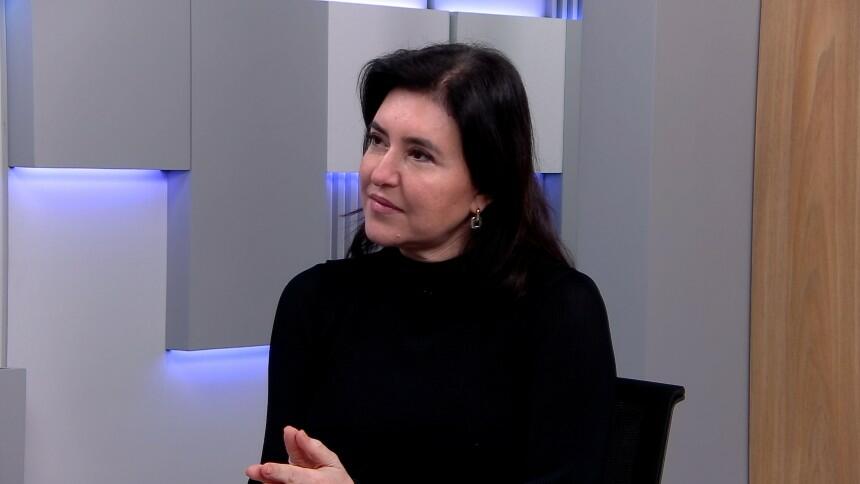
Former Planning Minister Simone Tebet entered 2026 without fear of change. At 56 years old, she switched parties, leaving the MDB for the PSB, and her electoral domicile to run for the Senate in the state of São Paulo.
She spent 30 years in the MDB party, during which time she was elected to the state legislature in her home state of Mato Grosso do Sul, served as mayor of Três Lagoas twice, and was a senator for 8 years. Now she dares to embark on a new journey, encouraged by the nearly 5 million votes she won as a presidential candidate in 2022. The majority of those votes were from São Paulo.
In an interview with the NeoFeed program "Elections 2026," Tebet explained why she wants to return to the Senate, which has become a strategic field in 2026. At stake is the power of senators to schedule the impeachment of Supreme Court justices.
“No one is above the law. But only and exclusively when there is abuse of power, corruption, embezzlement, or the selling of sentences. Otherwise, it's putting the Supreme Court justices on a leash,” says Tebet.
The former minister advocates for reform of the Judiciary, but also of the Executive and Legislative branches. "We have to discuss this shameful hijacking of the Brazilian budget through parliamentary amendments in the National Congress," says Tebet.
Granddaughter of Lebanese immigrants who settled in the interior of São Paulo, Simone recounts spending her childhood in the Andradina and Araçatuba regions. A law graduate with a master's degree from PUC-SP (Pontifical Catholic University of São Paulo), she summarizes the importance of the state she now wants to represent in one sentence: "If São Paulo is doing well, so is Brazil."
Read below some of the main excerpts from the interview. The full hour-long conversation can be viewed in the video above.
Pre-candidacy for the Senate in São Paulo
“I was a pre-candidate for President of the Republic, and that gave me the legitimacy not only to travel throughout Brazil, but also to present myself more strongly in São Paulo. It was the state that welcomed me the most, that gave me the most votes. São Paulo embraces everyone, and its dynamism is also due to my family's blood. My grandparents were Lebanese immigrants who came to São Paulo. My daughters have lived here for a long time. I feel very comfortable presenting myself now as a pre-candidate for the Senate. I always simplify the importance of São Paulo to the national scene with a single phrase: If São Paulo does well, Brazil does well. If São Paulo does poorly, the whole of Brazil feels it.”
New US tariff hikes and PIX
"It surprises me that people think these decisions by the American government have anything to do with the Brazilian elections. The United States today sees a great threat in certain sectors of Brazil. So, in the politically coined term used back then: 'It's the economy, stupid!'"
There's Brazilian ethanol, which is cleaner, more economically viable, and competes with corn ethanol from other countries. And then there are the big tech companies. We don't want to take away anyone's freedom of expression, but we need to regulate the networks because we can't turn big tech into a lawless field where you can encourage pedophilia or violence against women. This type of conduct, which Brazilian society doesn't accept in real life, cannot be accepted in virtual life. We know that the biggest big tech companies are American.
There's a fear (in the US) of losing its monetary hegemony. The real reason behind this is that they're afraid of other countries, other powers, and that at some point – which I think will come – there will be a diversity of currencies so they won't be so dependent on the dollar. That's where the PIX system comes in.
"The only thing Brazil cannot accept is giving up our sovereignty. The next 30 days will be decisive."
"To say that ending organized crime in Brazil will reduce violence is an absurd oversimplification and shows a complete lack of understanding. That's not what they want. With this tariff issue, they (the US) want to sit down and call us in for a chat. The only thing Brazil cannot accept is giving up our sovereignty. The next 30 days will be decisive. And we cannot give up PIX because it democratized banking access for the poorest. Now, discussing rare earth elements, that's what we can negotiate."
Rare earths
"Rare earth elements are a new pre-salt for Brazil; it's a unique opportunity. We have what the world needs. We have the second largest reserve. However, it could take ten years to develop the technology to extract these elements from our subsoil in an economically viable, safe, and fast way. China and the US have them, as do some other Asian countries. We shouldn't discriminate based on the origin of this money. It doesn't matter if it's Japan, China, or the United States. Whoever wants to partner with Brazil in this exploration, we must open our doors to them."
Now, under our rules. We can't do with rare earth elements what we unfortunately did with Brazilian agribusiness. We export our products in their raw state. But part of that production should be regulated to bring the agro-industry here, the processing that creates jobs, generates income, and attracts investment. We need to create public-private partnerships, between national investors and foreign capital, because there aren't enough resources to process everything we have.
And I think that's the prime cut. It's the future of Brazil, the immediate future. We can get something like this approved in six months in the National Congress, bring investors here. In a year and a half, we'll have a new reality in Brazil in relation to this. And with sustainability. We won't cause environmental problems."
"Rare earth elements are a new pre-salt for Brazil; it's a unique opportunity."
Spending cuts
"This knife has to be sharp to cut both ways. I started cutting spending as Minister of Budget. There were many complaints, and we removed millions of people who didn't need social programs. We just couldn't make much progress because we didn't have a supportive Congress. There was a mistake by the press, and in my analysis, when the new Congress was elected in 2022. We had the feeling that: 'Now it will work because we have a more right-wing and more fiscally minded Congress.' Big mistake. The three biggest spending cut measures we implemented didn't pass. That's on the expenditure side."
On the revenue side, it's the same. We have tax expenditures that reach R$ 600 billion per year. I am in favor of tax breaks for productive sectors. The main tax break, which consumes almost 22% of this total amount, is the Super Simples (Simplified Tax Regime). You can't eliminate it. It's the way to guarantee that small, micro, and medium-sized businesses can compete. But you have a remaining amount of tax expenditures that were necessary in the past, and are no longer. An example was the payroll tax exemption. It served its purpose back then, but now it can end, that's fine.
We need to review expenses that are no longer a priority, that are inefficient. We need to confront lobbying, the issue of privileges, and perks.
Fiscal framework
"The Finance Ministry team did a very clever engineering job. It was the best that could be done at that time. I maintain that with this same framework we can be a little more restrictive, without changing the percentage model. Let me explain why. We came from a pandemic, from a fictitious, fake budget. Many public policies and programs were not included in the budget. In the first year, we had to run a high deficit. There was some camouflage there, and we had to incorporate the budget for existing public policies."
We talk a lot about the fiscal target, which is fundamental. But we can only spend 70% of the revenue limit each year. So revenue will always grow more than spending. If we have to lower that a little, if we have to model a maximum growth of 2.5%, reaching a maximum of 2%, we have internal mechanisms in the framework to be more restrictive. If we create a model there, it's sufficient for us to run the country.
"Remember that, in parallel to this, we need to review spending. We have a lot of fat to trim. But at that moment, tax justice was done. We can even discuss: should we or shouldn't we tax dividends? That's another story. I myself am against, for example, taxing large fortunes. I think that won't amount to anything. You could have capital flight. But it didn't make sense in the Income Tax reform, which was already a campaign promise of the president, not to exempt those who earn up to R$ 5,000 from income tax. What was the compensation? The super-rich, who are 140,000 taxpayers, who don't pay up to 10% in taxes, will now pay. If I pay 7%, I reach 10%. This benefited millions of Brazilians. That's what I call tax justice, necessary and fair in such an unequal country."
"I maintain that with this same framework we can be a little more restrictive, without changing the percentage model."
The role of the Senate and the impeachment of Supreme Court justices.
"I see 2026 as the most important election in our lives since the redemocratization. Whether for the Executive branch or the Federal Senate. That's why I made myself available for this process, as a centrist. What is truly at stake is democracy as we know it, and the sovereignty of our country. It's the Brazil we want not just for the next four years, but for the next decade. I know the political project of the previous government [of former President Jair Bolsonaro], which he now wants to pass on to his son. And I know the life stories of those who are on our side, whether it's President Lula or those democratic forces."
The Senate has gained prominence because it is part of their project to weaken one of the branches of government to such an extent that it would allow for the perpetuation of power in an absolutely distorted way, with civilizational setbacks. The Senate has the power in the Constitution to impeach, or not, a Supreme Court Justice. No one is above the law. But only and exclusively when there is abuse of power, corruption, embezzlement, or the selling of sentences. The process is opened, with full right to a fair hearing and rebuttal.
What I cannot do, and this is where they want to cross the line, is impeach someone simply because I disagree with a judicial decision they made. “I disagree that on January 8th [2023] there was an attempted coup.” If I do that, I will put Supreme Court justices on a leash. That would be the end of democracy. Who will have the final say against the abuse of corruption or more serious coup attempts or attempts to remain in power by a head of the Executive branch, a president of the Republic? The Supreme Court, leashed, gagged, or intimidated, will not fulfill its role. I could have dictators there, in a kind of white dictatorship, perpetuating themselves in power. It's a veiled way that autocracies around the world, whether left or right, operate.”
"The Supreme Court, if it's chained, gagged, or intimidated, will not fulfill the role it's supposed to play."
The Master Case and the Supreme Federal Court
"I don't know the process. But if we get there with evidence, with a complaint, after the whole process has been completed, we have to investigate. Nobody is above the law. We are still in the investigation phase, obviously. And we are merely representatives of Brazilian society."
What Brazil needs to do in the coming years involves reforms. And the mother of all reforms is political reform, which, yes, includes judicial reform. I am in favor of fixed terms for Supreme Court justices. I think 12 years. Life tenure has served its purpose; remaining in office until death or retirement is no longer sufficient.
Political polarization
"I traveled throughout Brazil twice as Minister of Planning, visited all the state capitals, and saw what the polls are now showing. An absurd, overwhelming weariness with polarization. The problem isn't the voter. It's Brazilian politics that, in this 2026 election, unlike in 2022, didn't offer a third-way alternative. We have President Lula and we have Bolsonaro's ideology being put to use on the ballot. The other candidates who are polling are already positioning themselves as candidates who will support a specific figure in the second round."
The population sees no alternative to break through this bubble. I can see a weariness among voters. They've seen that these sensationalist speeches from the political class as a whole, from the National Congress, are all about getting 2 million, 3 million likes and so on. Talking about trivial things that don't put food on the table for citizens. The majority of the Brazilian population, who don't even follow politics through social media – they follow it in various ways – are witnessing this radicalization, this hate speech.
"There is no polarization on this side. Defending the Constitution and rights to prevent regression is not polarization. I say there is a division of the country that we want. This thing that borders on irrationality, the prejudices, and everything else that happens on social media, is not what the Brazilian population wants. The Brazilian population doesn't even want weapons, which is an illusion of the far right. We have a window of opportunity that is closing, not only in rare earths. We need to advance in formal education, in worker productivity. I know that São Paulo is an outlier in many issues. But there are problems here that Brazil doesn't have."
Public safety
"We have a violent public safety problem. The state has a painful, shameful mark: being the most violent state against women. We're talking about one femicide per day in the state of São Paulo. We have cell phone thefts like never before. All this to say the following: We have much more serious problems than the discussion of a family name or a division that only generates hatred in the Brazilian population. And it's good that this weariness is happening, because only in this way will we get Brazil out of the crisis. Only in this way will we move forward with social and fiscal policies, with the reforms that we need to make."
Budget hijacking
"When I talk about political reform, there's also the legislative reform. We have to discuss this shameful hijacking of the Brazilian budget by parliamentary amendments in the National Congress. I'm not against the amendments. It's a small amount to help small municipalities that sometimes can't get to Brasília and ask for funds to build a bridge, to repave roads, to get to schools, to buy tablets for students, that's fine."
"We need to discuss this shameful hijacking of the Brazilian budget through parliamentary amendments in the National Congress."
But today I speak with complete peace of mind. The entire discretionary budget of Congress, free from mandatory expenses (Social Security, payroll, education, health, etc.), leaves something around R$ 200 billion, maybe, to serve the entire country. The rest is in the hands of the National Congress. I'm talking about a parliamentarian who previously had R$ 15 million to serve municipalities and now has R$ 120 million per parliamentarian. So what happens when I need resources to implement necessary public policies, investment projects, etc., is that the government doesn't have a budget and Congress ends up distributing: "Who wants money?"



