































Ronaldo Nazário , "The Phenomenon," turned a personal concern into a business by founding R9 Financial and Asset Management 10 years ago. Two years ago, the company joined Galapagos Capital and became Galaticos Capital: a firm specializing in organizing the financial lives of athletes.
The thesis behind the business is simple, but little explored in the wealth management market: athletes have very different career cycles from traditional executives and require a different approach.
The most significant income arrives early, often before the age of 25, in amounts incompatible with the financial maturity of someone just beginning adult life. At the same time, the timeframe for generating this income is short. In football , it can last from ten to fifteen years.
After that, the accumulated wealth needs to support a second phase of life, which is living off the income, something that can begin at age 40 or younger, when most executives start building wealth.
To address this equation, Galaticos Capital positions itself as a family office for this audience. Today, the firm already manages nearly R$ 2 billion in assets, including liquid and illiquid assets, a growth that has occurred through word of mouth.
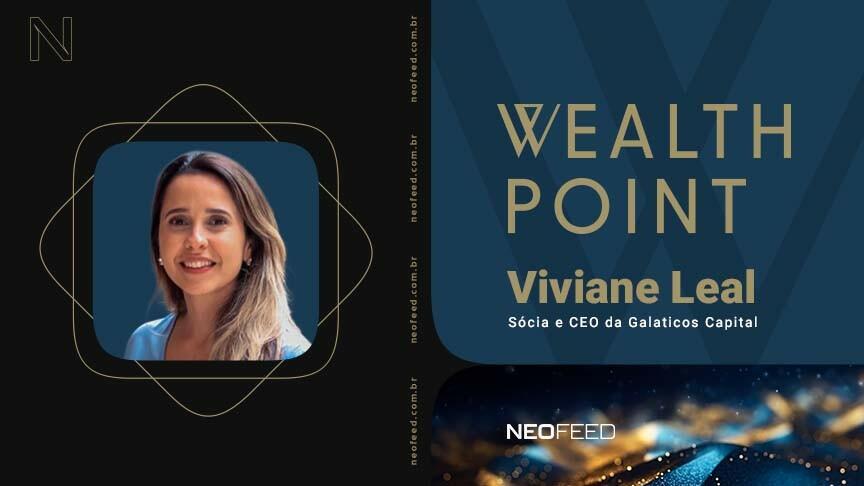
“Ronaldo and I realized that athletes have very well-structured professional careers, but they don’t necessarily have organized financial lives,” said Viviane Leal, CEO of Galaticos Capital and co-founder of the operation along with Ronaldo, on Wealth Point, a NeoFeed program.
The origin of the firm is directly linked to Ronaldo's career. According to Viviane, the former player was always concerned with separating his family structure from his professional management structure. The family's role was to support his career. The wealth management firm's role was to professionalize and give responsibility to the administration of his assets and ensure his family's livelihood.
This logic helped shape Galaticos' model. The company focuses on investments, but also on family management, financial education, payments, property and business administration, and legal and accounting support through partner firms.
The initial audience came from football, but the base expanded. Player Gabriel Jesus also became a partner in the operation, bringing a connection with a younger generation of athletes. Over time, Galaticos also began to serve athletes from other sports, such as women's football players, as well as influencers and artists.
Now, expansion is beginning to gain momentum through internationalization. Previously, demand came mainly from Brazilians who were leaving the country and needed a local structure to manage their assets.
Now, Galaticos already serves Uruguayan and Argentinian clients, as well as foreign athletes, who arrive in Brazil without knowing how to open a company, a bank account, or organize their own financial lives here.
The challenge is particularly relevant because sports careers are increasingly global. Athletes may be in Brazil, Spain, Paris, Saudi Arabia, Qatar, or other markets. Asset management needs to keep pace with this geography, including tax, legal, family, and liquidity issues.
But the most sensitive part of the work, according to Viviane, is still financial education. Athletes' relationship with money has improved in recent years: they ask more questions, monitor their portfolio's profitability, and are starting to discuss retirement earlier. Even so, the initial phase of their careers remains delicate.
This is when the dream comes true: the desire to buy the first home for the family, the dream car, and the pressure to raise the standard of living all intertwine. Galaticos' role is to help the athlete transform a short-term, intense income into long-term wealth.
“I usually tell clients that I clearly understand their spending capacity. But we need to see what their investment capacity is,” Leal stated.
In practice, the company aims to work with a minimum investment rate of 30% of income, which can reach 40%. In months with awards, image rights, and sponsorships, this percentage may be higher. The goal is to preserve, after retirement, a quality of life close to that of the working years.
By 2026, Galaticos wants to advance its own financial education project for young athletes still in training at the clubs.
“If we bring this to the grassroots level of the clubs, we can ensure that when they become professionals, they already have this educational background. Mitigating mistakes right from the start, which are crucial,” said Viviane.


