





















The Genial Group reached R$280 billion under management through investment in technology. Now, the market has become more demanding, and the strategy is to grow through business diversification.
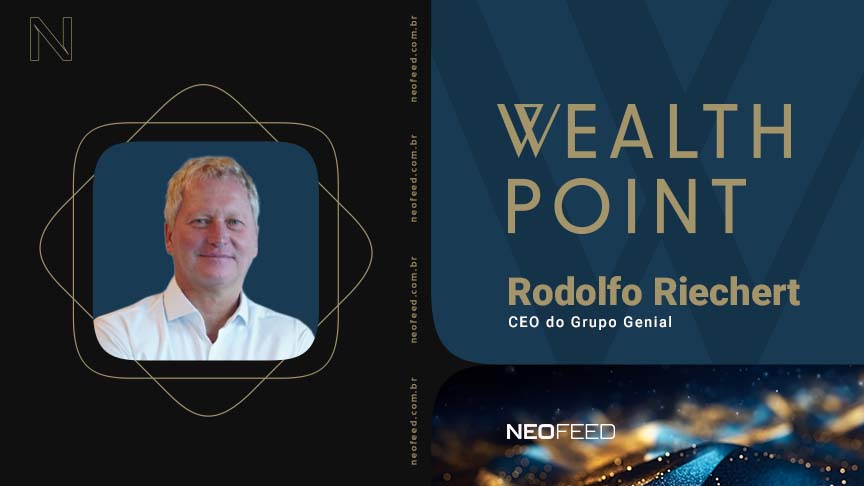
“I believe it’s no longer possible to be a niche business, like just investments. We need a more complete ecosystem. Our bet now is on the credit market,” says Rodolfo Riechert, CEO of Grupo Genial, to Wealth Point, a NeoFeed program.
The strategy has been built in layers. Since 2024, the group has offered a credit card whose limit is calculated based on the volume invested in the firm. The logic is to use assets as collateral to offer cheaper and faster credit and prevent the client from having to liquidate positions to address liquidity needs.
The group is now entering the payroll loan market, starting with public sector employees, with plans to expand into the private sector in the second half of 2026.
“We started getting into the credit sector because 90% of the population demands credit and only 10% invest. People are much less hesitant to take out credit online than to invest. So, we can use our technology to analyze clients,” says Riechert.
Meanwhile, other areas have been restructured. One example is wealth management, which saw a 30% growth in the number of clients in 2025, reaching more than 2.6 million, thanks to the strengthening of the retail sector.
Post-Master and Hidden Carbon Operation
If 10 years ago investment platforms were only seen for their benefits of open architecture and democratization, now their growth is beginning to raise questions about distribution rules and platform liability. This debate gained momentum after the episode involving the sale of CDBs (Certificates of Deposit) by Banco Master.
According to Genial's CEO, it's indeed important for the market to pause and reflect on what happened and how to prevent a repeat of this, but the blame, and therefore the solution, doesn't simply lie with the platforms. Riechert emphasizes that few investors actually lost money, as they were covered by the FGC (Brazilian Deposit Insurance Fund).
“There is a rule, and the brokers operated within that rule. It wasn't up to the platforms to analyze and say that Banco Master wasn't financially healthy: it had audited financial statements, and the ratings weren't bad. On the contrary, before having problems, it received an upgrade from a major risk agency,” says Riechert.
Another event that is putting the financial market under pressure regarding its responsibilities is Operation Carbon, an action by the Federal Police (with the Internal Revenue Service and other agencies) to dismantle a scheme of fraud and money laundering in the fuel sector linked to the PCC (First Command of the Capital), with asset concealment/shielding via fintechs and investment funds.
At the time, at least 40 investment funds were identified that could have had resources originating from a criminal organization. Banco Genial appeared in the case as the administrator of a R$ 100 million fund within a larger structure. Shortly after the start of the investigation, Genial relinquished the administration of the fund, and the company is monitoring the ongoing process while internally reviewing the vehicle's entry.
Riechert explains that he conducted an internal investigation into how he could improve compliance , but ultimately concluded that this money was already circulating within the financial system, making it very difficult to trace its origins.
"It's important to say that Genial wasn't under investigation, but rather the fund. We make every effort to find out where the money comes from, but, in my opinion, the financial institution can't be the sheriff or detective of the market; we don't have those tools."
The main argument would be that the money coming from the funds is already within the financial market, often arriving via fintech companies. This makes it very difficult to uncover any fraud that occurred prior to this inflow.
“The role of fintechs needs to be debated. Do all financial institutions truly have a legitimate financial purpose? To open a bank, you have enormous regulatory requirements. Is this also being done within the owners of the financial institutions?” asks the CEO of Genial.