

















Investors are used to following fund managers' bets to see which ones are best positioned in the current scenario, or which ones have made winning bets that have yielded fantastic returns.
However, in systematic fund management, mathematical models select the best assets. And the portfolio can contain hundreds of positions. Of course, the models are made by humans. But, once they are ready, the manager has little or no interference in them. And the inclusion or exclusion of any asset occurs systematically according to the programmed schedule.
This management approach already represents more than half of the American fund industry. In Brazil, however, managers estimate that less than 1% of assets under management use this strategy – this figure does not include quantitative funds, which use data but do not employ a set of pre-established rules in their management.
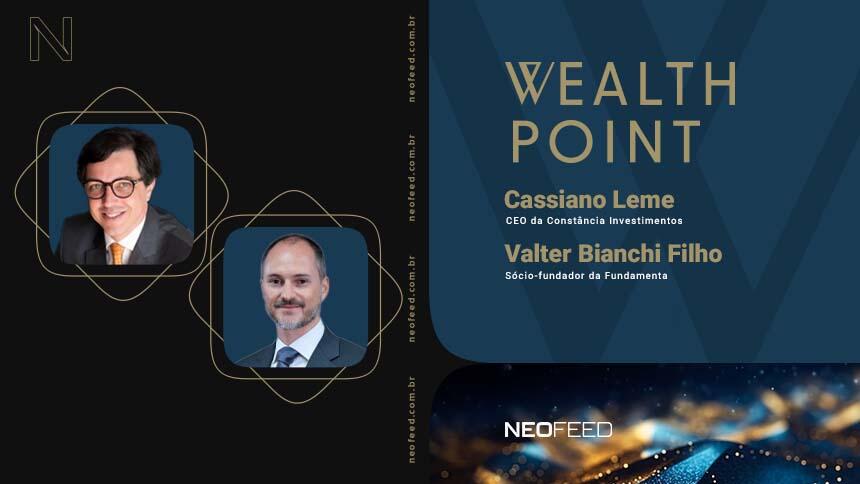
“Basing a decision-making process on one person, a 'showman,' is extremely fragile. We are focusing on the process and not on a specific person. Furthermore, there is the inherent human bias to control,” says Cassiano Leme, CEO of Constância Investimentos, in an interview with the program Wealth Point .
Systematic funds also aim to beat a benchmark by generating alpha. And to achieve this goal, they have specific strategies. Among the best known are factor investing, which uses momentum , and statistical arbitrage.
The firm that became convinced that the strategy was worthwhile was Fundamenta, which was founded in 2006 as a fundamentalist asset manager. But, gradually, it incorporated systematic strategies until it understood that the best approach was to strictly adhere to the philosophy.
“Human decision-making was still very relevant at the beginning of the process, but over time, we saw evidence that our interference tended to be detrimental,” says Valter Bianchi Filho, founder and investment director of Fundamenta. “So, we started ‘resigning from the decision-making process,’ but convinced that it was the best thing to do.”
The fact is that there is increasingly more information to be processed in the financial market. And having some kind of systematization in management may be the future. Especially with the advancement of artificial intelligence. In Bianchi Filho's view, technology will always be used as a complement.
“ChatGPT has a characteristic that bothers me: it doesn't know how to say no. We believe it can help in cleaning up operational data. It will be an assistant, but not someone who goes there and makes all the decisions for you,” says Bianchi Filho.
Leme, for his part, is optimistic and believes we are at a turning point. "In Brazil, there is an enormous concentration on macro strategies based on bank treasury," says Leme. "However, the studies we have show that, on average, macro funds haven't gone beyond a 'Brazil kit.' And that hasn't yielded returns."
According to the CEO of Constância Investimentos, investors are rethinking their philosophies and looking at where consistent long-term returns can truly be generated. "So, I think this could even be a turning point in the consideration of systematic strategies in Brazil."