









An independent agency, without the financial muscle of large global groups, has already created campaigns for Netflix, Havaianas, and Uber. With artificial intelligence, it is gaining even more competitiveness, competing on equal footing with the biggest players in the market.
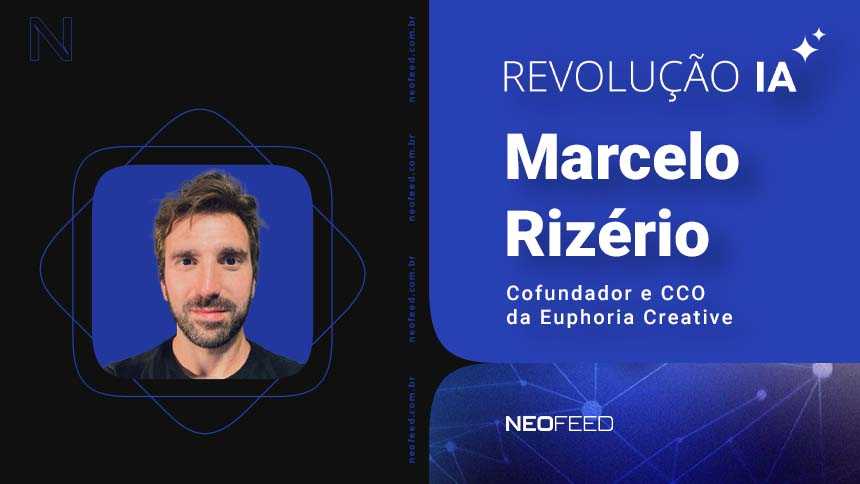
For Marcelo Rizério, CCO and co-founder of Euphoria Creative, one of the biggest transformations that technology is causing in the advertising market is not in the campaigns themselves, but in the starting point of each agency.
"Ten years ago, a large group agency would pay millions for software and platforms. Today it's the same price for everyone," he stated on Revolução AI, a NeoFeed program.
This leveling, however, does not mean that any agency can deliver the same result. Given equal access to tools, what makes the difference is experience, expertise, and human creativity.
The agency has already produced campaigns entirely with AI, such as the Ticket campaign, and hybrid productions, such as the Hellmann's campaign, but in neither case was the choice driven by trends or to impress clients.
In the Ticket campaign, the script itself played with the concept of artificiality: everything was fake, except for the benefits. In Hellmann's, a human hand was deliberately filmed to create a contrast with the rest of the AI-generated production.
And although it provides more agility, the use of AI does not eliminate common stages of the production process, such as testing and casting . "The client heard '100% artificial intelligence' and thought it would be ready the following week. We had to sit down and explain: you will still choose whether the character is male or female, tall or short. The AI comes after all that," he says.
According to the advertising executive, all these details are necessary because we are in the attention economy era, where a brand doesn't just compete with its direct competitors. It competes for space with the neighbor's vacation photo, the football championship results, or anything else that appears in the social media feed . In this scenario, being ignored is the worst possible fate.
Therefore, in Rizério's view, even a campaign that generates rejection serves a purpose, because it still generates conversation, keeps the brand on the radar, and feeds the algorithm. It's better to be talked about than forgotten.
One example was Volkswagen's campaign, which brought Elis Regina "back to life" via AI alongside her daughter Maria Rita, a campaign that divided opinions in the market, even though all the work was done with the authorization of the family and the rights holders.
"Regardless of whether you're for or against it, it became a topic of conversation, it became an agenda item. And at the end of the day, that's what made the campaign and the brand relevant," says Rizério.
The risk, however, lies in when the technology is used carelessly. AI already allows for the recreation of voices, faces, and scenes with a perfection that makes it almost impossible to distinguish the real from the fabricated.
"It's become very easy to fool anyone. We're going to enter a point where we won't be sure what's real and what isn't anymore. It's up to our generation to prevent this so the next one doesn't suffer," says Rizério.