












The cryptocurrency market was built on the premise of reducing dependence on banks, brokers, and other intermediaries. Now, its proponents see a new disruption on the horizon: the arrival of artificial intelligence agents capable of trading, investing, and moving funds on their own.
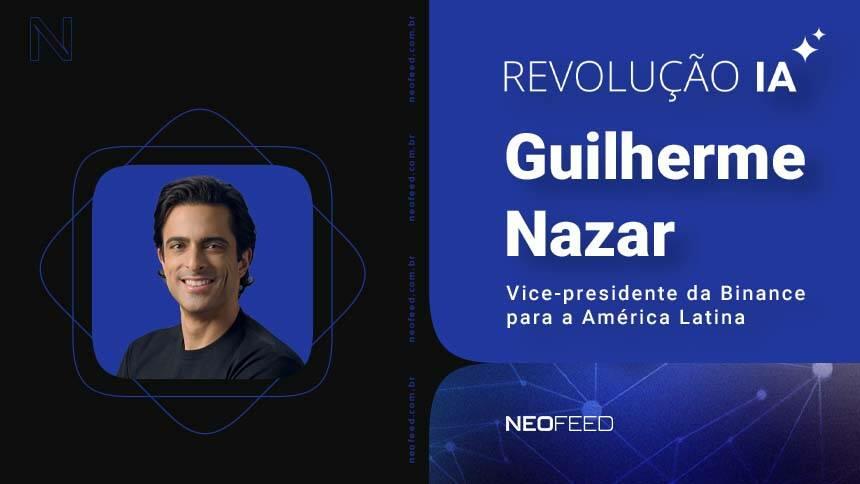
According to Guilherme Nazar, Binance's vice president for Latin America, blockchain is the infrastructure that will enable this new digital economy.
“In the not-too-distant future, you will have people on the blockchain and you will also have AI agents executing operations, sometimes purchases, consuming things,” says Nazar, on Revolução AI , a NeoFeed program.
This transformation could significantly expand the cryptocurrency market. Until now, the industry has calculated its growth potential based on the number of people connected to the global economy.
With autonomous agents operating on the same infrastructure, this logic changes. "You start to have no more limits to the market potential of blockchain technology and cryptocurrencies," says Nazar.
The idea is already taking shape within Binance itself. In April, the exchange announced the expansion of its AI agents' capabilities, allowing access to margin trading, asset management, and real-time market data through a unified interface.
According to the company, agents can now check prices, monitor portfolios, access balances, and automate trading steps in an environment with integrated security controls.
AI Pro, for example, a tool that allows users to create automated trading strategies with the support of artificial intelligence, combines models such as ChatGPT and Claude with Binance's proprietary features to search for information, monitor markets, and execute trading orders based on user-defined parameters.
To increase security, the system automatically creates a dedicated sub-account, without permission for withdrawals or transfers, allowing the AI to operate investment strategies without direct access to the client's main funds.
For Nazar, the use of AI in crypto trading allows for faster and more disciplined financial decision-making. "It will be a better executor than me, supposedly because it's connected 24/7 for this function," he states.



