








The idea of browsing websites, comparing prices, and manually deciding on a purchase may be coming to an end. In place of this model, so-called agent commerce is gaining ground, where consumers can delegate the entire purchase journey, from product search to payment, to artificial intelligence agents.
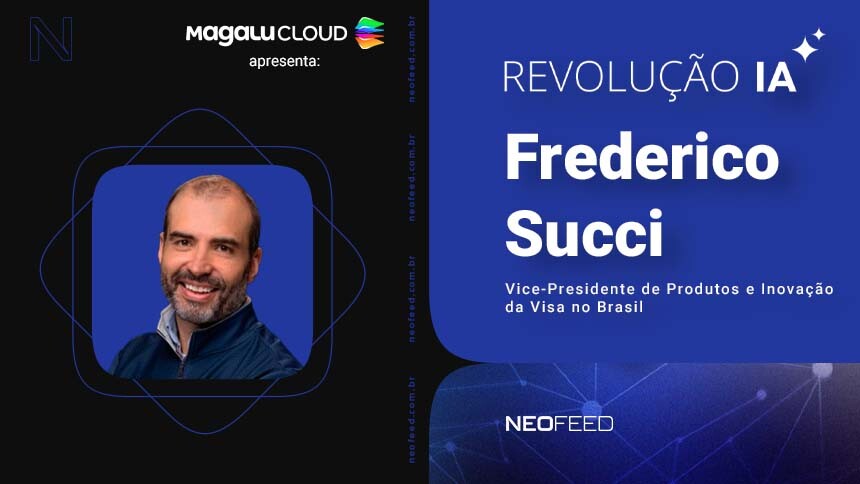
This transformation was the topic of the AI Revolution , a NeoFeed program supported by Magalu Cloud, which featured Frederico Succi, Vice President of Products and Innovation at Visa in Brazil .
The company conducted the first real transaction in Brazil using this model, employing secure credentials and biometric authentication, in partnership with Banco do Brasil . The expectation is that this new feature will be widely available in the second half of this year.
“You can say: I’d like to buy a ticket to Buenos Aires… and the moment he finds something, he makes the purchase on your behalf,” Succi explained.
The new model changes not only consumer behavior, but also the logic of digital retail. Today, companies compete for space in search engines like Google. In the very near future, they will also need to compete for the preference of AI agents.
However, adoption still depends on a profound adaptation of the entire ecosystem to ensure that these transactions are recognized as legitimate, secure, and authorized, preventing them from being treated as fraud or improper automated activity.
Meanwhile, consumers themselves will need to get used to the idea of delegating purchasing decisions, which Succi believes shouldn't be a problem, since Brazilians are eager to try new technologies.
"Every new technology is not just a matter of infrastructure, it's a matter of culture and maturity," said Succi.
In this new era, the success of e-commerce will depend not only on competing for consumer attention, but also on the preference of artificial intelligence.