


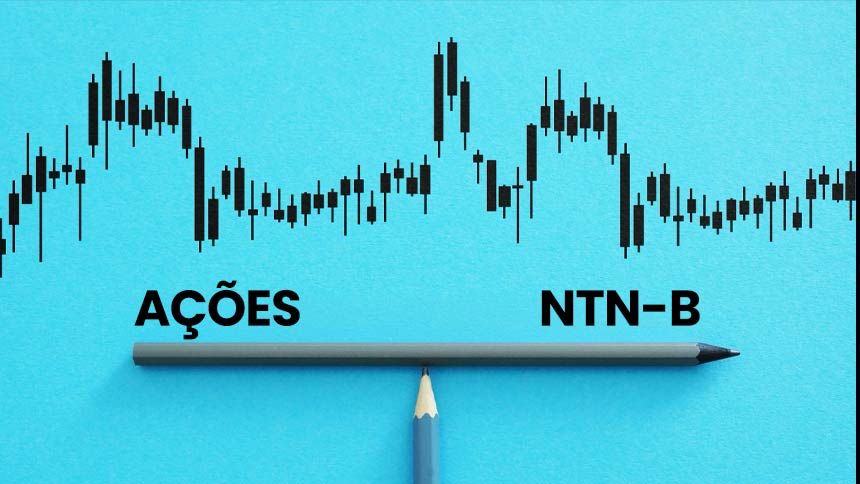
The Ibovespa is at its highest appreciation level since 2010 relative to the NTN-B 2050, according to a survey by TAG Investimentos. This is a sign that the stock market is expensive and that inflation is not being properly priced in.
The IPCA 2025 Treasury bond has been paying a fixed interest rate above 7% for quite some time, while the Ibovespa – above 180,000 points – has appreciated by more than 38% in a year.
Based on this diagnosis, the asset management firm, with approximately R$ 17 billion under management, began to reinforce its preference for inflation-linked assets in its recommendations.
In the moderate model portfolio for March, for example, the allocation to IPCA (Brazilian inflation index) has the largest share, with 25%, while post-fixed credit and cash accounts for 15%, variable income 10%, and the remainder diversified in other asset classes.
A composition that reflects the firm's caution in the face of the current environment. "If the price of the NTN-B is correct, the stock market cannot be right at its current level of valuation," says André Leite, investment director at TAG Investimentos .
The assessment stems from the idea that, if the long-term NTN-B already reflects a Brazil with poor fiscal policy and high interest rates, the recent appreciation of the stock market seems difficult to sustain in the same environment. According to Leite, the disconnect between the two markets is a technical distortion in investment flows.
On one hand, there has been a global portfolio reallocation to emerging markets, which has directly benefited the Brazilian stock market. Foreign investment in general goes to stocks at a ratio of five to one compared to NTN-Bs (Brazilian Treasury Notes) since Brazil lost its investment grade rating and large global asset managers can no longer allocate to its public debt.
Furthermore, foreign investors account for approximately 50% of the daily trading volume in stocks on the B3 (Brazilian stock exchange), but represent less than 10% of the total domestic public debt. This helps explain why the Ibovespa (Brazilian stock market index) was pushed upwards more strongly than long-term government bonds.
On the other hand, the NTN-B market also suffered additional domestic pressure. The popularity of incentivized debentures among local investors reduced demand for government bonds indexed to the IPCA (Brazilian inflation index).
Moreover, according to Leite, managers who buy these assets and convert the IPCA (Brazilian inflation index) return to CDI (Brazilian interbank deposit rate) end up being forced to sell NTN-B bonds in the futures market, increasing supply and accentuating the relative devaluation of long-term government bonds.
TAG's conclusion is that, in terms of allocation, inflation-indexed bonds are more attractive than equities at the moment. Even though convergence between the two prices may take time, the asset manager believes that a portfolio more heavily weighted in NTN-B bonds than in equities tends to suffer less if this adjustment comes from a correction in the stock market.
“In a scenario like this, inflation continues to be the most poorly priced risk by the market, which is why today hedging against inflation (IPCA) makes more sense than increasing risk in the stock market. Besides, it's the best hedge for the portfolio,” Leite analyzes.
This preference gains even more weight because TAG does not see inflation as a passing risk. Leite argues that the impact of the global war on Brazil's risk tends to be transitory, but its effects on prices may be more persistent, especially due to supply restrictions in energy, fuels, fertilizers, and microprocessors. In the case of fertilizers, he mentions increases of 50% to 60% due to lack of supply, which impacts food prices.
In this context, assets linked to the IPCA (Brazilian inflation index) once again fulfill a dual role: they offer real returns and act as protection.
Leite notes that the Central Bank has already revised its inflation projection for 2026 from 3.4% to 3.9%, while the market has begun to factor in a slower pace of interest rate cuts. Post-fixed income has regained attractiveness, but, in TAG's view, shorter-term NTN-Bs are still the best investment opportunity, as they fluctuate less with the interest rate and more with inflation itself.