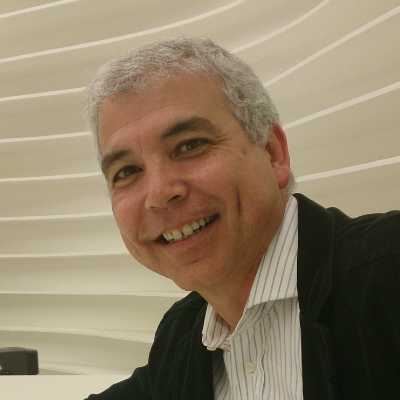


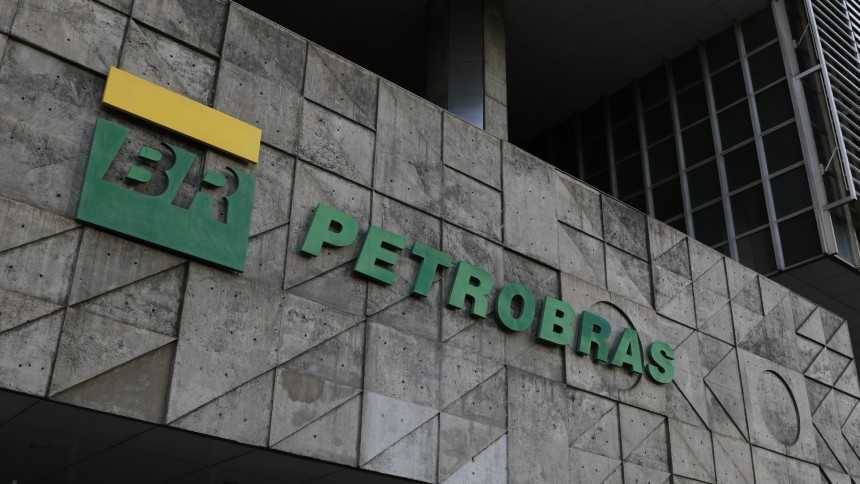
Petrobras President Magda Chambriard said on Wednesday, April 1st, that the company is studying the possibility of making Brazil self-sufficient in diesel oil production within five years. Currently, the state-owned company produces about 70% of Brazil's demand for the commodity.
According to her, Petrobras' current business plan already foresaw increasing diesel production by 300,000 barrels/day, reaching 80% self-sufficiency.
“Given the new global scenario, the company is reassessing its goal to reach 100% within the same period,” Chambriard stated during the CNN Talks Infra Energy for the Future event in São Paulo, adding that this production increase is “an ongoing internal discussion,” motivated by Petrobras’ ability to overcome challenges.
The executive stated that Petrobras' domestic oil and gas production capacity already protects Brazil from international energy fluctuations and crises, bringing stability to the domestic market.
"For the consumer, it means the certainty that external volatilities will not haunt us, because that is our policy," he stated, recalling the dependence of road transport, especially trucks, on diesel. "For our shareholder, it is the guarantee of a market that is perhaps the largest consumer market in Latin America."
To achieve diesel self-sufficiency goals, Chambriard said that Petrobras is already investing in expanding refineries such as the Abreu e Lima Refinery (RNEST), in the Suape Complex, in Pernambuco, which will have its capacity increased to approximately 300,000 barrels/day.
In addition, the Duque de Caxias Refinery (Reduc), in Rio de Janeiro, will increase its production from 240,000 to 350,000 barrels of oil per day. Furthermore, the units are being adjusted to maximize diesel production at the expense of other derivatives, such as fuel oil.
The president of the state-owned company avoided entering into controversy regarding diesel price controls due to the conflict in Iran. She highlighted the impact of the closure of the Strait of Hormuz, through which approximately 20% of the world's daily oil transport passes.
"If I have a global market where 200,000 to 500,000 barrels per day affect the price of oil with a demand of 105 million barrels per day, imagine 20 million barrels per day," he said, referring to the total volume passing through the Persian Gulf.
Chambriard added an “additional instability” to the geopolitical scenario: US President Donald Trump. “According to monitoring done by the company, President Trump’s statements caused $13 trillion to change hands in just the first 20 days of the war,” he said.
Regarding the company's plans, she emphasized that Petrobras is executing a robust strategic plan, worth US$109 billion, to expand its oil and gas production capacity.
“This strategy not only reinforces our dominant position in the domestic market, but also expands the company's global relevance, positioning Brazil as one of the top ten exporters and a crucial supplier to Asia,” he added.
Among the figures presented, she highlighted that Petrobras' total production ("ProRata") recently reached a peak of 2.92 million barrels per day, marking a significant record for the company.
"The company already operates 90% of the national oil production and is expanding its gas production capacity and optimizing the use of new offshore platforms to strengthen the energy supply in Brazil," he stated, citing that offshore gas production capacity reached a peak of 52 million cubic meters exported to the coast, a significant increase compared to the previous 29 million cubic meters.
Meanwhile, the president of the state-owned company stated that the company invests in renewable energy and demonstrates its socioeconomic impact, reinforcing its centrality to energy security and the development of Brazil.
“Our motto is that everything that is done will be done with the best technique, but not at any cost, but with capital discipline,” she said, recalling that the generation before hers in the company “really liked” oil and gas. “From my generation onwards, we started to like money, so we need to do what needs to be done, in the best possible way, but at the lowest cost.”