

New York — There is a musical score in the Morgan Library & Museum with erasures that no copy would dare reproduce. These are not the mistakes of someone who hesitated and let the pen run across the paper. They are the creative strokes of someone who thought too fast for the ink to keep up.
This original score — like all others — by Wolfgang Amadeus Mozart belongs to the non-profit institution created by John Pierpont Morgan, or J.P. Morgan (1837-1913), the banker who was the world's greatest art collector between the late 14th and early 20th centuries.
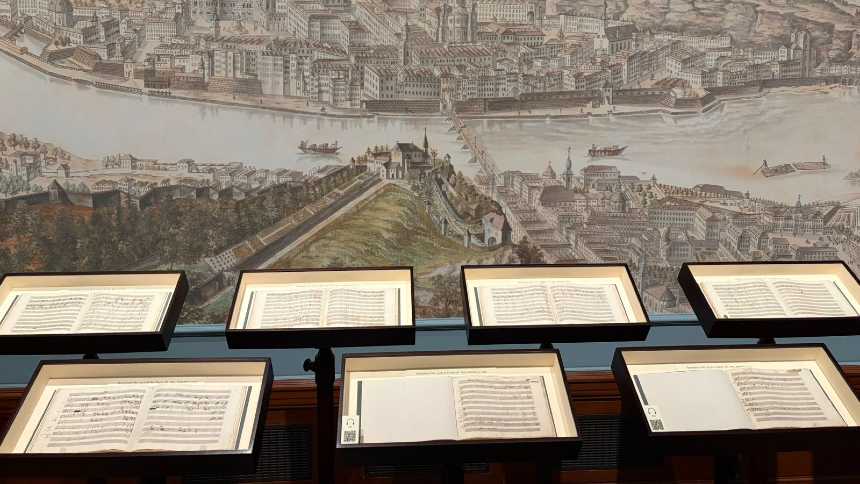
The exhibition Wolfgang Amadeus Mozart: Treasures from the Mozarteum Foundation of Salzburg is on display for a short period (until May 31) and is an unprecedented collaboration between Morgan and the International Mozarteum Foundation of Salzburg.
This is the first time that the custodian of the world's largest Mozartian collection, originally formed through donations and inheritances from the composer's own family, has allowed the collection to cross the Atlantic to reunite with the original scores of the Austrian musician and composer (1756-1791).
A significant selection from this collection is separated into two rooms: Act I and Act II, which symbolize periods in the musician's life—childhood and the discovery of a talent on one side, maturity and creative freedom on the other.
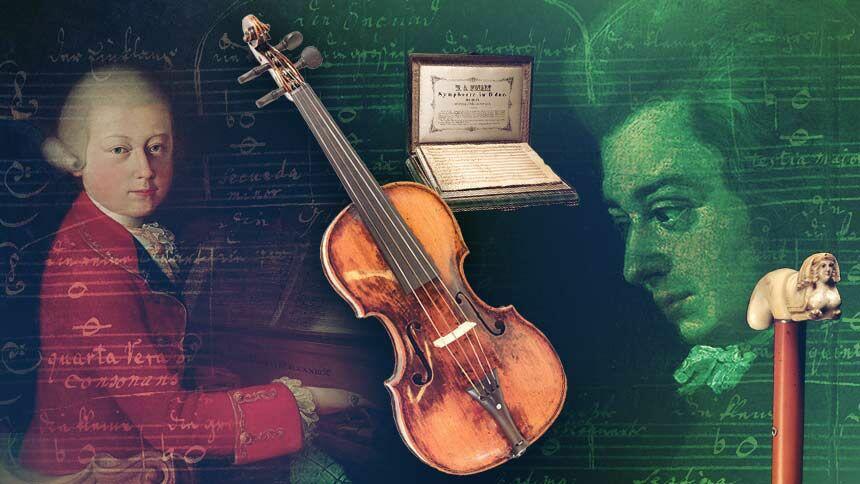
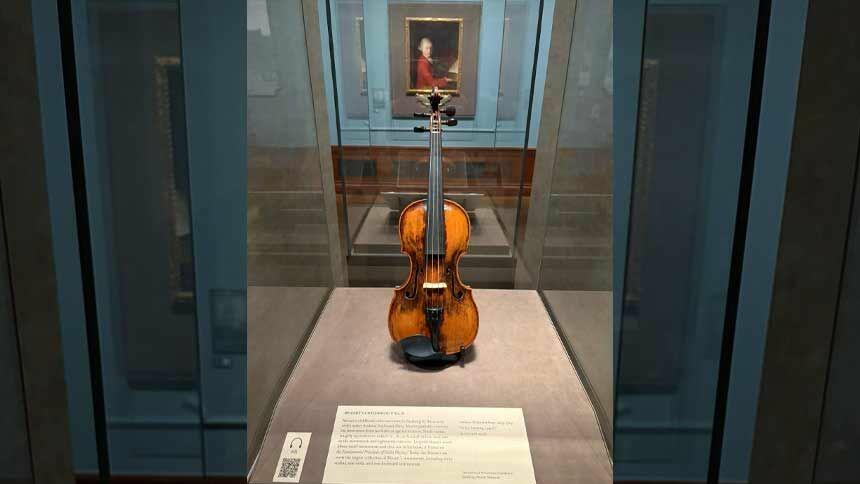
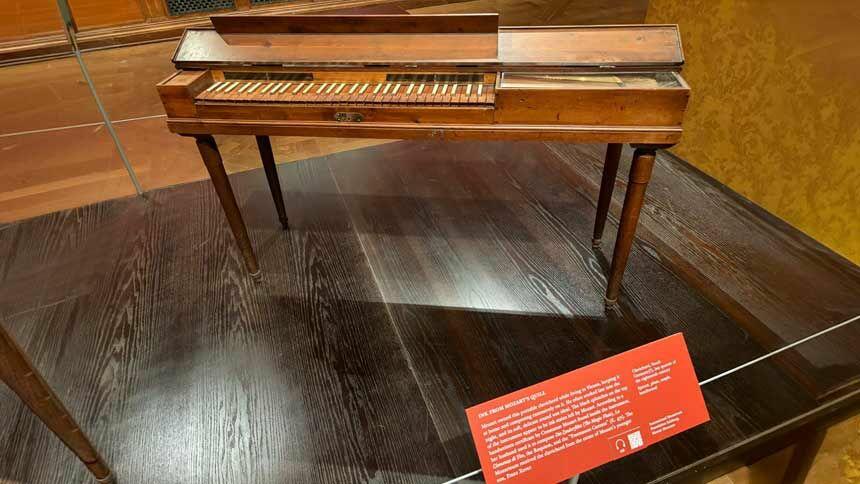
The violin Mozart used in his childhood, for example, made in Salzburg around 1746, is on display. As is the harpsichord he played while composing The Magic Flute . Along with portraits, letters, and autograph manuscripts, these objects form something rare in any museum in the world.
It's interesting to pay attention to the details. Mozart's harpsichord has keys worn from so much use. The violin from his childhood, made of spruce and maple in Salzburg when he was ten years old, still bears marks that no restorer has erased.
But there is one aspect that elevates the exhibition. The Morgan Museum possesses, in its permanent collection, two pages containing Mozart's earliest compositions—written when he was five years old, between February and December 1761.
These pages were cut out in the early 19th century from the so-called Nannerl Music Notebook , a book of exercises that Leopold Mozart, the musician's father, compiled from 1759 onwards to teach piano to his eldest daughter, Maria Anna.
The original notebook ended up in the hands of the Mozarteum in 1864. The detached pages are in the Morgan. For more than two hundred years, they remained separated.
Now reunited for the first time since then in the same room, visitors can see the book and the pages that once belonged to it, a single story that has finally come together again.
What is the Morgan Museum?
Located at 225 Madison Avenue in the Murray Hill neighborhood, the building that houses the Morgan Library & Museum holds Gutenberg Bibles, medieval manuscripts, and the room where the Federal Reserve (Fed), the American central bank, was founded.
It is a reflection of its patron's desire. An art lover, J.P. Morgan wanted a library to house and enjoy his collection – which eventually grew to around 50,000 items.
The space, built by architect Charles Follen McKim, the same architect who designed the original Pennsylvania Station (demolished in 1963), was completed in 1906, seven years before the death of J.P. Morgan.
At the beginning of the 20th century, he was the most powerful man in American finance. But his obsession with collecting preceded his financial dominance.
He amassed paintings, sculptures, Egyptian artifacts, Chinese porcelain, and books (illuminated manuscripts, first editions, original musical scores, incunabula) with a voracity that his biographers have never been able to fully explain and that Morgan himself never bothered to articulate.
The basement of his house on 36th Street was built to store what he kept acquiring.
The original library, for example, has three floors of carved walnut bookshelves, ceiling frescoes depicting zodiac signs and mythological figures, and secret staircases between the shelves leading to the upper levels, as well as an elevator for transporting books.
There are three copies of the Gutenberg Bible there — from an original print run of about 180 copies, of which fewer than fifty have survived. One is always on display, on a rotating conservation schedule.
There are also illuminated medieval manuscripts over 1,300 years old; the Golden Gospel of Henry III; the only complete copy of William Caxton's edition of Le Morte d'Arthur, acquired in 1911; early editions of Copernicus and Galileo; the manuscript of Charles Dickens' A Christmas Carol; the scribbles on paper where Bob Dylan jotted down the first verses of Blowin' in the Wind; and, discovered in 2024 by a museum employee among piles of documents, a previously unpublished Chopin waltz, dating from the 1830s, which no one knew existed. The collection totals more than 350,000 objects.
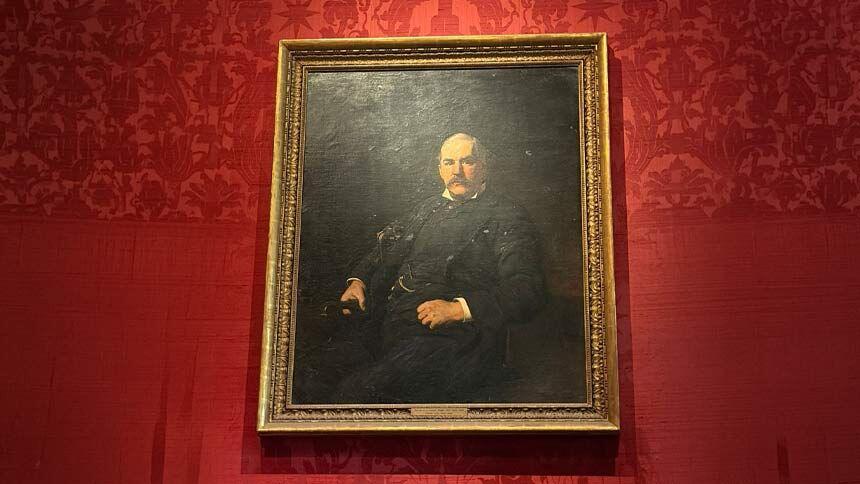
But no room in the museum illustrates the figure of JP Morgan better than his private office, in the so-called West Room , which is covered in red silk walls (everything there has been restored due to time and the stains caused by cigar smoke).
Above the fireplace, a portrait of Morgan—placed there after his death. Next to it, a steel safe where the most valuable manuscripts were kept until 2003. And the story goes that, hidden in the wall between the shelves, there was a secret bookcase.
But on that hidden shelf, the museum staff who discovered it found nothing. What Morgan kept there remains a mystery to this day.
What is no secret is what happened within those walls in the early morning of November 4, 1907. The American financial market had collapsed weeks earlier. Banks were failing. Depositors were rushing to the branches to withdraw their money.
The country had no central bank and therefore no mechanism for containment. Morgan summoned the presidents of the major financial institutions in New York to his library and simply locked the door.
For 24 hours, those confined negotiated the amounts each would commit to stabilize the system. A few hours before dawn in New York, everyone would sign a commitment to contribute. The crisis was contained. Six years later, the episode would be cited as the initial step towards the creation of the Fed in 1913.