


In April 2025, when BS2 announced the purchase of an undisclosed minority stake in Paag, the rationale behind the move was clear: to advance towards the high transaction volume of the Brazilian betting market, one of the specialties of the Minas Gerais-based fintech company , founded in 2021.
The outcome of this gamble, however, was not as expected. Contrary to the odds, the deal, which included the possibility of buying 100% of Paag, did not materialize, opening the door for another player to enter the dispute, the outcome of which has now been revealed to NeoFeed .
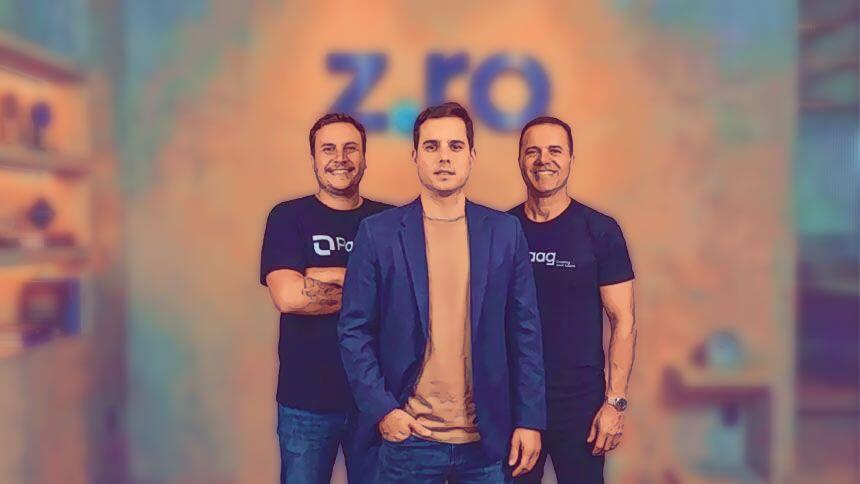
Z.ro Global Payments, a fintech company from Pernambuco specializing in financial infrastructure and payments, previously known as Z.ro Bank , is announcing the acquisition of Paag's payments division in a deal whose financial terms were not disclosed and which also involves a stock swap.
“We weren’t negotiating, but we had been having informal conversations with Paag when we saw the news about BS2. And the feeling was that we had missed an opportunity,” says Edisio Pereira Neto, co-founder and CEO of Z.ro. “And I’m sure that, at the time, the entire market thought the same thing.”
Contacted by NeoFeed , BS2 reported that it had signed a memorandum of understanding for the acquisition of part of Paag. "However, due to contractual disagreements identified during negotiations, the transaction did not proceed," the company stated in a note.
Neto, in turn, emphasizes that, due to contractual restrictions imposed by Paag itself, he has no information about the unsuccessful negotiations between the fintech and BS2. He does not, however, keep secret the reasons that led Z.ro to acquire the company's payments arm.
“The Central Bank raised the bar due to several recent scandals, and in this scenario, we are already seeing a consolidation in the payments sector,” he says. “So, we are buying market share. Paag processes 200 million transactions per year, and we are bringing that into our ecosystem.”
To give you an idea of the impact of incorporating these numbers, Z.ro currently processes 500 million transactions annually. However, the rationale behind the transaction isn't limited to that volume. In this first inorganic move by the company, another issue is literally at stake.
According to Neto, a significant portion of the transactions processed by Paag is concentrated in the gaming segment – which includes mobile games and, primarily, the betting market. This latter area involves only players authorized by the federal government.
“Of the approximately 80 regulated betting sites in the country, Z.ro serves about 40 and Paag serves 30. And with only one overlap in that base,” he states. “This transaction brings us consolidation in a market with high volume.”
A study by Tendências Consultoria and Peers Consulting+Technology shows that online betting generated gross revenue of R$ 37 billion in Brazil in 2025, the first year of operation of this market under the regulation sanctioned at the end of 2023. The country is already the fifth largest global market in the sector.
With these figures in mind, and based on the acquisition, Z.ro is creating an iGaming vertical, which will be run by João Fraga and Ricardo Vidal, respectively CEO and CSO of Paag, who, in the agreement, also become partners of the Pernambuco-based fintech company.
From B2C to other frontiers
By combining these strengths, Z.ro projects that the vertical's share of its revenue will evolve from 25% to 35%. This will be alongside lines of business such as processing local transactions for multinational companies operating in Brazil, in a remittance model that integrates payments, foreign exchange, and cryptocurrencies.
However, that wasn't the initial thesis of the fintech company, which was founded in 2019 in Porto Digital, Recife, as a multi-currency bank focused on B2C. "In six months, we had over 1 million app downloads. And along with them came a million problems that we hadn't mapped out," says Neto.
Upon identifying that “90% of these problems” were related to its banking-as-a-service partner at the time, the company decided to invest, as early as 2020, in developing its own infrastructure and obtaining licenses – including that of a Payment Institution – from the Central Bank.
The move coincided, shortly after, with the launch of Pix, which boosted demand for its infrastructure. Conversely, the fintech saw players like BTG, Nubank, and PicPay advance in its B2C space. And, with less firepower, it understood that it was time to pivot its business.
As a result of this shift to B2B, the company now serves 200 businesses. Among them are Binance, Foxbit, the Peruvian company PaySafe, and the JPCM Group, a shopping mall management company in the Northeast of Brazil, as well as football clubs like Sport. And it competes, in different niches, with names like eBanx, dlocal, and BS2 itself.
On the other hand, the B2C operation will be shut down at the end of the month. While closing that door, the company is moving forward with its plans to open a new frontier: the Latin American market. This explains why it was renamed Z.ro Global Payments in April.
With the understanding that instant payments, following the success of Pix, will gain global scale, this strategy has already resulted in the opening of operations in Mexico, Argentina, Chile, and Peru. And in a license obtained in Switzerland that allows for cross-border payment operations worldwide.
As part of these efforts, which have included an investment of R$10 million to date, the fintech company appointed Rafael Lavezzo as CEO of this global front, which is served by 150 professionals located in Brazil and these other countries. And it already envisions new operations in 2027, with markets like Colombia on its radar.
“We are a very down-to-earth company, with no cash burn. And these operations are designed to be profitable from the start,” says Neto. “Our estimate is that this global division will account for 30% of our results. And that, at some point, this share will reach 40%.”
In this regard, Neto emphasizes that the company does not need external resources – its only funding round came in 2020, with an investment of R$ 30 million from Multinvest. However, he does not rule out talks with potential strategic partners to accelerate its growth in Latin America. And he is already seeking new M&As .
“We already have advisors looking for other deals; this is integrated into our strategy, whether it's an acquisition or even strategic local joint ventures,” he says. “We have ongoing discussions and expect to announce other agreements soon, both in Brazil and abroad.”