

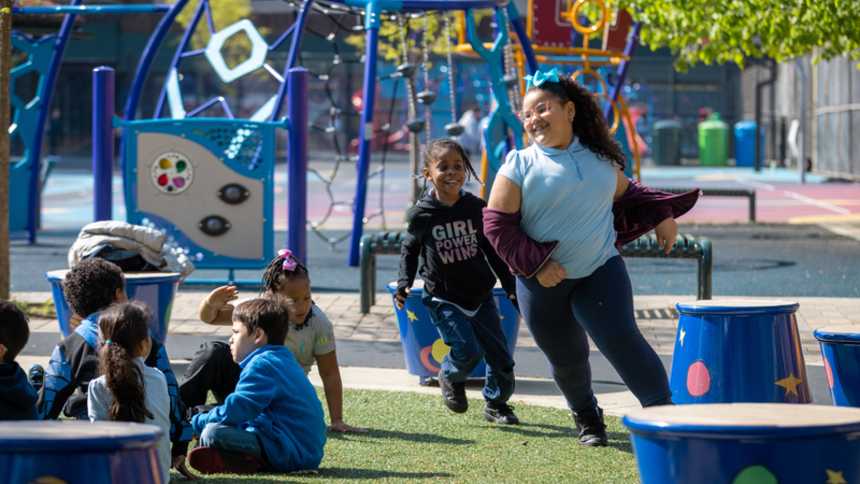
New York - At a public elementary school in the Bronx, New York , a group of girls who loved basketball faced a challenge during recess: the boys occupied the only two available hoops, leaving the young athletes out of the picture.
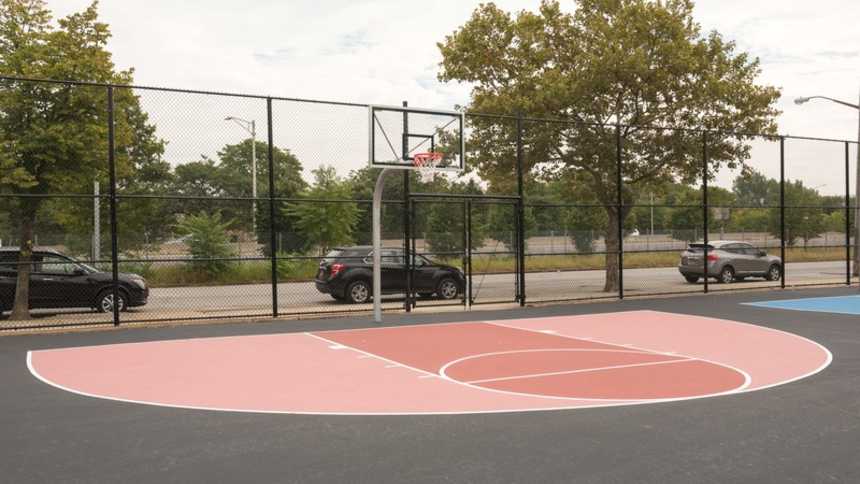
The problem was solved when – at their request – the floor markings around one of the baskets were painted pink. The color doesn't prevent anyone from playing, but the boys started avoiding that basket, giving the girls an equal chance to practice the sport.
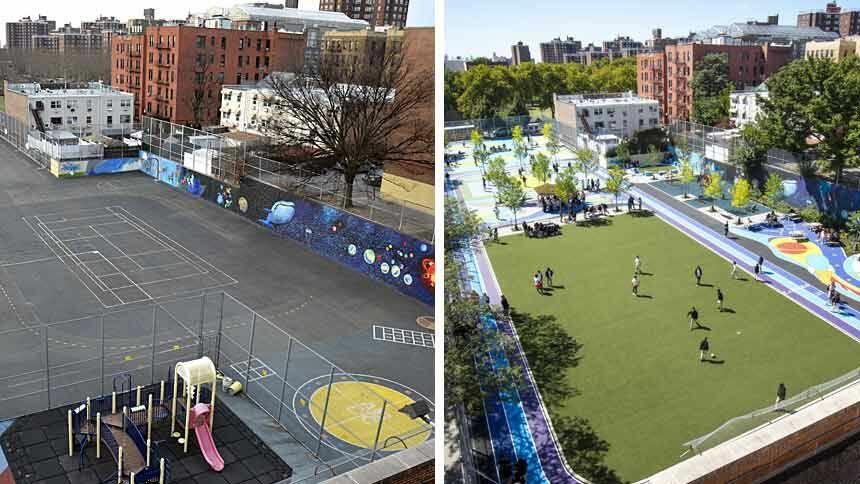
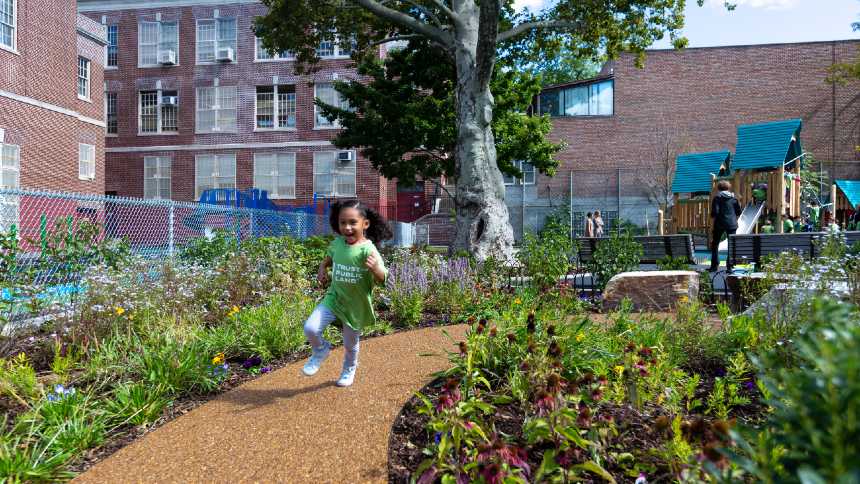
This is an example of a gradual transformation that is turning the courtyards of public schools in New York – normally paved and inhospitable – into green, vibrant, and community spaces.
The initiative is carried out by professionals from the Trust for Public Land (TPL), a national organization founded in 1972, whose objective is to connect communities to nature by preserving green areas.
Currently, more than 5 million New Yorkers live within a ten-minute walk of a park, schoolyard, or trail developed by the organization. These include the Long Island Greenway and the Queensway, which is currently under expansion.
In New York City, more than 240 playgrounds have been reinvented across the five boroughs. There are approximately 950 throughout the city, many awaiting transformation. All projects are being carried out in public schools, with 30 projects scheduled for completion by 2030.
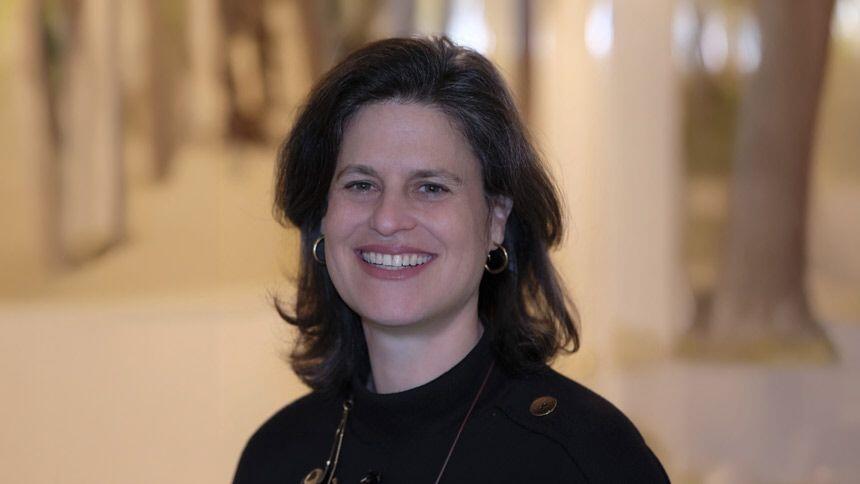
“We transformed these areas, which resemble parking lots, into vegetated spaces capable of absorbing rainwater and reducing heat,” Tamar Renaud, a public health specialist and director of the New York State Trust for Public Land for the past two years, tells NeoFeed .
"These initiatives also serve to teach civic responsibility to children, who participate in the design process along with landscape architects," he adds.
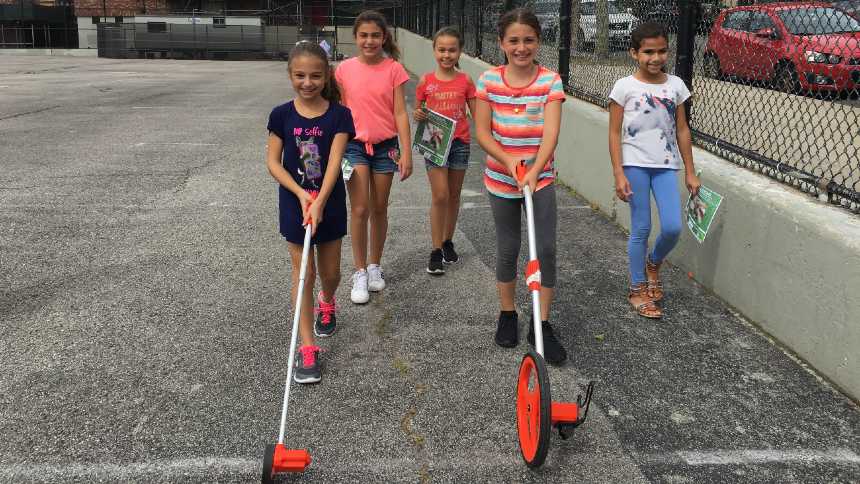
The process for each courtyard involves engaging students, teachers, and staff to understand what that community wants for the space. A group of students participates directly in the design, learning about planning, budgeting, and related professions.
They measure the land and decide how to arrange the elements, balancing preferences with space and budget limitations. After construction, there is follow-up to ensure proper maintenance of the green areas.
The renovations utilize green infrastructure materials and techniques, such as permeable surfaces and tree planting, although they still include paved areas intended for sports use. Tamar notes that many contractors are now aware of these practices.
Typically, these projects take place in areas with limited access to parks and recreational spaces, often in low-income communities. Therefore, one of the conditions for the renovation of these spaces is that they be open to the general public on weekends.
“Often, a city councilor seeking impact in their community contacts us because they know we completed projects in 18 months, a timeframe considered relatively short,” explains Tamar. “The next step is to check if the local school is interested. In other cases, it's the schools or parent associations that contact us.”
Funding comes from various sources. In areas with a history of flooding, there is support from the Department of Environmental Protection. There are also resources from the School Building Authority, the Department of Education, city councilors, district presidents, members of Congress, and, in some cases, initiatives linked to the city government and climate justice.
“These agencies want to prevent the sewage systems from becoming overloaded during storms, which have brought more frequent tornadoes. In recent years, one city was affected by storms that previously occurred only once every hundred years,” Tamar points out.
Nationally, the Trust for Public Land has already transformed more than 350 schoolyards in 26 states, including cities like Atlanta, Philadelphia, and Los Angeles. According to the organization, nearly 28 million American children still lack access to a park near their home: the new playgrounds are one of the most effective ways to reduce this gap.
Last February, the organization, in partnership with other national institutions, announced a revamped version of the Green Schoolyard Action Agenda, envisioning that by 2050, all communities in the United States will have access to community green schoolyards.
An agenda serves as a guide for organizations, professionals, policymakers, funders, and advocates to help expand these areas on a large scale.
“It’s a model that can be replicated globally: it depends on local priorities, funding sources, and political support,” says Tamar—the daughter of a woman from Rio de Janeiro, she speaks fluent Portuguese and has strong ties to Brazil.
"Green infrastructure can be a motivating factor, especially in areas prone to flooding. Implementation is facilitated by the fact that the land already belongs to the public sector. It is also important to identify funding sources, such as public bodies or philanthropy, and to have committed leadership."
Tamar emphasizes that when there is political will, projects move forward: investments in parks generate economic returns, save on healthcare costs, and, through stormwater management, improve quality of life.
She cites a study on the "loneliness epidemic," released in 2023 by the U.S. Appeals General, by Vivek Murthy: "People with access to green spaces tend to be happier, as they have places for leisure, socializing, and well-being," she emphasizes. "The parks we preserve and the revitalized patios are part of this search for connection, physical and mental health."