


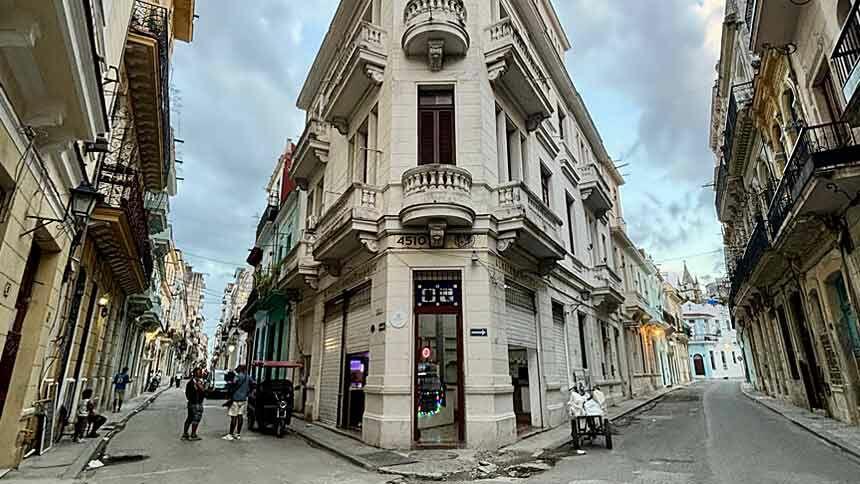
Havana - "You can pay in Cuban pesos or in dollars ." The phrase, repeated in restaurants, private shops, and services in Havana, summarizes a silent but profound transformation in Cuba 's economy.
What began as an occasional practice in tourist spots has become a structuring rule of daily life – and has laid bare the gap between those who have access to hard currency and those who depend exclusively on the Cuban peso.
With approximately 11 million inhabitants, the country is going through a prolonged structural crisis, which has worsened since 2020. Data from the National Office of Statistics and Information show a contraction in economic activity, a drop in productivity, and strong pressure on consumption.
The scenario combines mutually reinforcing factors: reduced tourism, external restrictions, low domestic production, and persistent macroeconomic imbalances. In the vacuum left by the state, the dollar strengthened.
Although the Cuban peso is now the only official currency, this was not always the case. For decades, the country operated with a dual currency system: the Cuban peso (CUP) and the convertible peso (CUC), the latter pegged to the dollar and used primarily for tourism and transactions with foreigners.
The legalization of the use of the American currency dates back to 1993, when the government began allowing its circulation as a response to the post-Soviet Union crisis.
With the 2021 monetary reform, the CUC was eliminated and the Cuban peso became the sole official currency. However, the institutional design did not keep pace with the real economy. The dollar consolidated itself as the main reference of value, especially outside the state sector.
In the main tourist areas of the capital, such as the Habana Vieja neighborhood, the American dollar is widely accepted in restaurants, craft markets, and private businesses.
In the informal market, which dictates the real cost of living, US$1 can be worth between 400 and 500 Cuban pesos, far above the official rates set by the Central Bank of Cuba.
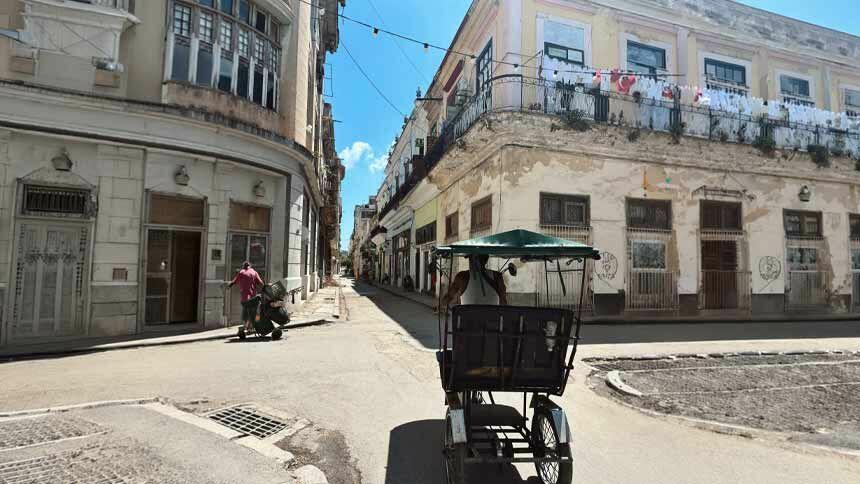
Dollarization has also reshaped the service sector. The traditional bicycle taxi, previously used mainly by locals, has become part of the dollarized tourism economy. Tours of the capital are offered directly in foreign currency.
Salary of US$5 per month
William H.*, a bicycle taxi driver in the capital for over 16 years and a graduate in engineering from the University of Havana, has adapted his income to this new logic. “It’s not our official currency, but it’s undoubtedly the main one,” he says in a conversation with NeoFeed . “With the dollar, I can buy things in private stores at a better exchange rate.”
Following the monetary reform, the minimum wage was set at approximately 2,100 Cuban pesos per month, while the average salary is around 5,800 pesos.
In the informal exchange rate, with the dollar between 400 and 500 pesos, the minimum wage is equivalent to something between US$4 and US$5 per month, and the average wage to something between US$11 and US$14 — which drastically limits access to basic goods for most of the population.
For tourists, the acceptance of the dollar facilitates consumption and sustains a significant portion of the economic activity. In Havana, bicycle taxi drivers charge an average of 1,000 CUP per trip for local residents. A two-hour city tour of the main points of interest can cost US$10 per person.
“Here in Cuba, we don’t live on dollars. We survive,” William summarizes. “That’s the only way we can buy a few basic supplies to get us through the month.”
Brazilian lawyer Lucas Jorge, who visited Havana for just over a week, quickly adopted the system. “Before coming, I knew that bringing dollars would make access to the main tourist sites easier,” he told NeoFeed . “For us, who come from abroad, it ends up being more worthwhile, and we also help the economy circulate alongside the dollar here on the island.”
Dollarization exposes a growing economic fragmentation. Today, Cuba operates with at least three points of reference: the official exchange rate, prices regulated by the state, and the informal market, where the dollar dictates the rules.
In practice, it is the parallel market that organizes daily life. Persistent inflation, recognized in analyses by organizations such as the Economic Commission for Latin America and the Caribbean (ECLAC), is driven by the scarcity of goods, monetary issuance, and the devaluation of the Cuban peso.
Those who receive remittances from abroad or work in the private sector, which expanded after 2021 with the legalization of micro, small, and medium-sized enterprises (MSMEs), have greater access to the US dollar and, consequently, to goods and services. Meanwhile, state employees remain dependent on a currency that has lost its function as a store of value.
In everyday life, this dynamic translates into informal practices. Payments may be made in dollars, but change is often given back in Cuban pesos, a strategy used by merchants to retain hard currency within the business and ensure the replenishment of supplies.
Reports from international organizations, such as the United Nations (UN), point to persistent difficulties in food supply and security, reflecting the weakening of the state distribution network.
The "currency," as the dollar is called locally, organizes real economic life, while the Cuban peso survives as the formal currency of a system increasingly detached from the daily lives of Cubans.
*The character William H. requested to have his name changed for fear of government retaliation.