

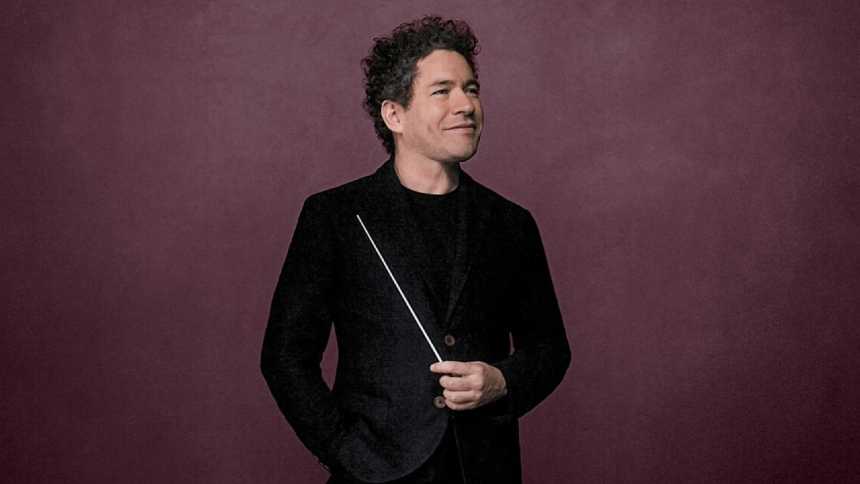
New York — On Tuesday, April 28, a concert by the New York Philharmonic at Lincoln Center, followed by a gala dinner that raised $3 million for the orchestra, officially marked the arrival of its new artistic and musical director: the 45-year-old Venezuelan conductor Gustavo Dudamel.
By assuming the direction of the oldest philharmonic orchestra in the United States, founded in 1842, he joins the ranks of legendary conductors who have held the position, such as the Austrian Gustav Mahler, the Italian Arturo Toscanini, the American Leonard Bernstein, and the German Kurt Masur.
Dudamel arrives at Lincoln Center after conducting the Los Angeles Philharmonic for 17 years and serving as a guest conductor in New York for the past three years.
The conductor, son of a trombonist and a singing teacher, was born in Barquisimeto, the fourth largest city in Venezuela — known as the City of Music for housing several institutions dedicated to this art.
From a young age, Dudamel participated in El Sistema , a government-funded music education program for low-income children. This initiative was created 50 years ago by musician and conductor José Antonio Abreu, who passed away in 2018 and also founded the Simón Bolívar Symphony Orchestra of Venezuela in 1978, of which Dudamel has been the director since 1999.
“When I was nine years old, Maestro Abreu noticed something special in my musical life. He made me learn and follow the beautiful path of conducting,” Dudamel said in an interview with musicians from the philharmonic.
“He was like a father. When discussing an interpretation or a piece, themes of philosophy and poetry would emerge. He was a genius,” says the Venezuelan, who throughout his career worked with conductors such as the Argentinian Daniel Barenboim and the Italian Claudio Abbado. “The most beautiful thing is that they were my conductors and also my friends.”
The program for Dudamel's first year as conductor of the New York Philharmonic, which begins in September 2026 and runs until October 3, 2027, includes premieres by Canadian pianist and composer Zosha Di Castri and Cuban-American Tania León.
A tribute concert is also planned to mark the 25th anniversary of the September 11 attacks, accompanied by performances of On the Transmigration of Souls , a work by contemporary composer John Adams.
The orchestra will also perform in six European cities and is celebrating a new five-year operatic partnership with Carnegie Hall, which begins with a production of Giacomo Puccini's Tosca .
The philharmonic will feature collaborations with artists such as Lang Lang, Yo-Yo Ma, and Mitsuko Uchida, as well as multimedia artistic residencies with Marina Abramović and Gustavo Santaolalla.
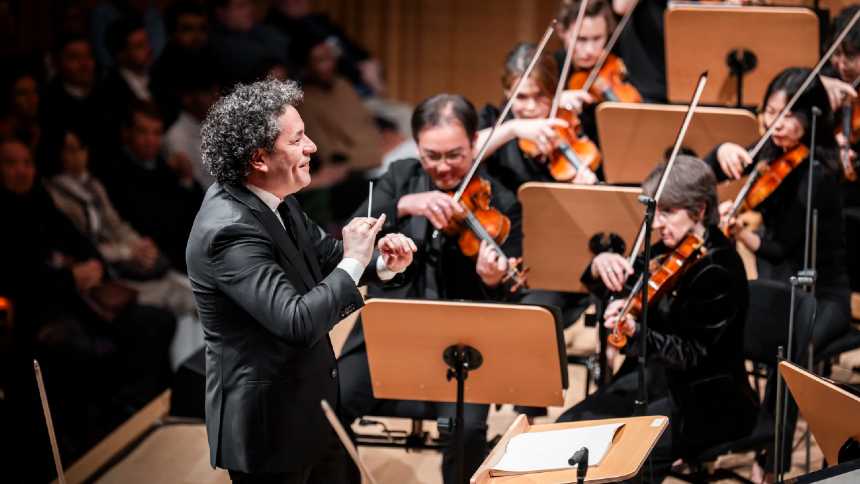
Furthermore, the conductor will dedicate three weeks to the 200th anniversary of Beethoven's death, celebrate the birthdays of John Adams (79) and Steve Reich (90), and conduct free outdoor concerts during the New York summer. The season concludes with MASS, a 1971 composition by Leonard Bernstein, which brings together musicians, actors, and dancers.
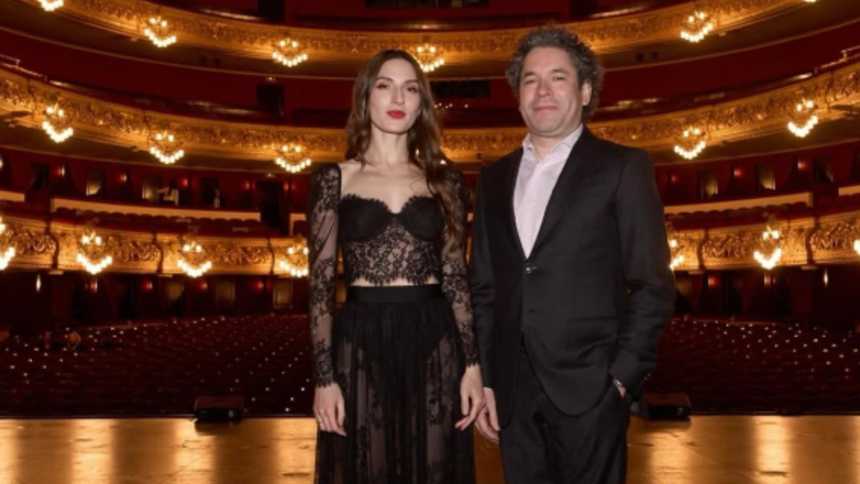
Even before this musical marathon, Dudamel took to the stage at Lincoln Center last November for a panel about the premiere of El Canto de las Manos ( The Song of the Hands ), a documentary filmed in 2022 and directed by his wife, the Spanish actress María Valverde.
The film follows the conductor as he stages Fidelio , the only opera by Ludwig van Beethoven (1770-1827), performed in 2020 by deaf singers in celebration of the 250th anniversary of the German composer's birth — Beethoven began losing his hearing around the age of 28 and by 40, he could no longer hear anything.
“We chose Beethoven not only for his music, but also for his deafness,” said María, alongside her husband and the other panelists: DJ Kurs, director of the Deaf West Theatre; Melissa Draganac-Hawk, a leader in sign language education; and the evening's host, actor Bradley Cooper — nominated for an Oscar for directing and starring in Maestro , about the life of Leonard Bernstein.
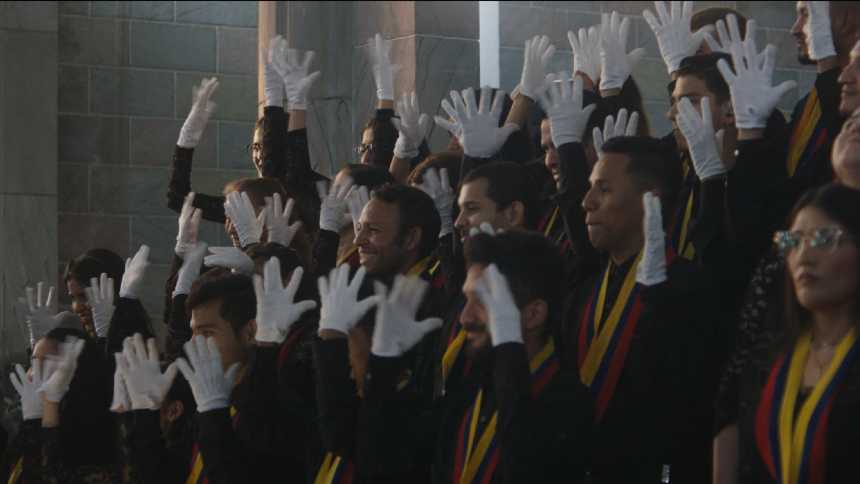
The documentary shows how Fidelio took Dudamel back to his roots in Venezuela and to a project created by El Sistema in 1995: the Coro de Manos Blancas (or Choir of White Hands), formed by deaf musicians.
“At the time, I conducted the first concert of this choir. I was a teenager, without a full understanding of what it was all about,” the conductor recounted at the event, which NeoFeed attended. “But that was already a connection with the impossible: deaf young people singing Beethoven’s Ode to Joy . It was the most natural way for me to connect with that community,” he added, before an audience of about two thousand people.
The documentary showcases an audacious project by the conductor and his team as they select, train, and rehearse 12 of these musicians for the opera, performed in sign language alongside professional singers, actors from the Deaf West Theatre, and the Los Angeles Philharmonic at the Walt Disney Concert Hall.
“The most important thing was to bring justice to a community that is sometimes segregated for no reason. By changing our perspective, we realized a completely different world,” said the conductor. “It’s not about inclusion. It would be arrogant to say that we want to include the deaf community in the hearing community. It’s about integration, a natural process.”
“None of this was created by a single person: it was Beethoven, the Manos Blancas Choir , the deaf community, the theater, and many people who came together to imagine the impossible,” says the conductor, who involved his philanthropic foundation in this project. “Beyond presenting concerts, artistic institutions need to consider art as a true tool for social transformation,” Dudamel emphasized.
As Maria said, “Considering who Gustavo is, what he has already achieved, and what he is capable of doing, it is essential to see how this project impacted him in order to understand that the concept of this work goes beyond sound. It gives these musicians the opportunity to become protagonists of an opera, and also of their own lives. This is the power of recognition.”