

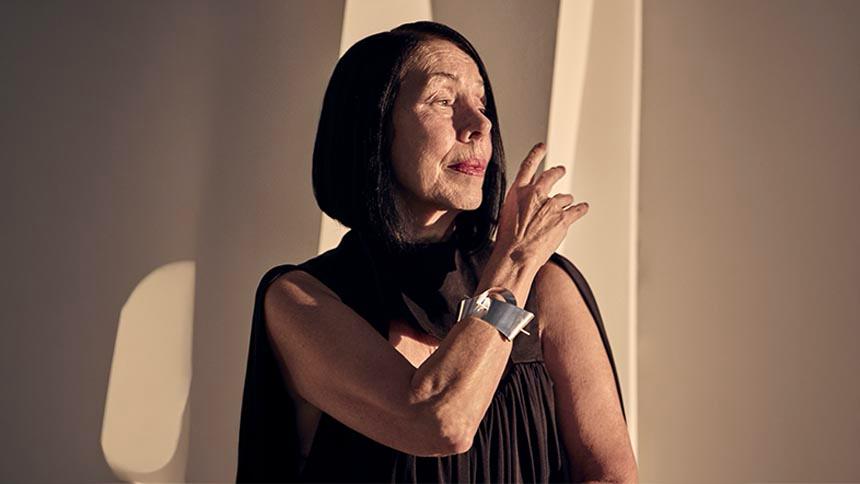
For several years, artist Iole de Freitas has been waking up before sunrise. She sits on her balcony in the Laranjeiras neighborhood of Rio de Janeiro and watches the night give way to day. "I witness an unbelievable dawn," she says in an interview with NeoFeed .
“I keep chasing those moments, anxiously waiting for them to last. It’s a temporal relationship. I’m in the night, in the darkness, waiting, every dawn, to see if the light will come at 4:40 or 5:20. This observation keeps me in a state of expectation.”
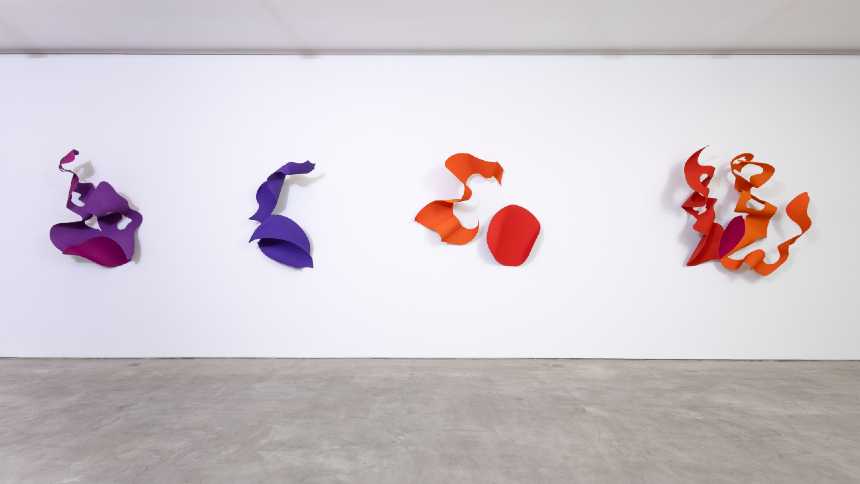
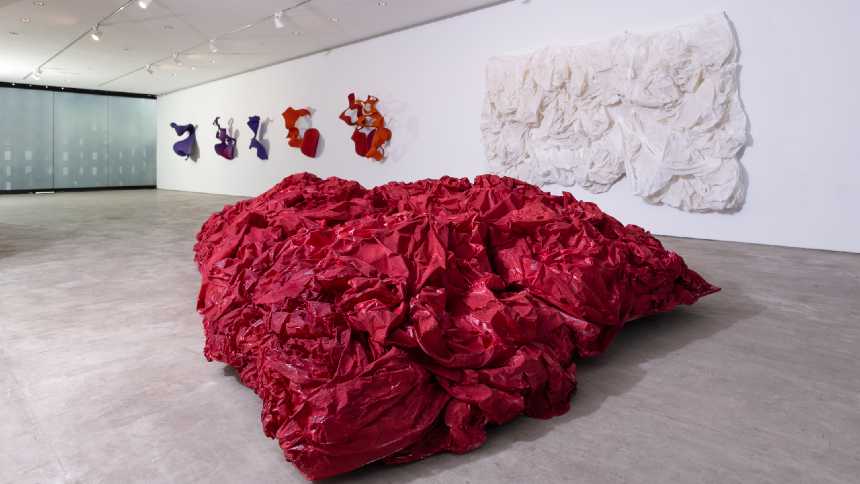
At 80 years old, Iole never ceases to be amazed. In the darkness, she sees the sky open up in shades of violet to magenta, passing through intense oranges, in a continuous movement until the light completely fills the day. From this observation, the artist created the series Nocturnes , presented at the Raquel Arnaud gallery in São Paulo until May 30th.
The sculptures are made of stainless steel, a material she has worked with for decades. With it, she creates fiery forms, giving the sheets a vibrant and light feel. However, she doesn't exploit the metal's shine; she camouflages it. She paints each part of the sculpture with sand and matte paint, in shades captured from the sunrise seen from her window.
“Dawn repeats itself every day, but never in the same way. The light first appears on the horizon. It is there that the structure reveals itself. From it are born waves of distinct colors, always the same, with minimal differences,” he explains.
In Nocturnes , this principle unfolds in the wall sculptures. The sculptures share the same logic, but each one finds its own movement and its own variation of color.
You have to look closely to notice that, just as the sky varies according to the incidence of light, Iole colors each curve with a distinct tone, composing, in each piece, a transition between night and day — some more violet, others warmer.
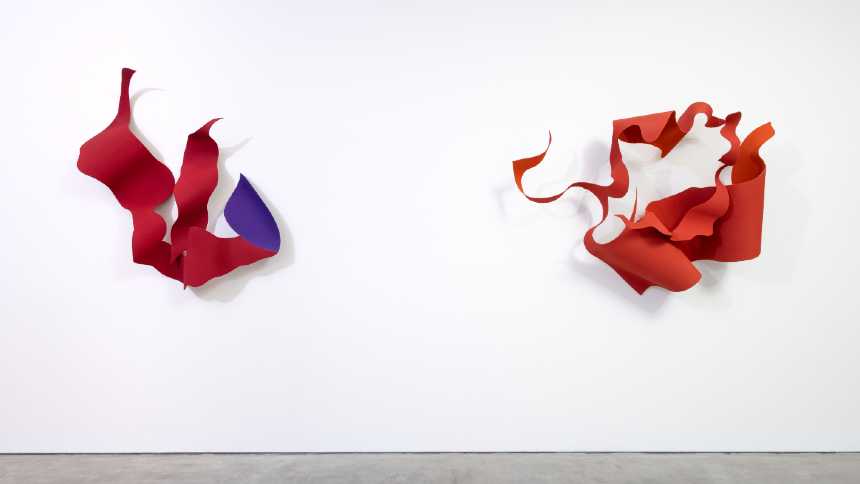
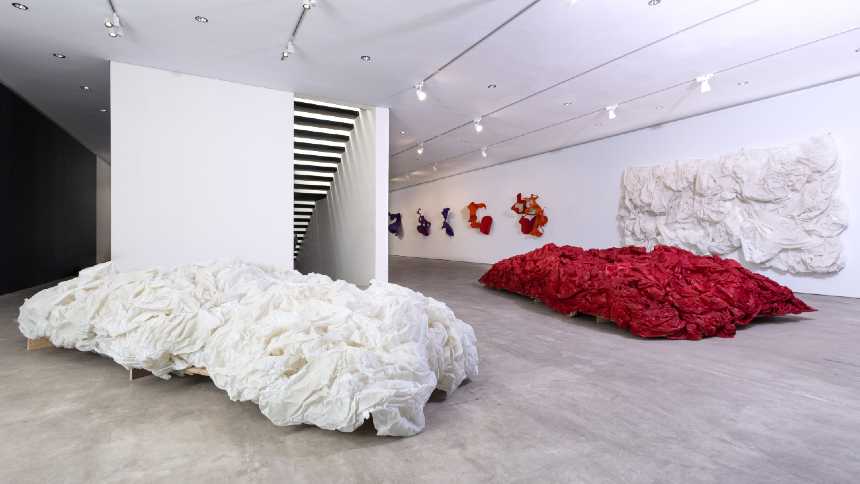
Alongside this new series, Iole also presents the sculptures Mantos , made of glassine paper—a translucent, lightweight, and resistant material. The sculptures explore a tension similar to that of the stainless steel pieces.
In metal, the artist extracts lightness and vibrancy from a rigid material. While, on paper, she starts from something seemingly fragile to affirm its support. With an air blower, she gave it “the breath of life. The paper is now alive. Look: it breathes,” wrote curator Eucanaã Ferraz, on the occasion of the exhibition Making Air , in 2025, at the Paço Imperial, when he presented the Cloaks .
Iole creates texture and volume by inflating the material with folds and creases, which she then colors with a mixture of glue and sand—this time, in white and red. In both sets, the artist simultaneously produces movement and suspension, as if capturing a decisive instant in which light and wind pass, rearranging everything that previously seemed static.
Color and time
Freezing movement and color is a gesture present from the beginning of Iole's career. Born in Belo Horizonte in 1945, she approached art through dance, already in Rio de Janeiro, where she moved with her family. The experience with the body in motion profoundly marked her thinking.
It was in the 1970s, during a stay in Milan, that she entered the world of visual arts. There, she began to use her own body as material. Still under the strong influence of dance, she made photographic and video records of her actions. These records, made on Super 8 and Kodachrome, already show a chromatic variation that oscillates between bluish and orangey tones.
There is, in a sense, a distant rhyme between the recent works and the early ones made on film. In the film, the grain gives the image its own vibration; in the sculptures, the sand gives form to the color.
Over the decades, Iole has materialized the movement, creating sculptures made with wire, tubes, and fabrics. Forms that seem to emerge from the body and expand into space.
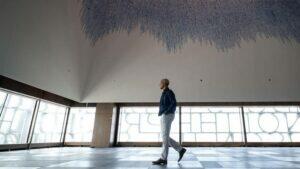
Iole's works grew larger and larger, also extending into the aerial plane of the institutions. Polycarbonate plates and stainless steel rods, which she calls arrows, traversed the spaces, anchoring themselves to the walls and creating tension within the architectural logic that contained them.
Twisted, the transparent surfaces are suspended in mid-gesture, evoking a grand jeté , as if fixing an ongoing movement in the air. In 2007, at Documenta 12 in Kassel—one of the world's most important exhibitions—this vocabulary gained scale and intensity, occupying an entire floor and facade of Friedrichsplatz, the building where the exhibition took place.
Works to wear
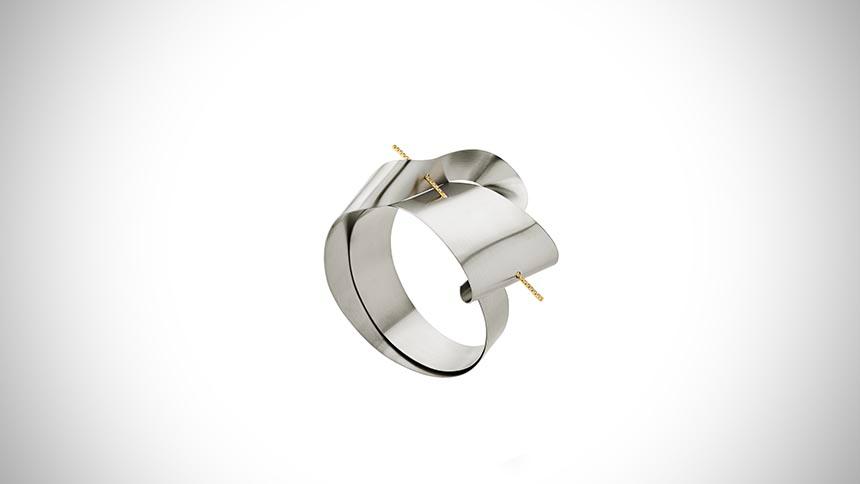
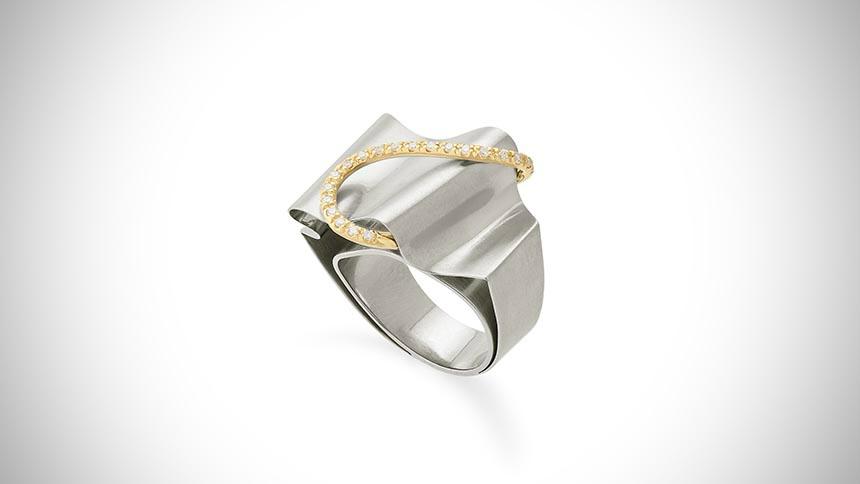
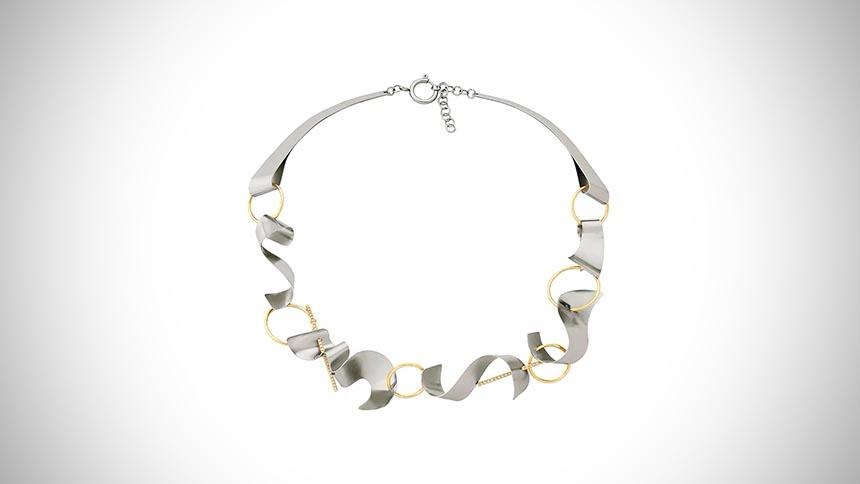
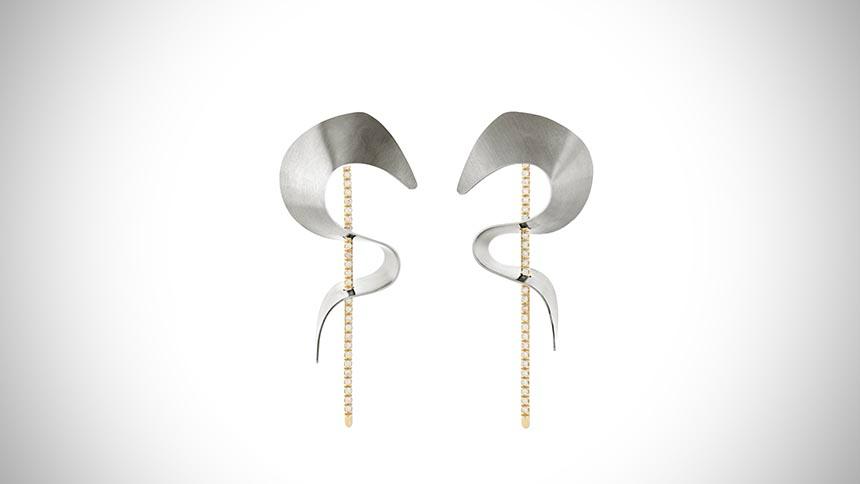
It is from this research that the goldsmiths at HStern started to develop, in collaboration with the artist, the HStern + Iole de Freitas collection. If, in the installations, the work expands to the scale of architecture, here it establishes an intimate measure, of the ear, the neck, the hands.
“It was amazing to watch the process, because while I make twists with sheets of metal measuring six meters by two, the goldsmiths work with sheets of three centimeters by one. And I was observing how they managed to do it,” recalls the artist.
The process took two years. “We agreed that the raw material would include steel — a material they had never worked with before. It’s not exactly the same steel I use in my pipes, but it’s a very high-quality steel,” he says. Iole only became resistant to the use of stones in the pieces.
But he soon realized that the discreet diamonds set in his arrows would not detract from the poetic quality of his work. "It was something very unique; I was overjoyed to witness the admirable craftsmanship of the goldsmiths, who have been working for the brand for over 30 years," he says.
Both the jewelry and the exhibition at the Raquel Arnaud gallery coincide with the celebration of Iole's 80th birthday. In December, she gathered friends at the Museum of Modern Art in Rio de Janeiro to celebrate her birthday and danced all night.
Before each exhibition, she asks herself what she wants to do. And the celebration gave her the energy to create these new works that herald the dawn. “The plastic act is invention, not self-expression. It is language. I create for the other, in relation to the other,” she says.
With no interest in repeating himself, he continues to invent. "I will invent, maintaining a coherence, a connection with the poetics of my work. At 80, I observe things much more."