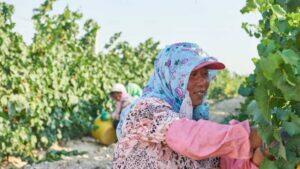


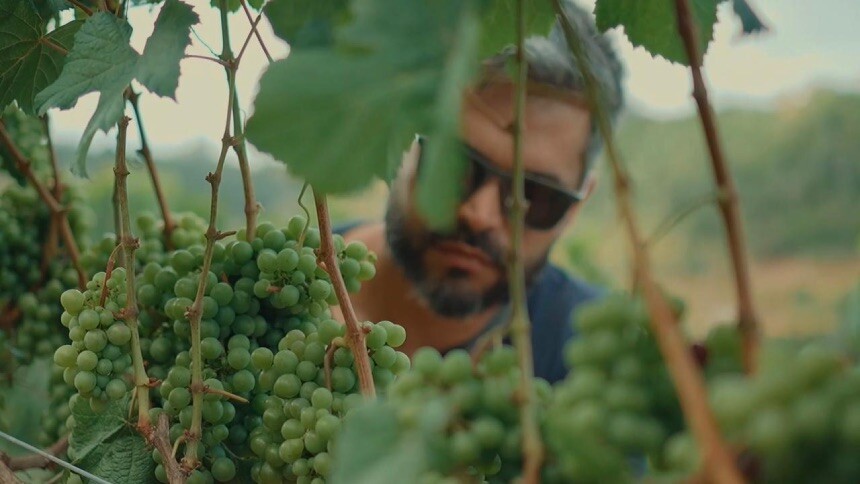

Much is said about the wine boom in the Southeast , but little is heard about the wines of the Northeast. Although the first experiments took place in the 1970s in the São Francisco Valley, the region has not remained stuck in the past. A new wave of expansion is advancing through the northeastern states, beyond the banks of the river.
“They treat the wines of the Northeast as if they were all the same, but they are not,” says agronomist Walter Leal, from Vitti Consultoria em Viticultura, to NeoFeed . “There is enormous diversity.”
Ultimately, the Northeast is a vast mosaic of different climates, soils, and altitudes. From the humidity of the coastal zone and the coolness of the semi-arid mountains to the heat of the arid interior, each microregion demands a unique agronomic solution. There are countless projects, in distinct stages of development—some already well-established; others still under study.
Brazil is the only country in the world to practice three types of viticulture. The South follows the traditional model typical of temperate areas, with harvests in the summer. In the Southeast, Midwest, and the Chapada Diamantina region of Bahia, double pruning has shifted the harvest to the winter. And the São Francisco Valley represents tropical viticulture, where irrigation control allows for two or more harvests per year.
One of the new hotspots on the map of Brazilian wines is the Borborema Plateau. Stretching across the states of Alagoas, Pernambuco, Paraíba, and Rio Grande do Norte, with altitudes between 500 and 1,200 meters, the region is home to "islands" of mild climate amidst the semi-arid landscape of the hinterland—the high-altitude wetlands.
There, 900 meters above sea level, Garanhuns in Pernambuco is establishing itself as a hub for wine production and tourism.
The harvest takes place in the summer, just like in conventional viticulture. With little rain and a good temperature range, the days are so hot that it allows the grapes to ripen without losing acidity—one of the most difficult characteristics to achieve in Northeastern wines.
It all began in 2012, with studies by Embrapa to discover new terroirs in the Northeast. "It was the cornerstone of this entire movement," Patrícia Coelho de Sousa Leão, a researcher at Embrapa Semiárido responsible for the research, tells NeoFeed .
Despite Borborema being located in the band of the globe between the Tropics of Cancer and Capricorn, the vineyards produce one harvest per year – and the result is usually healthy grapes, with perfect ripeness. Could this be a fourth viticultural system? Agronomists and oenologists prefer to call it tropical highland viticulture, just a variation.
Award-winning labels
The first winery in Garanhuns was Vale das Colinas. In 2013, during a wine course, the doctor couple Michel Moreira Leite and Micheline Cavalcante Silva had the idea of planting vineyards. When they contacted Embrapa, they learned about the research in the city. "We left in love," Michel tells NeoFeed .
Thus, in 2017, Vale das Colinas was born, the first winery in the Pernambuco hinterland and the entire Borborema region.
Today, Michel and Micheline own 15 hectares of grapes – a significant amount compared to the average two hectares of vineyards in Brazil. With 38 employees, Vale das Colinas produced 29,000 bottles and received 26,000 tourists in 2025.
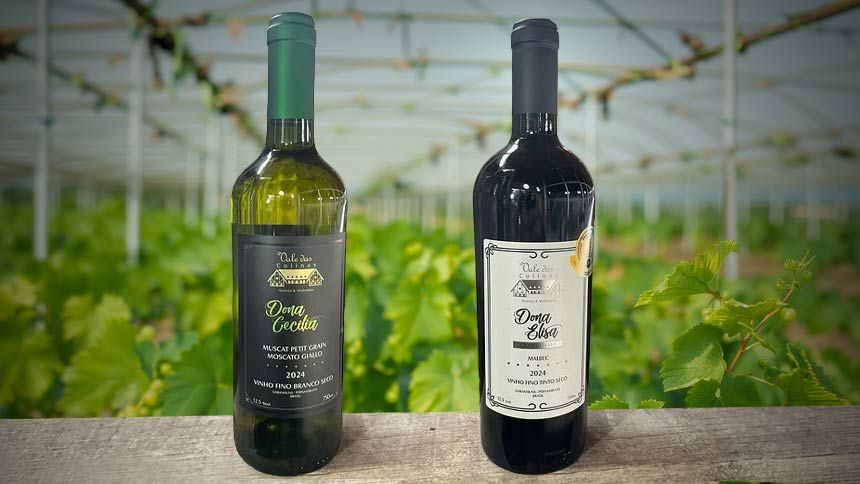
Several of the wines produced by the couple have already won awards, such as the Dona Elisa Gran Reserva 2024 red wine, a 100% Malbec, and the Dona Cecília 2024 white wine, a blend of Muscat Petit Grain and Moscato Giallo, both gold medal winners at the Grande Prova de Vinhos do Brasil 2026.
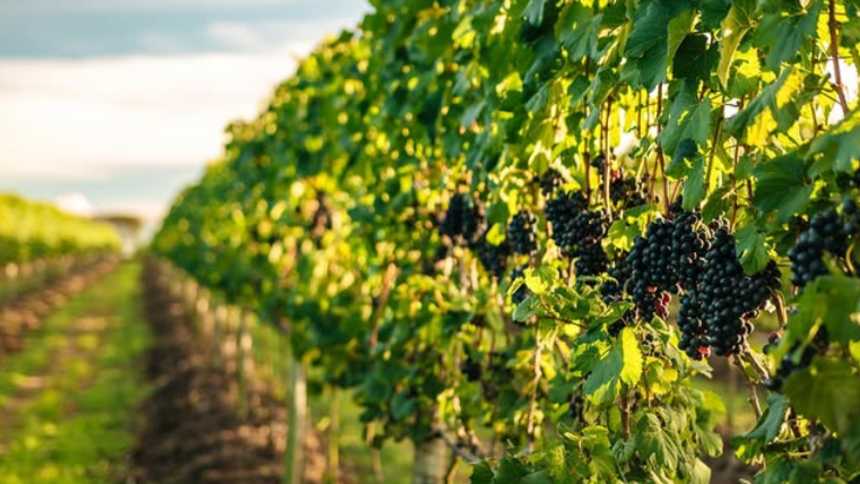
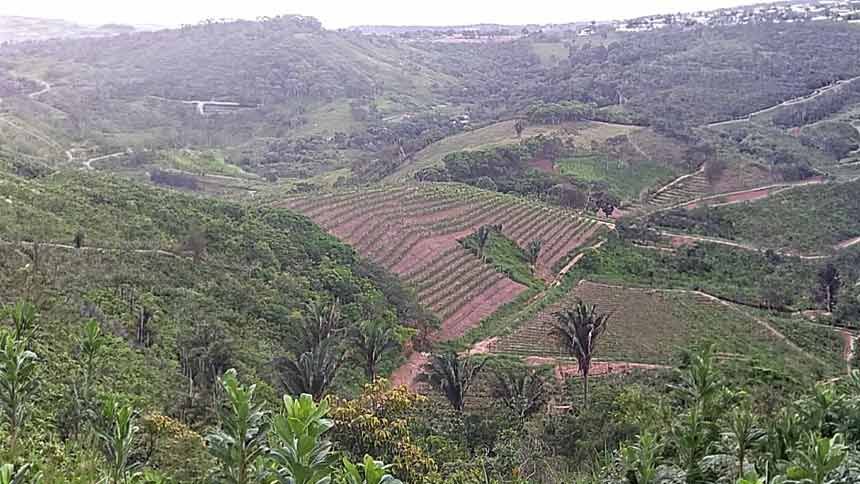
About 300 kilometers to the north, still in Borborema, lies Bananeiras, in Paraíba, another microregion that is beginning to attract attention. The municipality was not included in Embrapa's research and entered the Northeast's wine-growing map through the initiative of two or three entrepreneurs.
The pioneer was Johan Gonçalves, founder of Vinícola Gonçalves in 2023. After passing the business in João Pessoa on to his children, he bought land in the region in 2022. "I wanted an activity," he tells NeoFeed . "And I thought about making wine." For now, he has only done test winemaking. Commercial harvests will only happen when the construction of the industrial unit is finished.
Telson Ferreira, a lawyer and partner at Alteza Condo Resort in Bananeiras, decided to create the Casa Ferreira winery in 2023 after traveling with his wife and a couple of friends to the Serra Gaúcha region.
“We are making history by planting wine grapes in the interior of Paraíba,” he tells NeoFeed . In 2024, he planted the first vines. And, at the end of 2025 and the beginning of 2026, he harvested his first crop.
He took the grapes to be vinified at Vinícola Mello, in Garanhuns, by the Chilean winemaker Cristián Sepulveda, from the Terra Nossa winery and consultancy in Espírito Santo do Pinhal, in the São Paulo portion of the Serra da Mantiqueira mountain range — and responsible for producing a good portion of the wines from the new wine-producing regions.
"When he saw the grapes, he told me I had found a good terroir ," the lawyer proudly states.
Producers say that Malbec and Sauvignon Blanc thrive in Bananeiras, but there are still no scientific studies on varieties or management practices in that microterroir. It is therefore too early to determine a style for the wines.
Outsmarting the humidity
Of the projects in the Northeast, perhaps the most surprising is that of the vineyards near the coast. Very humid, these areas have always been considered unsuitable for growing grapes – especially the more delicate wine grapes, which are exposed to all sorts of diseases. But some are taking the risk.
In Rio Grande do Norte, just 30 kilometers from Natal and 47 from Pipa beach, in São José do Mipibu, the Casa das 7 Evas winery is already in operation, although not yet fully completed. But why make wine there?
In addition to the advancement of agricultural technologies that are spreading vineyards throughout Brazil, one must also take into account the pioneering spirit of some entrepreneurs.
“I wanted to make my land financially viable, but this project had a very attractive element: the challenge of doing something almost impossible,” recalls Evanildo Palatinsky, partner at Vinícola Casa das 7 Evas, from Paraná, to NeoFeed .
“It really does have a lot of moisture,” attests winemaker Marcelo Minosso, Evanildo’s partner. “Almost impossible,” however, doesn’t mean impossible.
By conducting all sorts of tests and taking every precaution, he is realizing that, with the right pruning of the leaves, the grapes don't get damp or cook in the scorching sun of the northeastern beaches: "In the summer, which is drier, we are achieving good ripening and maintaining the acidity."
When the news gets around, surely other brave souls will try the same.