

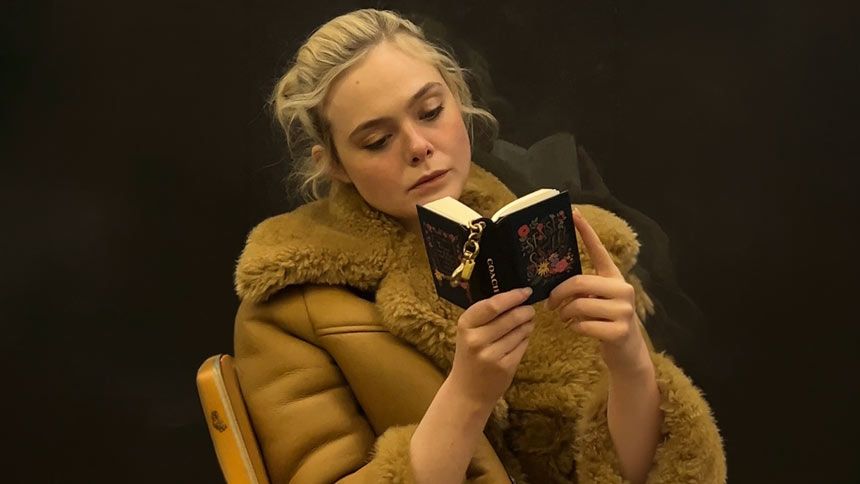

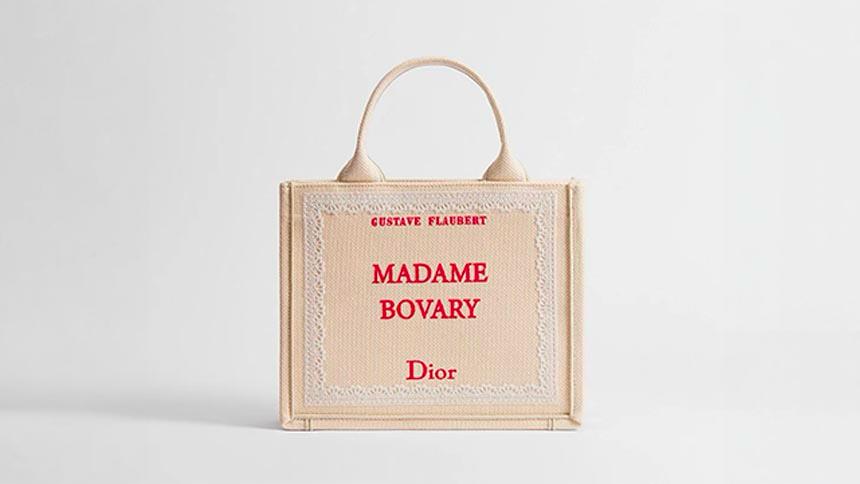
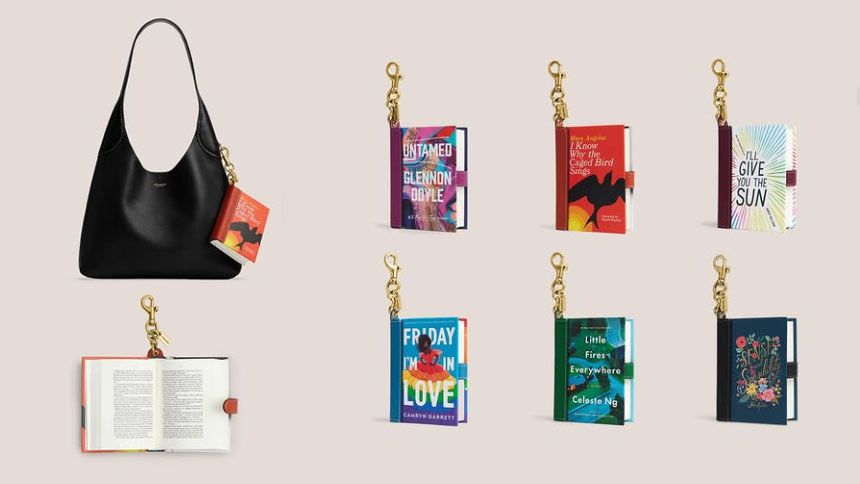
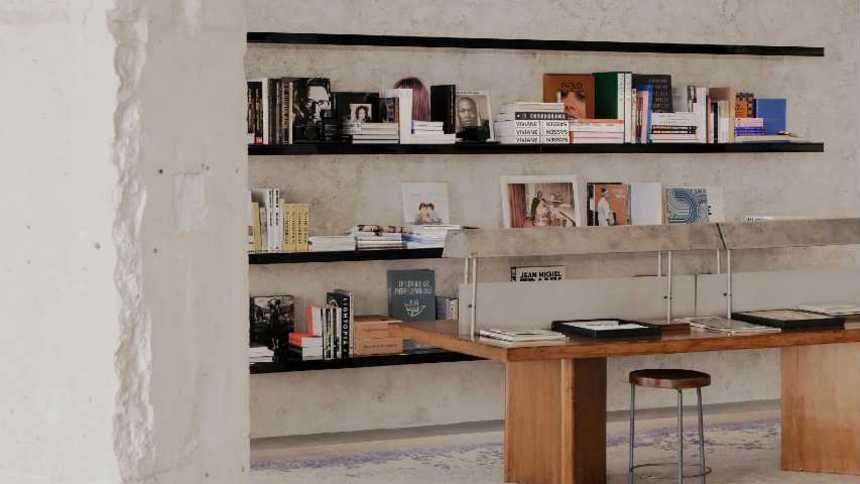
The American company Coach miniaturized books and transformed them into handbag charms . The French brand Dior printed titles of literary classics on its new collection of tote bags , while Yves Saint Laurent opened a bookstore in Paris and the Italian brand Miu Miu travels the world with its itinerant book club.
When high fashion incorporates books and reading into its universe, it's not just a style trend. It's the clearest sign of a radical paradigm shift. If in the past reading was linked to the idea of intellectual deepening and personal development, today it also functions as a status symbol—especially among young people.
On TikTok , Instagram , and X , ways of showcasing reading are multiplying. In videos with dynamic cuts, precise framing, visual effects, and soundtracks, users flaunt their literary preferences. Photos of well-organized bookshelves have even gained a hashtag — #shelfies; a combination of " shelf " and " selfie " in English.
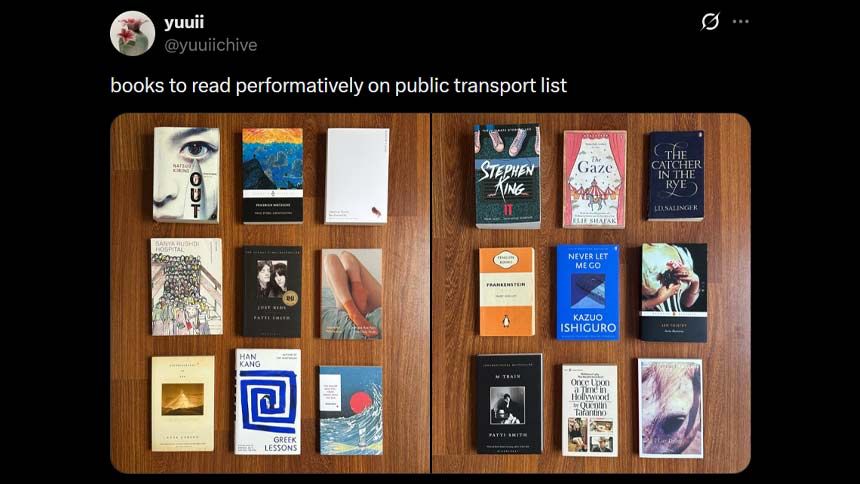
In cafes, on the beach, at home, or at a rock concert, the scene is always carefully composed. On X, the profile @yuuiichive, for example, suggests the best books to "perform" on public transport.
It's like that common trend among gym-goers: "If you don't post it, it doesn't count," where memes play on the idea that without an online record, the effort is in vain. If you don't post it, you didn't read it.
Under the logic of "performative reading," the book becomes a sign of social distinction. "Literature becomes part of a narrative of identity and belonging to a community," says Marina Garrote, research director at the think tank Reglab, in a conversation with NeoFeed .
Making reading a showcase of lifestyle habits is, ultimately, a way of demonstrating power, as suggested by the French sociologist Pierre Bourdieu (1930–2002). Between the 1960s and 1970s, he developed the idea of "cultural capital," according to which knowledge, skills, and aesthetic preferences also serve to define positions in society.
At the moment when Jane Austen's Sense and Sensibility becomes a Coach " book charm " for US$95, or Gustave Flaubert's Madame Bovary adorns Dior bags for US$3,300, cultural (and social) prestige becomes radicalized.
Meanwhile, online, literary communities are buzzing. On TikTok, the hashtag #BookTok has accumulated nearly 400 billion views, with over 52 million videos created.
“What makes BookTok particularly powerful is its ability to generate stories about stories (...) creating layers of meaning that go beyond the original work,” reads the report BookTok in Brazil and new literary experiences , released earlier this year by Reglab. “Users are not just readers, but co-authors of a collective metanarrative about what it means to read, belong, and share in the digital environment.”
And, as Marina points out, in the digital world, communication is mediated by emotion, by the personal experience of influencers — which humanizes reading and, therefore, brings it closer.
Real-world impact
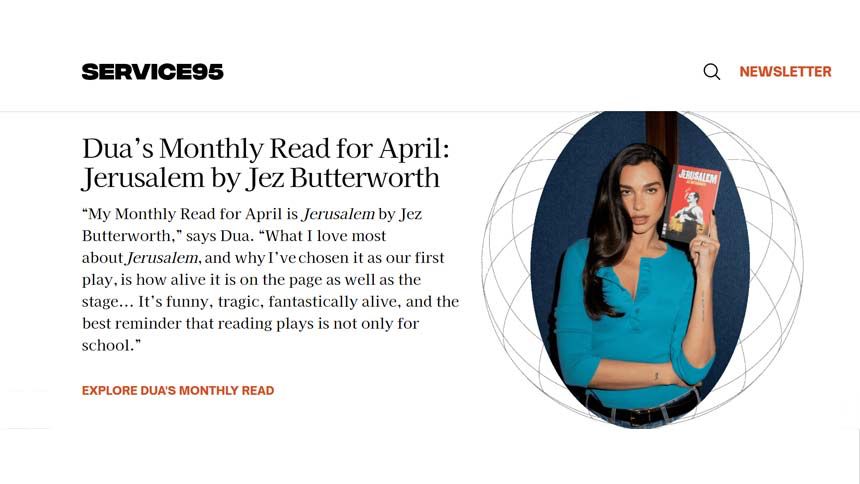
Another pillar shaking up the online literary market is book clubs created by celebrities. Pop icon of Generation Z , the Albanian singer-songwriter Dua Lipa, has amassed around 700,000 followers on her Space95 in just over two years.
Older and more established, Reese's Book Club, founded by American actress and producer Reese Witherspoon, has 3 million subscribers. Compared to the audience of influencers dedicated to pure entertainment, these numbers may seem small. But they are large for culturally curated content.
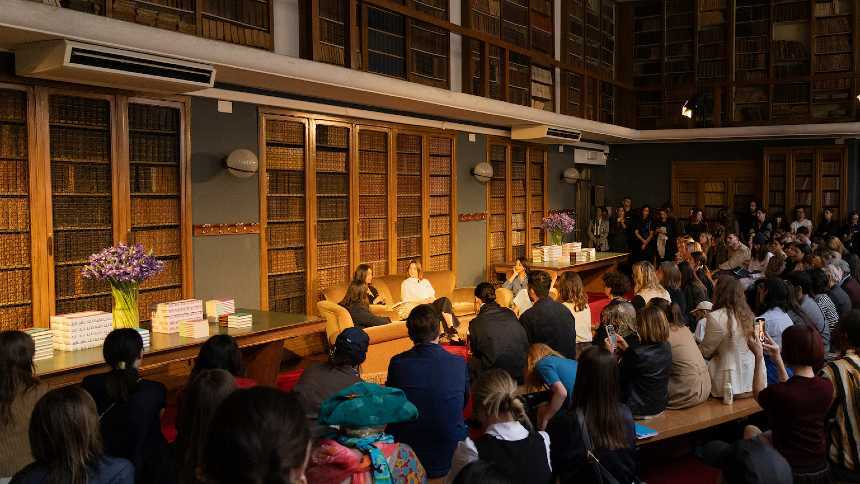
Thus, virtual communities end up influencing the publishing market. "After all, to use the book aesthetically, you need to have the physical book," argues Marina. In other words, the idea that online technology would eliminate paper is unfounded. Not at all—at least not yet.
It's common to find entire sections in bookstores dedicated to "TikTok hits." Around 55% of the titles selected by Witherspoon's team reach The New York Times bestseller list—a phenomenon known as the "Reese effect."
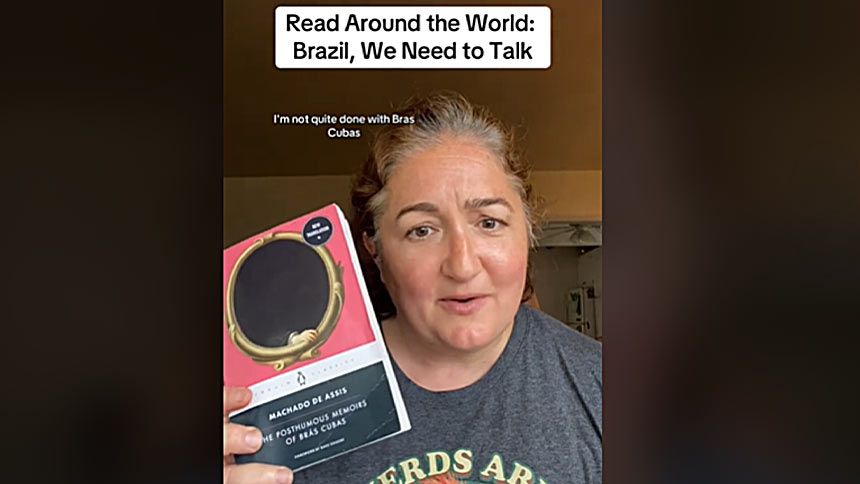
At the speed of scrolling , old titles gain new life. In 2024, after an American woman went viral expressing her enchantment with *Memórias póstumas de Brás Cubas* (Posthumous Memoirs of Brás Cubas) , Machado de Assis's work topped the bestseller list. A novel from 1881!
At the same time, publishers are investing more and more in premium editions and reinforcing the image of the book as an object of desire. The buzz in the digital world is so great that the Jabuti Prize created this year the category Incentive to Reading — Digital Culture , aimed at influencers.
New readers
“What stands out at this moment is the role of social media as important vectors of discovery,” says Sevani Matos, president of the Brazilian Book Chamber (CBL), in an interview with NeoFeed . “Digital platforms have begun to directly influence purchasing decisions, creating a more horizontal dynamic based on identification and belonging.”
In 2025, 18% of the Brazilian population aged 18 or older will have purchased at least one book—a two percentage point increase compared to 2024. Of these, six out of ten get their information about reading from social media, according to the third edition of the Panorama of Book Consumption in Brazil 2026 survey.
During the same period, the number of readers who buy a book recommended by a TikToker increased by almost 70% — going from 3.5% to 5.9%, according to data from a CBL survey in partnership with the consulting firm Nielsen BookData.
In theory, by 2025, Brazil will have gained 3 million new readers. And the majority of them are in the 18-34 age group, which together increased by 3.4 percentage points.
"In theory," because there's a huge difference between buying a book and reading it. Experts, however, don't seem to pay much attention to the debate that contrasts superficiality with depth.
“It is more productive to understand this phenomenon as part of a broader ecosystem,” argues Matos. “Keeping the book in circulation, present in conversations and associated with different forms of expression, contributes to strengthening reading in the social imagination.”
Experience, according to the president of CBL, shows that contact with literature doesn't always begin in an in-depth way. “Many reading journeys begin with trends, viral recommendations, or momentary curiosity. But even content considered performative can function as effective bridges,” he states. “The important thing is that there is an entry point.”
Considering the digital frenzy surrounding literature, the door is wide open—it remains to be seen if it will be used. After all, if a book is a symbol of cultural status even before it is opened, it is in the act of reading, silent and invisible, that it reveals its true transformative power.