



The childhood of many millennials was marked by the morning routine of watching cartoons on SBT while drinking a glass of chocolate milk. However, starting in 2012, with the understanding that advertising directed at children constituted an abusive practice, broadcasters began removing children's programming from their schedules.
Without advertising, it became impossible to keep shows like Bananas in Pyjamas , The Fantastic World of Bob, The Powerpuff Girls , or SpongeBob SquarePants on broadcast television. As a result, the Silvio Santos Group saw the age profile of its viewers (and consumers) increasingly shift towards the elderly.
Now, CEO Ana Karina Bortoni, who has been in the position since the death of Silvio Santos in August 2024, is trying to reverse this trend. "It's not just about rejuvenating. It's about expanding the audience," explains the executive in a conversation with NeoFeed .
The strategy encompasses virtually all of the company's businesses and has a clear objective: to win over future consumers without losing the connection with the "old guard"—who helped build historic brands like SBT, Tele Sena, and Jequiti.
To that end, Ana Karina has been implementing a series of innovations in order to keep up with the changing behavior of Brazilians.
The public that used to go to lottery outlets to pay bills has switched to digital banking. The consultant who went door-to-door has started selling via WhatsApp . The child who watched cartoons on broadcast TV has migrated to YouTube . And the viewer who used to wait for programming in their living room now consumes content on their cell phone — whenever and wherever they want.
The transformation of Tele Sena happened mainly through digitalization. While previously purchasing tickets essentially depended on a visit to a lottery outlet, post office, or physical point of sale, today consumers can buy them directly through their cell phones. This change eliminated a significant barrier for younger consumers, accustomed to handling virtually everything via their smartphones.
Currently, more than 60% of sales are made through digital channels, and the age range of the brand's audience, previously over 50, is now approaching 35. "It's interesting when someone says, 'My grandmother used to buy it, now I buy it too,'" says Ana Karina.
Cebolinha's scent
At Jequiti, the challenge is similar. The brand was born and grew supported by direct sales, a physical catalog, and face-to-face meetings between consultants and their clients. It was the world of the scented magazine, of "rub here to smell it," of purchases made at home or at work. Today, the representative sells via WhatsApp, sends payment links, receives payments via Pix (Brazil 's instant payment system), and needs to control inventory in real time.
Therefore, Jequiti has been testing a platform with over 7,000 consultants, where they can access the catalog, check stock, register orders, generate payment links, and track payments.
The goal is to reduce friction and transform a huge base of registered users into a more active operation. The company has over 1 million registrations per year, but less than 40% act as repeat sellers. A large portion buys for their own use or for their family, taking advantage of discounts.
Jequiti has also been focusing on a portfolio more heavily reliant on partnerships. Among the products are perfumes named after the country music singer Ana Castela and the characters Hello Kitty and Monica's Gang .
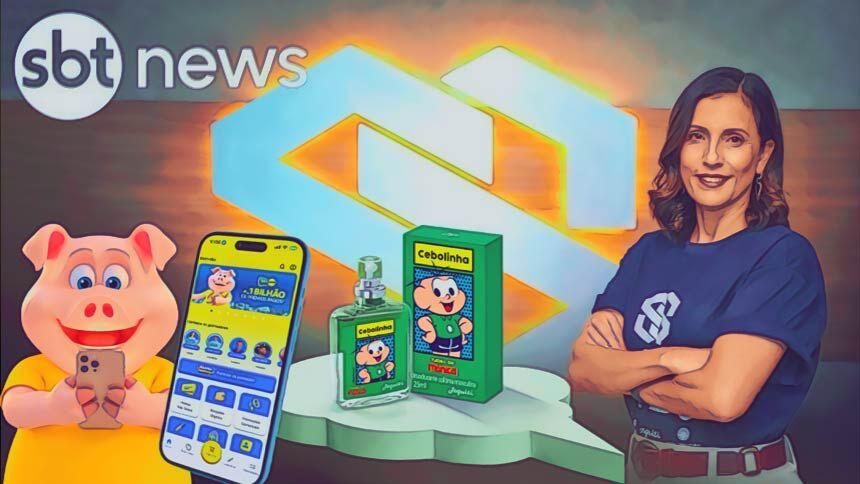
Cebolinha's perfume, for example, became a phenomenon: with prices between R$ 20 and R$ 40, the children's fragrance gained unexpected appeal among adults.
The turning point came after a video by influencer Renan Garbuio Gandara went viral on TikTok . In just three days, the company sold the equivalent of what it normally sold in an entire year of the product. The perfume continued to gain traction and, currently, one unit of the 25 ml version is sold every 30 seconds on the brand's e-commerce site.
Over the past three years, the participation of the 34-year-old audience in Jequiti's customer base has jumped from 40% to 73%.
At SBT, the discussion about rejuvenation is a bit more sensitive. The channel carries a powerful emotional connection, but faces the same challenge as all free-to-air TV channels: communicating with a generation that no longer organizes its routine around the programming schedule.
The group's response has been to expand digital distribution. According to Ana Karina, +SBT wasn't created to be a " Netflix of SBT," but an extension of broadcast television, bringing together soap operas, classic programs, children's content, and productions that engage with the channel's historical base.
The idea is to allow the public to watch SBT wherever they want, without turning the platform into a direct competitor to the major streaming services .
SBT Kids was created as an alternative to the disappearance of cartoons from the daily schedule of free-to-air TV. Instead of trying to maintain a children's programming block at specific times, the group decided to concentrate this content in the digital environment, where children already spend a considerable amount of time.
"My daughter is 18 years old and has never seen a large television. She only watches on her cell phone," says the executive.
Another strategy was the launch, at the end of last year, of SBT News. The aim is to take journalism beyond broadcast television, distributing content through pay TV, streaming, YouTube and digital platforms.
For decades, the Silvio Santos Group helped shape the consumption habits of millions of Brazilians. Now, for the first time, it needs to learn the habits of a generation that never woke up early to watch cartoons on SBT.