

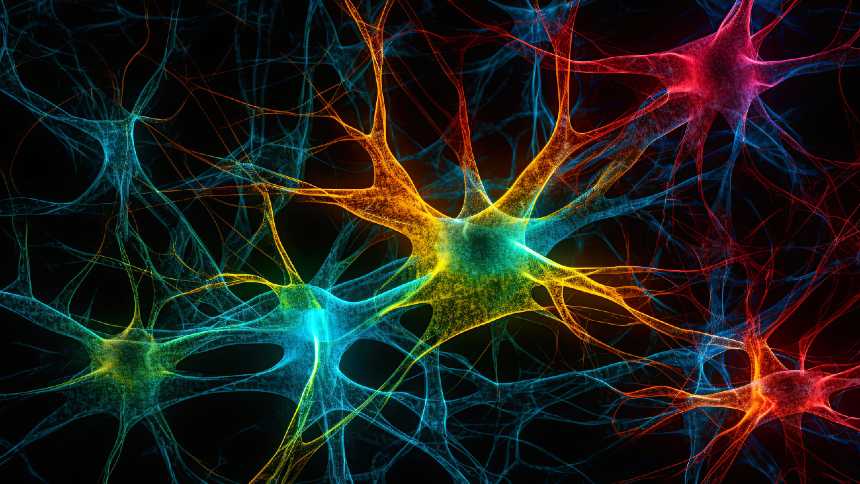

Many scientists and philosophers consider the human brain a kind of "final frontier" to be conquered. This expression, however, should be understood more as a powerful metaphor—inspired by space exploration—than as a literal consensus. It is a way of expressing how much we still don't know about this organ, which functions as the body's integration center and plays a decisive role in who we are.
The scale of this challenge can be illustrated by numbers. There are approximately 86 billion neurons, and each one can establish between one thousand and ten thousand connections, forming a network of trillions of synapses. It is thanks to this complex web of electrical and, above all, chemical signals that we think, feel, and exist—and that vital functions, such as heartbeat, blood circulation, and hormonal regulation, are coordinated.
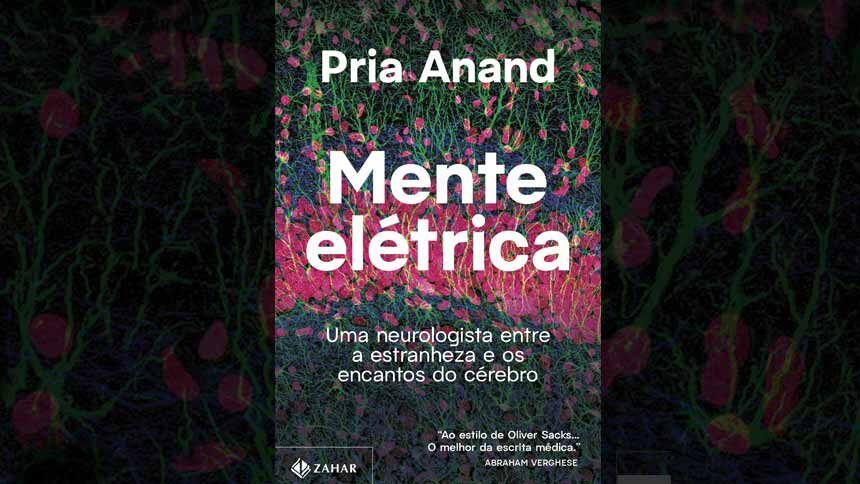
In Electric Mind: A Neurologist Between the Strangeness and Charms of the Brain , recently released in Brazil, physician Pria Anand offers the reader what she herself defines as "a fascinating journey through the strange—and sometimes wonderful—landscapes of neurological disability."
With her debut work, she has been hailed as the "heir" to Oliver Sacks (1933-2015). Starting in the 1970s, and especially in the 1980s, the English neurologist broke with the overly technical tradition of medical writing by transforming clinical cases into engaging narratives, in classics such as *The Man Who Mistook His Wife for a Hat* . With her own unique style, Anand continues the dialogue between medicine and literature.
In the book, the neurologist tells the story of the girl who, after her first kiss, believed she had suddenly gone blind. And the story of the woman with seizures haunted by the same four chords of a single song every month. There's also the case of the mother whose baby, she swears, was switched at birth. Or the family that believed they were the target of a curse that prevented all its members from sleeping.
In neurology, the doctor explains, illnesses are often closely linked to the narratives surrounding them: the clues to unraveling them are hidden both in the details of patients' life experiences and in what the body itself reveals. "The stories are engraved in the very structure of the brain, to such an extent that the impulse to narrate survives and even intensifies after the most devastating injuries," writes Anand.
Her own personal experiences as a doctor, mother, and patient served as the foundation for her study, exploring the strangest ways in which our brains can go astray. She does this from her work at the hospital in Boston, to her childhood in India, and her experiences in the Peruvian Amazon and Conakry, the capital of Guinea.
Like neural connections, Anand intertwines memories, medical cases, and neuroscience to present the different types of what he calls "wounded brains." His purpose is to demonstrate a central paradox of neurology: even the most perplexing symptoms can reveal something universal about what it means to be human.

His starting point is his grandfather's harsh childhood in rural India, marked by illness, poverty, and a scarcity of basic necessities. "It was difficult for my grandfather to remember when he had contracted polio, such was the frequency of fevers caused by annual episodes of malaria," he recounts.
Despite the adversities, he studied, worked, and built a remarkable career. In his old age, the late effects of the disease appeared silently and progressively. "Seeing him frail on the examination table, I felt the story inscribed on his body," observes the doctor.
The diagnosis revealed not just a clinical picture, but a bodily biography—the body as an archive of life and a harbinger of the future. “I understood then that the body holds truths and prophecies,” says Anand. That moment with his grandfather marked his vocation: not only to treat, but to interpret bodily narratives, understanding medicine as a form of reading.
For Anand, medicine emerges as a field where science and humanity coexist. Since childhood, the narrator has demonstrated a fascination with stories, initially mediated by her sister. Nightly narratives served as a refuge from silence. The brain is, to a certain extent, a storyteller. "Studies on the divided brain [into two hemispheres] show this need: even in the face of contradictory behaviors, the left hemisphere seeks to justify them with plausible stories."
Medicine, in this sense, becomes an interpretive practice. However, it recognizes that not all stories are heard or valued equally. Illnesses are experienced and interpreted differently according to gender, social class, and historical context.
Working in a hospital where most patients are vulnerable, Anand encountered narratives that are usually made invisible. Inspired by Scheherazade from One Thousand and One Nights , the neurologist proposes listening to and honoring these stories in an attempt to understand the human experience.