

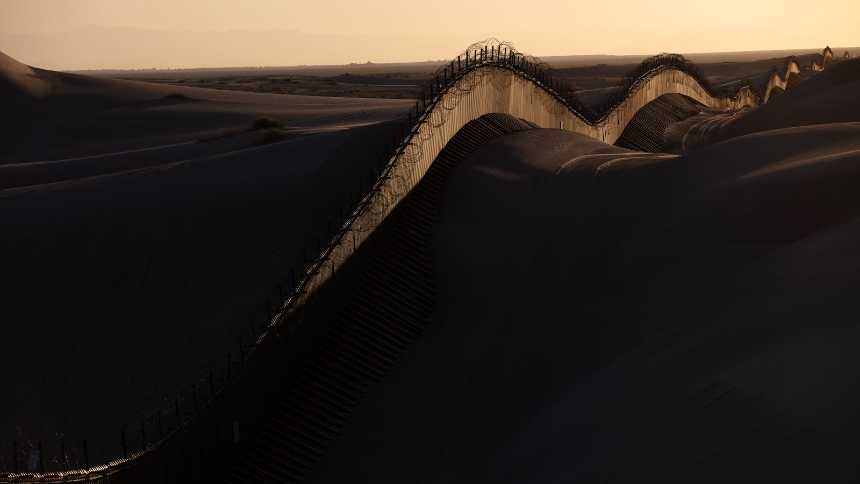

In the middle of the desert, following the undulations of the terrain, a wall divides the territory. The construction tears through the landscape. The golden light casts a long shadow that accentuates the abyss imposed by that barrier. The image is seductive. Is it an art installation? An image created by artificial intelligence?
An unsuspecting observer might ask themselves these questions. The photograph , however, is real. These are images of the wall that divides Mexico from the United States , taken by the Brazilian photographer Christian Cravo.
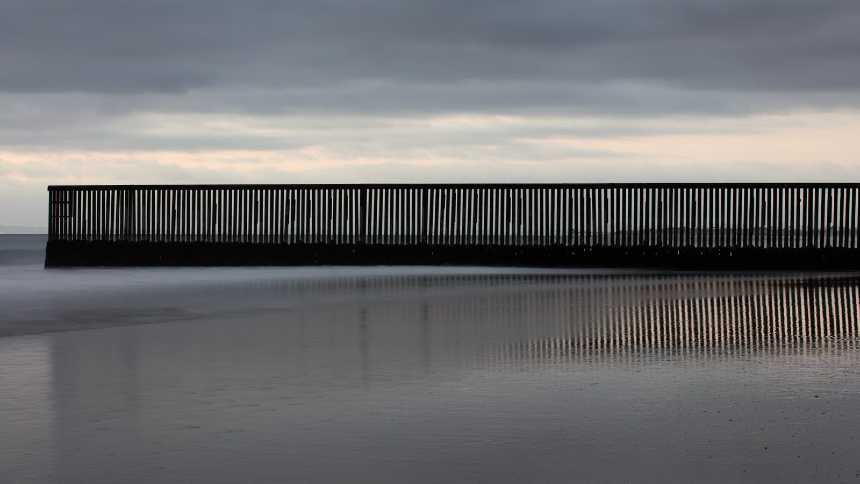
Christian spent about two weeks on the border, documenting the 3,140-kilometer wall between the two countries. "What intrigues me about this project is understanding the role of artists in presenting certain situations," Christian tells NeoFeed .
"I don't want people to simply look at that wall and see only something horrible, laden with moral judgment. I want to provoke them to look and, paradoxically, perceive it as a beautiful image. I want people to have this confusion regarding what is ugly, beautiful, moral, and immoral."
Christian achieves this goal. His photographs capture the golden light of the beginning or end of the day and explore intense contrasts, transforming the five- to nine-meter-high structure—made primarily of vertical steel beams, concrete panels, and crowned with barbed wire—into compositions of strong graphic appeal. The beauty of the images, however, makes them all the more unsettling.
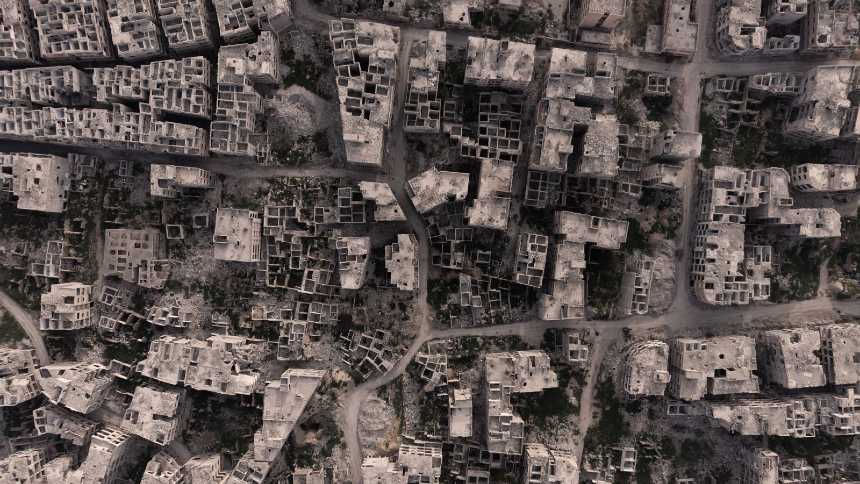
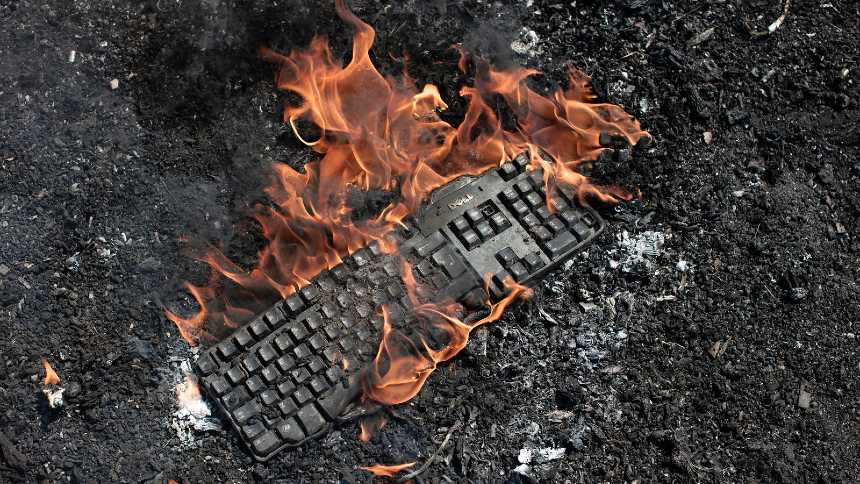
These photographs are part of the series Anthropic Landscapes , in which Christian investigates the marks of human intervention on nature—also called "anthropy." They show how humanity transforms the landscape, whether through environmental tragedies or the impacts of war, consumption, or the exploitation of natural resources.
Family inheritance
Just a few minutes of waiting to take a photo were enough for a border patrol agent from Mexico to appear, ready to inspect what the photographer was capturing.
Christian acknowledges that he moved around that territory with a privilege that is hard to ignore: being a white man with a European passport and fluent in English. This social advantage helped him enter and leave the United States with relative ease. "That certainly affected how they treated me," he says.
The son of renowned photographer Mário Cravo Neto and Danish woman Eva Christensen, Christian lived in the United States and then in Denmark from the age of eight to twenty-two. Photography also became his form of expression.
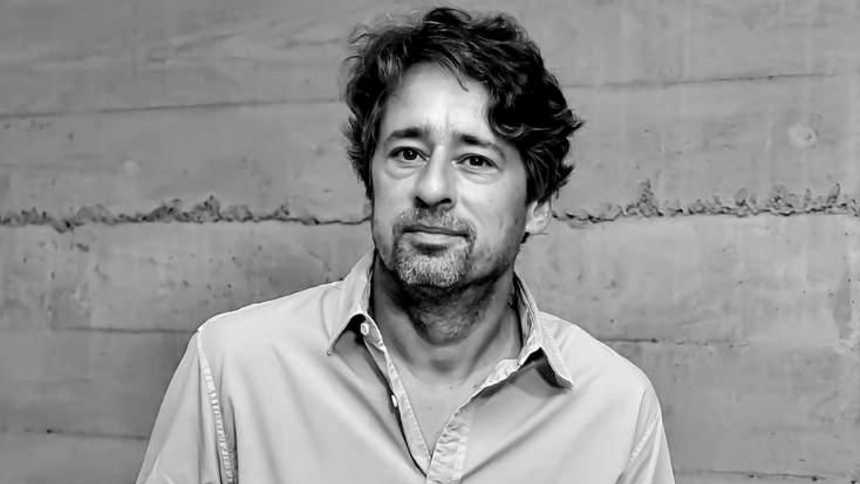
Like his father, he built much of his career working primarily in black and white. Anthropogenic Landscapes marks his first series completed in color.
“For me, photography has always been a black and white language. I joke that it evokes our primitive, ancestral vision when we see in black and white,” says the photographer.
The black and white photograph, however, brings a dramatic quality that Christian didn't want for this project. "I wanted to present the destruction and environmental imbalance in a more neutral way. That's why it had to be in color," he explains. "Pollution is colorful."
In many of the disasters photographed by Christian, color ceases to be an aesthetic element and becomes a given of the tragedy itself. "I have to show the color," the photographer states. Without abandoning the rigor in the construction of light and shadow that marks his black and white essays, Christian began to explore these same contrasts in color photography.
The difference is that now, color also carries information. "I need to show the black of the tires on the almost white sand of the Kuwaiti desert, the artificial colors of the garbage in the landfills of India, the textile pollution in Accra," he explains. "Color is part of the story I'm telling," he explains.
Provocation and conversation
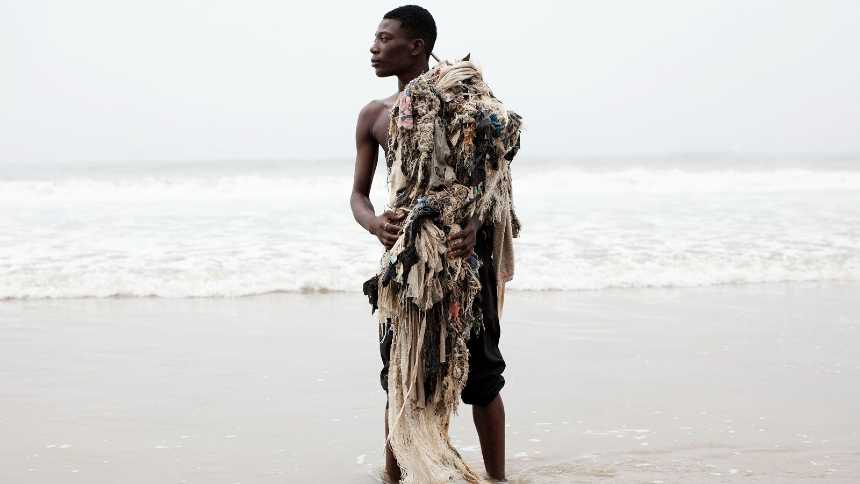
Today, Christian travels the world in search of paradoxical images: tragic and, at the same time, beautiful and unsettling. One of the essays in the series was carried out in Accra, the capital of Ghana, one of the main destinations for used and surplus clothing from the fashion industry.
It is estimated that around 111,000 tons of textile waste arrive in the African country every year. The city is only able to collect and process 30% of this volume. The remaining 70% ends up being illegally dumped in open landfills, on beaches, or is burned, worsening environmental pollution.
At first glance, Christian's photographs resemble a fashion editorial. But the people portrayed are members of the WonBeeGaBa collective, which works to clean beaches and develop solutions for plastic recycling.
In addition to collecting plastic waste, the group also tackles mountains of clothing and fabrics that wash ashore daily. It is precisely this textile waste that they are carrying in the images.
"The artist's proposal needs to be, above all, paradoxical," he reflects. "If you want to stimulate dialogue and thought about the work, it needs to provoke. Provocation is the beginning of a conversation. And that's very important."