

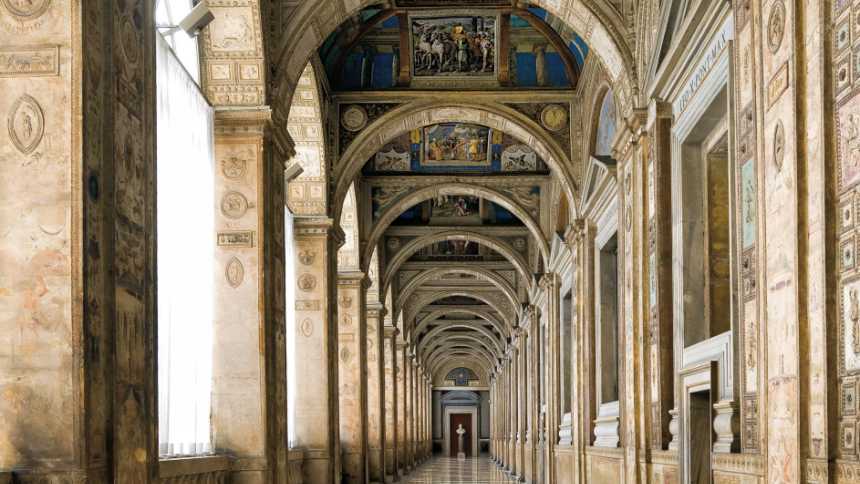
Rome — “The space was beautiful, but old and faded.” That was the reaction of American Stephen A. Schwarzman, recalling his first impression upon visiting the Loggia di Raffaello ( Raphael Gallery), a corridor in the Apostolic Palace, the official residence of the popes in the Vatican . More than just a passageway, it is a hybrid space between architecture and painting, designed to impress.
But such beauty could not withstand almost 510 years of age, and the need for intervention arose. “People who know people” brought the project to restore the Renaissance masterpiece to the CEO of the Blackstone management company, Stephen Schwarzman. And he immediately agreed to participate.
“I’m Jewish, but my wife, Christine Hearst, is Catholic, and I move around a lot in that community,” Schwarzman said in an interview with NeoFeed . “We thought it was a great idea to be a part of it.”
Through his foundation, the investor donated US$14.3 million to the initiative, which includes the revitalization of the frescoes, the modernization of environmental conditions, and the implementation of advanced technologies for the conservation and documentation of the heritage.
Schwarzman is one of the leading names in global private equity. At the helm of Blackstone, he heads one of the world's largest alternative asset managers, with US$1.3 trillion under management. In recent years, he, whose fortune is estimated at over US$40 billion, has focused his philanthropic efforts on education and culture.
Among his best-known initiatives is the donation of US$350 million to the Massachusetts Institute of Technology (MIT) for the creation of the Schwarzman College of Computing. There is also the contribution of US$150 million to Yale University and £185 million to the Schwarzman Centre for the Humanities at the University of Oxford .
Beyond the global visibility of the masterpiece's restoration, the announcement gains symbolic weight by bringing Stephen Schwarzman and Pope Leo XIV closer together.
During a recent visit, the businessman met with the Holy Father in private and brought a gift that is becoming increasingly common in the Holy See's diplomacy: a team jersey. This time, the gift was a jersey from the New York Knicks, a basketball team from New York .
The piece was signed by three players who attended Villanova, the Augustinian Catholic university in Pennsylvania, where the pontiff studied and graduated in Mathematics in 1977. The gesture helps to illuminate the nature of the project itself: a network of connections between American culture, global philanthropy, and the historical heritage of the Catholic Church .
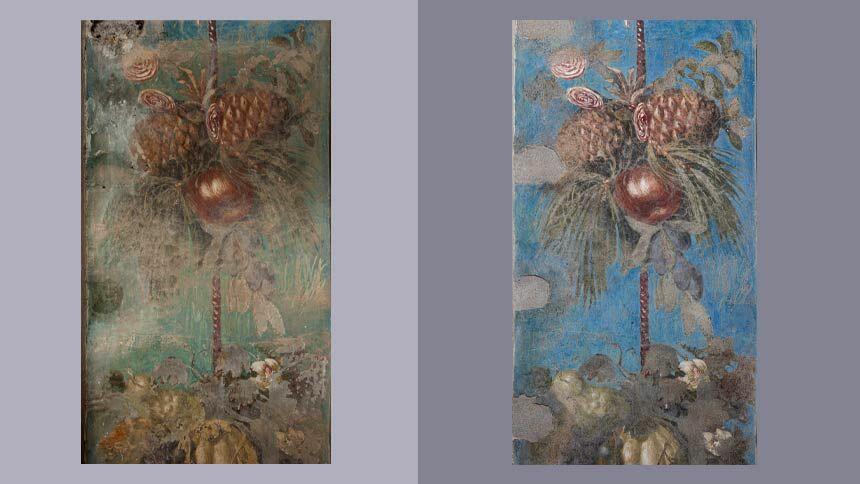
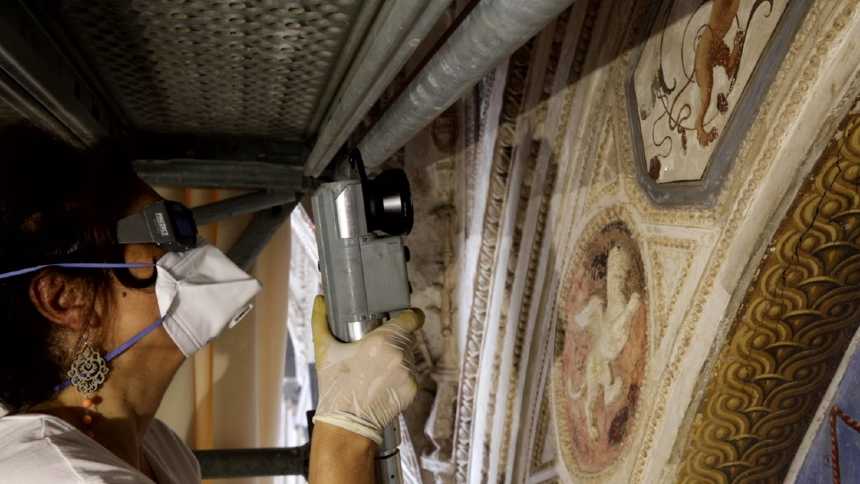
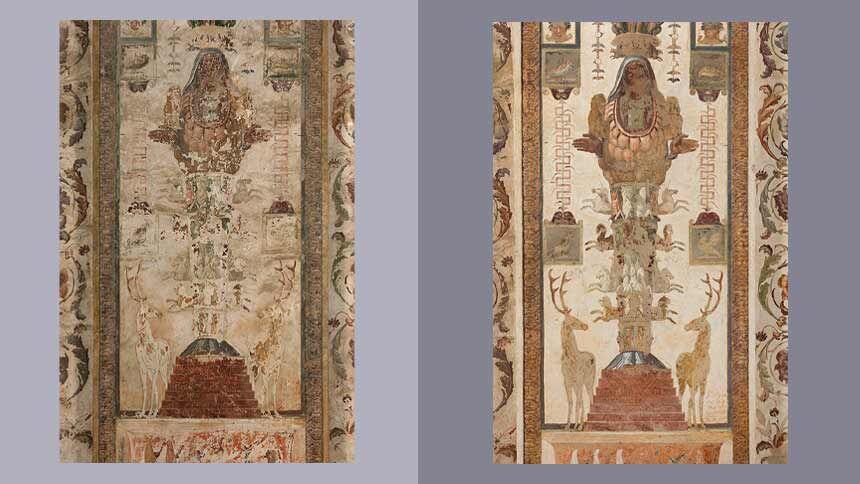
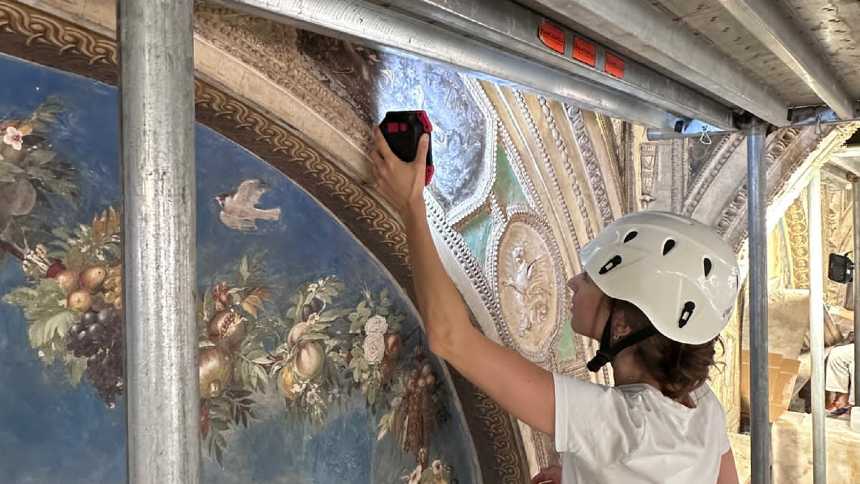
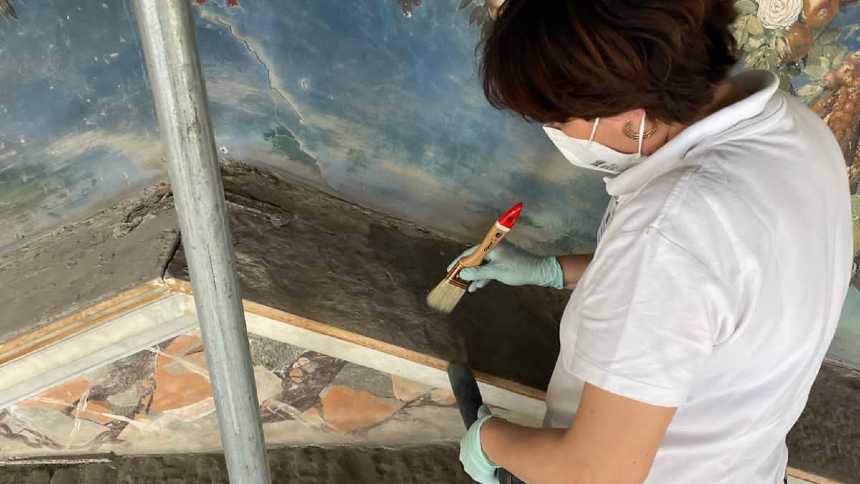
The intervention is already underway and is expected to last five years. During the presentation of the project at the Lapidary Gallery of the Vatican Museums last Wednesday, June 24, the restorers detailed the use of a state-of-the-art technology called active fiber laser.
Operated by around 20 specialists, the equipment, similar to small pistols, performs a dry cleaning with millimeter precision — removing layers of residue accumulated over centuries without touching the artwork.
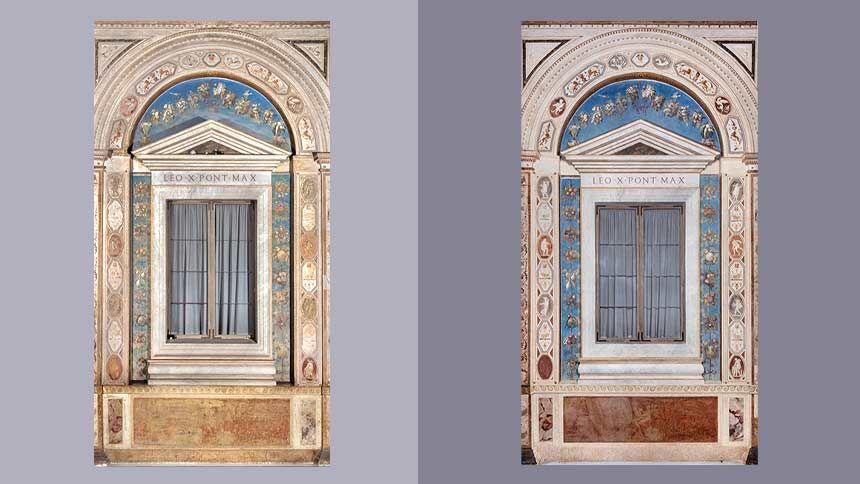
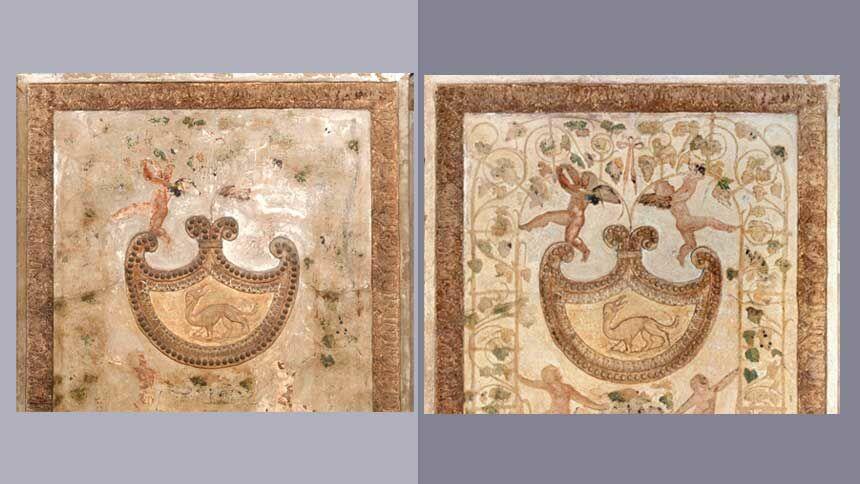
Gradually, the gallery's approximately 1,300 square meters are regaining the original vibrancy of its colors and the clarity of its original compositions.

The origin of the Loggia di Raffaello is linked to the Vatican renovation program initiated by Pope Julius II Della Rovere (1503–1513). He entrusted the architect Donato Bramante (1444–1514) with the task of reorganizing the complex.
The idea was to connect the Apostolic Palace to the Belvedere Courtyard through a monumental sequence of spaces, creating an architectural perspective that would simultaneously affirm the centrality of the Church and the ambition of a reborn Christian Rome.
It is in this context that Bramante conceives the structure of the Loggia as a multi-tiered path, marked by classical language and the notion of order as an expression of power. The intervention establishes the basis for what would later be developed by Raphael Sanzio (1483–1520).
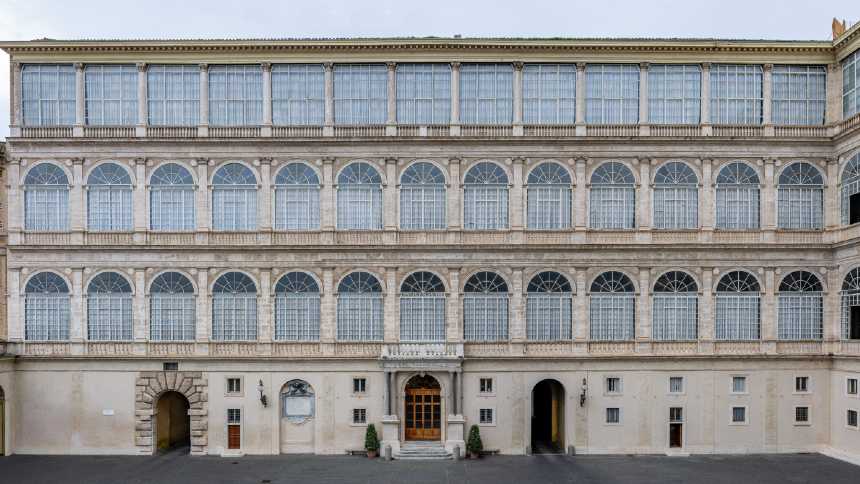
Located on the second floor of the Apostolic Palace and facing the courtyard of St. Damasus, where heads of state are received for audiences with Leo XIV, the gallery is one of the most sophisticated examples of early 16th-century art applied to architecture.
Measuring approximately 65 meters in length and organized into 13 sections, it structures a continuous path, in which each section of the ceiling is occupied by episodes from the Old Testament in the initial segments and a conclusion dedicated to the New Testament in the last.
Under Raphael's supervision, between 1517 and 1519, the execution of the paintings was divided among his main collaborators. Giulio Romano (1499–1546) was responsible for the biblical scenes. Giovanni da Udine (1487–1564) conceived the grotesques.
The decorative compositions, which combine plant elements, fantastical figures, and ornaments, were inspired by classical antiquity—especially by the discoveries at the Domus Aurea, the palace built by Emperor Nero (37–68 AD) after the fire of Rome in 64 AD.
The result is a pictorial surface that takes up and reinvents the Roman decorative language, transforming it into a continuous Christian narrative.
The restoration of the building directly addresses this historical accumulation of layers of wear and tear. In addition to meticulous cleaning, it includes the complete replacement of windows and sealing systems with high-performance structures capable of filtering ultraviolet rays and reducing heat entry, without compromising the original aesthetic appeal.
The operation is part of the Legacy of Raphael: The Vatican and Beyond program of the World Monuments Fund, an international organization dedicated to the preservation of historical cultural heritage around the world, with ongoing technical training and digital documentation.
In this context, Barbara Jatta, director of the Vatican Museums, highlights the historical role of the work within the career of the "Divine Raphael," who dedicated his last years to the papal see.
“Raffaello’s Loggia is one of the most important and delicate ensembles in the world. It concentrates, in extraordinary detail, the total ambition of the Renaissance and the creative force of the artist and his team,” she states.
At the end of the process, controlled visits are planned for specialists and scholars, with the possibility of progressive opening to the public, always under strict safety criteria.
Renaissance art is not merely an object of preservation, but a space of permanence and transition, where past and present, conservation and use intertwine—showing the world how the dialogue between faith and culture is more relevant than ever.