


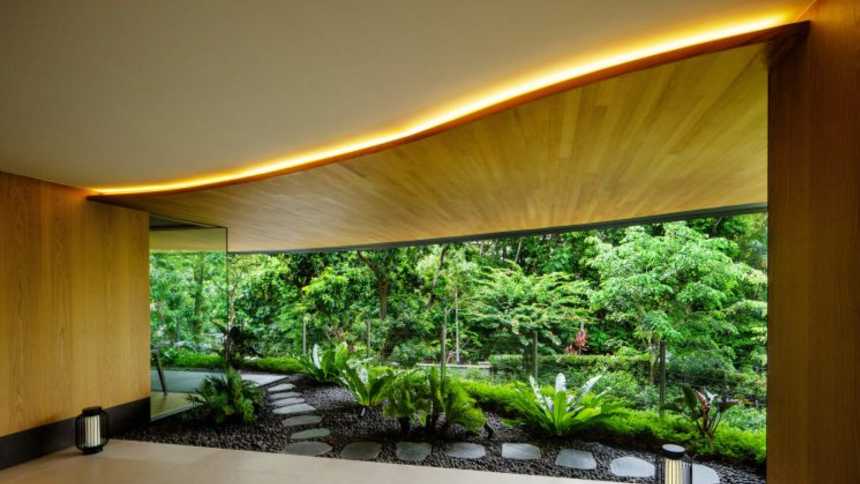
The idea of the home as a refuge has become one of the most enduring clichés of the post-pandemic era. It has been repeated by developers, brands, and magazines to the point of almost losing its meaning. But now there is a more concrete shift. The home is beginning to be evaluated by its capacity to give back to its inhabitants some of the energy that daily life consumes.
This changes the role of decoration . For a long time, interiors were treated as representational settings, intended to communicate taste, status, or modernity. The new value doesn't eliminate the image, but subordinates it to the emotional performance of the space. The question ceases to be simply "how does this house look?" and begins to include "how does it make someone function?".
This difference between appearance and performance is evident in the data from the Life at Home Report 2024, commissioned by IKEA , which surveyed 38,630 adults in 39 countries. According to the survey, 36% consider it important to feel pleasure at home, but only find this experience sometimes, rarely, or never.
Sleep emerges as the primary activity associated with physical and mental well-being. Organization, hobbies, companionship, and personalization are also linked to greater satisfaction with home life and a more positive outlook on the future.
The survey was commissioned by a brand that sells home products and should be read with that interest in mind. Its scale, however, helps to make a transformation visible: the home is no longer a neutral container.
It can reduce friction, promote rest, create a sense of belonging, and enhance the feeling of control. It can also do the opposite. Noise, heat, disorganization, lack of privacy, and environments incompatible with routine drain energy, even when the property looks impeccable in photographs.
This is where design ceases to be merely a finishing touch. It organizes light, circulation, acoustics, storage, temperature, and the boundaries between work, rest, and social interaction. An emotionally efficient home doesn't need a sauna or a meditation room. It needs to minimize distractions and support the genuine rituals of those who live in it.
The shift is also evident in how interiors are being conceived. British editor Michelle Ogundehin called this approach, less concerned with the appearance of simplicity and more attentive to how spaces breathe, age, and affect well-being, "new purism."
Solid wood, stone, clay, and tactile surfaces reappear not only as an aesthetic language, but also for their durability and ability to age without appearing obsolete. The interior ceases to be a disciplined image and once again embraces use, memory, and transformation.
"The market is starting to reward properties that promise deceleration, identity, and less operational friction."
The real estate market has already begun to translate some of this desire into price. In March 2026, Zillow, a digital platform for the American real estate market, analyzed more than 2 million properties advertised in the United States in 2025 and compared more than 600 terms present in the descriptions with the actual sale prices.
Homes with piers traded for 5.4% more than expected; outdoor kitchens, for 4.4%; outdoor showers, for 4.3%. The term "cottage" appeared associated with a premium of 3.2%, while outdoor fireplaces added 2.8%.
The most relevant data point, however, lies in the combination of personalization and reduced wear and tear. Customized features added approximately 3% to the price. Ready-to-move-in properties were sold for 2.9% above expectations. Those requiring renovations, on the other hand, suffered an average discount of 14%.
In an environment of expensive credit and high construction costs, the buyer wants more than just beauty. They want financial predictability, fewer pending decisions, and a home that can function from day one.
These associations don't prove that a fireplace or an outdoor shower, in isolation, causes an increase in value. Location, construction standard, and property profile also matter. But the combination reveals a trend: the market is beginning to reward properties that promise a slower pace of life, identity, and less operational friction. The value lies not only in what the house possesses, but in the life it seems to make possible.
The expansion of wellness real estate reinforces this shift. In an update released in May 2026, the Global Wellness Institute estimated the sector at US$876 billion in 2025, with the possibility of reaching US$1.8 trillion in 2030.
There's opportunism in this race: piling up gyms, spas, and the word "biophilia" doesn't guarantee well-being. The strategic shift lies in the migration of health and recovery, previously treated as amenities, to the very conception of the real estate product.
For developers, architects, furniture and materials brands, this changes the brief. It's not enough to design an environment that photographs well or reproduces the visual codes of the moment. It will be necessary to show how each decision reduces noise, improves sleep, facilitates organization, increases autonomy, allows for dignified aging, and adapts to the different stages of life.
Design builds value when it transforms abstract well-being into everyday performance.
A home is no substitute for economic security, public health, or human relationships. Nor is it a refuge for those living under threat of eviction, precarious conditions, or violence.
But in a market that caters to consumers with purchasing power, a new layer of value is being built. The next real estate prize may not be the rarest marble or the most photogenic room. It will be the house capable of giving back what the day has taken away.
* Mônica Barbosa is a consultant and curator; with a career spanning over 30 years, she investigates how design structures perception, desire, reputation, and value for brands, businesses, and organizations.