

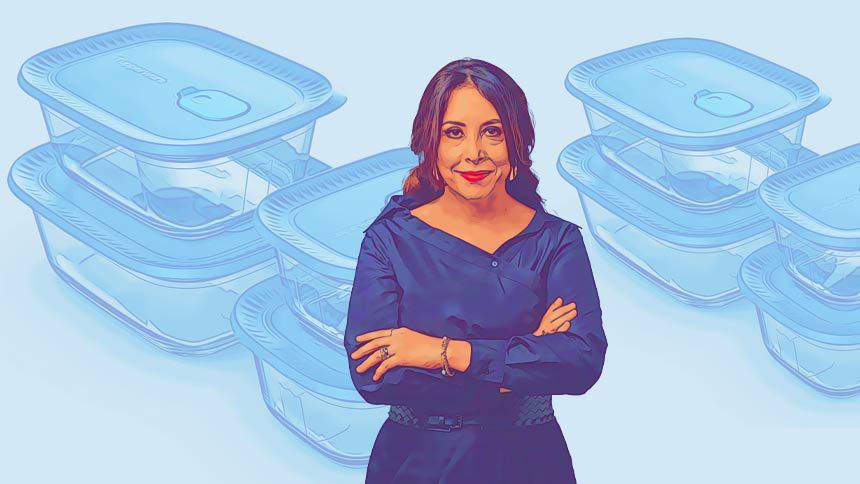

Known in Brazil for its direct sales model, mainly in the 1980s and 1990s, through consultants who hold meetings in homes to offer products, the American company Tupperware wants to rejuvenate its consumer audience, its salespeople, and migrate to other product lines.
Closely associated with plastic containers, the company broke this paradigm and recently entered the glass products sector in Brazil. Ceramic and stainless steel containers are other options under study. The main plan is to recover sales volume in the Brazilian market, the second largest operation in Latin America, behind Mexico.
The first move in this plan has just been made: the change in leadership. Recently, the Mexican company BeFra announced the acquisition of Tupperware's Latin American operations for US$250 million.
The idea is to better balance the revenue of the two countries in which the company operates. Last year, the company's operations in the region achieved revenue of US$270 million and adjusted EBITDA of US$82 million.
Mexico accounts for two-thirds of revenue, with US$179 million in revenue and US$74 million in EBITDA. Brazil has one-third: US$91 million in revenue and US$8 million in EBITDA. The Brazilian market was once a leader in Latin America, but has lost ground.
In the first quarter of 2026, the gap remained significant. While the Mexican market reached US$49 million, the Brazilian market grossed US$22 million between January and March. The strategy devised is precisely to increase this percentage for Brazil.
The recovery plan also comes after the company's struggles in the United States, when, in September 2024, after a period of declining sales, the brand faced a Chapter 11 filing—a mechanism under US bankruptcy law that allows companies to restructure their debts.
But in October of that year, it reached an agreement with investors and creditors, who exchanged debt for control of the company, and ended the judicial reorganization. It was in this context that the Latin American operation, one of the company's most profitable, was sold.
“We went through some difficulties and this affected the Brazilian market. It shook those who had been working in our sales force,” says Paola Kiwi, senior vice president and regional director of Tupperware in Latin America, in an interview with NeoFeed .
"Now, we are in an extraordinary moment, focused on the emotional connection to the brand and on innovation," he adds.
More than just little jars
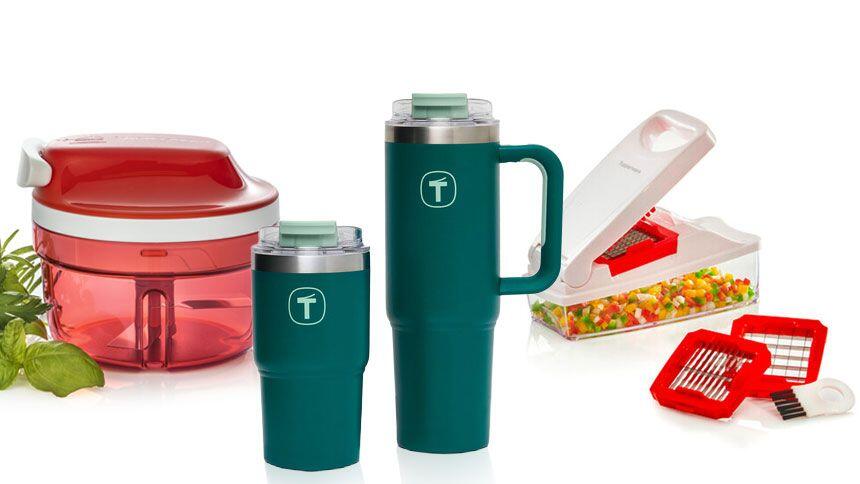
According to the executive, the company sees a focus on new products and new materials as the way for Brazil to regain greater relevance in the region's revenue. This involves accelerating sales of the company's products that are not so well-known in the country, such as pitchers, thermal cups, and household utensils.
“In Brazil, the most relevant categories are related to product preservation. That's where we're known,” says the Chilean executive. “But we now have the opportunity to focus on preparation products, such as cutters and grinders, which are strong in Mexico. We have much more than just little containers.”
The argument for entering the glass serving dish market, rather than focusing solely on plastic, lies in the product's "complete journey." While Tupperware's materials have historically been known for their freezer-safe design and suitability for packed lunches, glass can also be used in the oven, in addition to the refrigerator.
“This means the company is no longer just a company that makes plastic products. We entered the glass market because society is changing, and we feel this demand from the public for other alternatives. We need to evolve,” explains the VP.
The products entered the Brazilian market at the end of last year, and now the company is studying the implementation of other materials. "It solves a problem and can now meet this need of our client."
Tupperware doesn't reveal the percentage that glass products already represent in its revenue, but the expectation is that these new materials will account for a significant share in the coming years. For now, it's still in the single digits.
“As long as I maintain the quality of the product, why not make a ceramic or stainless steel pot? We are not limited to just one material. This could be a path forward. The brand allows us to explore various avenues,” says Kiwi.
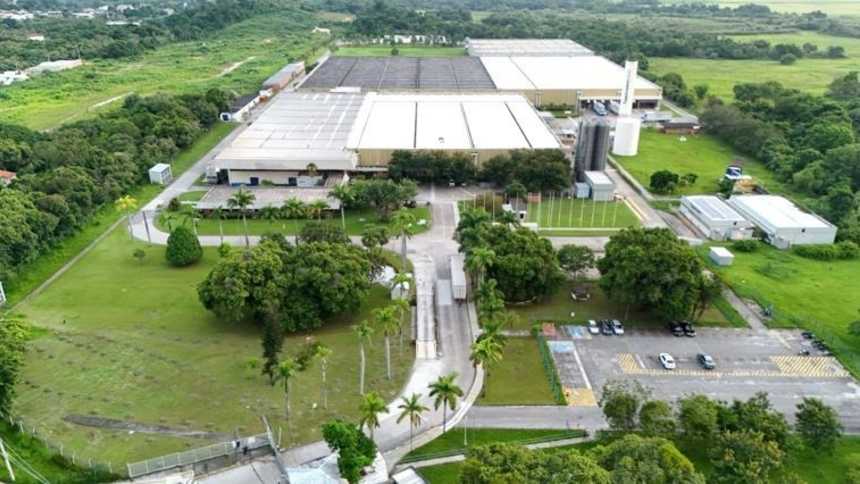
For now, the glass containers are produced in Asian factories, based on Tupperware's own designs and standards. The plastic containers, however, are made in the factory located in Rio de Janeiro.
Omnichannel company
With the new owner, the company should once again allocate investments towards the growth of its operations. This assessment is still being defined by BeFra, according to the executive.
“There is this desire to resume investments, which were paralyzed for several reasons. We stopped investing in technology. We are analyzing what opportunities exist for expansion, including at our factory,” explains Kiwi.
And although the growth avenue lies in expanding the portfolio, the company does not intend to change its sales channels, such as entering supermarkets. The goal is to continue with independent sales consultants, but more connected to the digital world.
“Our salespeople are entrepreneurs seeking an alternative source of extra income or their family's main source of income. Many are formally registered as individual micro-entrepreneurs (MEI). We still have those ladies who hold meetings at home, but most use social media,” says the vice president of Tupperware.
In this regard, the company has been encouraging the implementation of virtual stores on TikTok Shop , which arrived in Brazil last year. The support includes materials and assistance with content development platforms.
With approximately 200,000 independent representatives, Tupperware plans to become an omnichannel company, but only through the sales force of these independent sellers.
"I have a consultant from the interior of Ceará who is one of the biggest sellers in Brazil, because she managed to expand her reach online and today she sells throughout the country," she says.
“The digital market is growing precisely because of its ease of use and the entry of the new generation, who are getting to know us. We will move forward with this audience, but without neglecting physical sales. Demonstrating the functionality of our products still makes a difference,” Kiwi adds.