

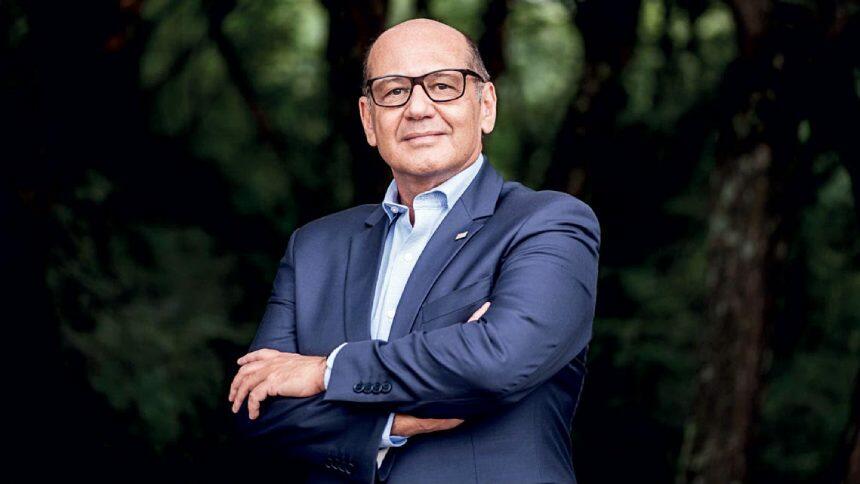
At the helm of the Butantan Institute during the arrival of the first Covid-19 vaccine in Brazil in 2020, Dimas Covas now faces a new challenge. Since last year, as lead scientist at the Chinese company Sinovac, he has been working to secure a US$100 million investment from the company in vaccine platforms in the country—a mission that, according to him, will not be simple.
The pharmaceutical company entered the Brazilian market at the height of the pandemic, through a partnership with a São Paulo institution, which resulted in Coronavac. However, the lack of an effective industrial development policy meant that this advancement did not translate into a permanent platform for vaccine production.
Today, Brazilian healthcare remains dependent on supplies from abroad, especially from Asia. So much so that, to date, Brazil has no vaccine of its own against the coronavirus.
"We are still in the same vulnerable situation. We still don't have a consolidated vaccine industry, to the point of being able to respond quickly to a new pandemic," says Covas, in an interview with NeoFeed .
According to him, the problem is not necessarily a lack of resources, but rather a lack of necessary infrastructure and skilled labor to absorb the new technologies. And, at this moment, Brazil is not prepared to receive the opportunity proposed by Sinovac.
"We need to train people capable of working in this area, technical engineers in the construction of advanced pharmaceutical industries. The country needs to prepare itself to receive these investments," he states.
In any case, the company already has a partnership with the Paraná Institute of Technology (Tecpar) for technology transfer and national production of vaccines against chickenpox and human rabies within a maximum period of 10 years. But there are still major bottlenecks on the part of the institution.
According to Covas, the anti-vaccine movement, strengthened during the pandemic, remains one of the major challenges to public health, and one that has left its mark on national immunization policy.
"It's a difficult battle. I see people no longer giving importance to vaccinating their children. There's an anti-scientific sentiment. It's denying scientific facts that have been proven for over a century," he criticizes. "The greatest struggle of humanity is ignorance against wisdom."
Below are the main excerpts from the interview:
In September, you will complete one year leading the research and innovation area at Sinovac in Brazil. What is the main difference compared to your work at Butantan?
Butantan and Sinovac are different in nature, but in essence, they are very similar. Vaccines represent the institute's main business—and Sinovac's as well. It's a Chinese multinational high-tech company, present in more than 60 countries. The scale and strategy are different. Now I look at the world. Sinovac sees Latin America as one of the most important regions in its business strategy.
From this broader perspective, is Brazil significantly behind?
Brazil is highly dependent on foreign production. Although new vaccines arrive here at relatively the same time as they are used in more developed countries, our autonomy is very limited. More than 90% of complex pharmaceutical products, including vaccines, are produced abroad. It's a multifaceted dependency. China and India have a significant presence in this regard.
Besides external dependence, is access to these products also a problem?
They are efficient, but many have prohibitive prices. They end up being restricted to those who can afford them, to those who have health insurance. This shows that Brazil isn't doing very well in this regard.
And why have we reached this situation?
Today we have a trade deficit of US$20 billion per year in pharmaceutical inputs, including vaccines. This has been happening for decades and is part of a broader process of deindustrialization. Brazil once had 30% of its GDP represented by industrial production. Today it is around 10%.
Does dependence tend to increase as technology advances?
The more technology develops and becomes more complex, the greater the dependence. The policy instruments we have used have not proven sufficient to shorten this distance.
"Brazil ranks 13th in the world in the production of academic articles, but 52nd in innovation."
What needs to be done to change this scenario?
The big question is how to transform knowledge into a product. That's the great dilemma. Brazil is 13th in the world in the production of academic articles, but when we look at the innovation index, the transformation of this knowledge, the country is 52nd. There is a very large difference between the production of knowledge and its transformation into assets for the country. This is a major bottleneck.
Is there a lack of funds preventing Brazil from moving forward in this direction?
It's not a matter of resources. Three years ago, the National Fund for Scientific and Technological Development (FNDCT) released funds, putting approximately R$ 30 billion into circulation.
So, what is the main challenge?
The question is how to transform these resources into productive investment, supporting the Brazilian industry of new technologies in pharmaceuticals and vaccines. China, South Korea, and Japan have been doing this for 20 or 30 years. The issue is applying the correct policy, based on successful global examples. Brazil needs to look more to its peers in initiatives that are working. It's no use dreaming of being American or European. We are not. We need to emulate the most similar countries. China is a good example. Today they are the world's factory.
Has Brazil learned nothing from Covid-19?
We could have learned more. We are still in the same vulnerable situation. We still don't have a consolidated vaccine industry capable of responding quickly to a new pandemic. Many measures were taken, but few actions were actually undertaken. The pandemic was a catastrophe, everyone was impacted, but when it was controlled, the concern disappeared. And many public policies were relegated to the back burner.
"The pandemic was a catastrophe, everyone was impacted, but when it was controlled, the worry disappeared."
Can Sinovac help reverse this situation?
This is one of the company's actions: to contribute to reducing this vulnerability. Sinovac wants to develop local technological and productive capacity. This is what will prepare the country for new challenges. We are prepared for an investment cycle of US$100 million. The issue is that Brazil needs to be ready to receive these resources.
And how can Brazil prepare?
The issue isn't money. It's the need for infrastructure. To prepare, Brazil needs to invest heavily in training people. People capable of working in this area, engineers specialized in building advanced pharmaceutical industries. This is very different from what large multinational companies have been doing in Brazil. The country has to do its part.
What more is needed?
Besides people, there are also institutions. Sinovac has two partnerships with the Paraná Institute of Technology (Tecpar) for technology transfer and national vaccine production. And the institute needs to prepare to receive this technology. It's the same situation Butantan faced a few years ago, with enormous difficulty in incorporating technology in the country.
How have other countries managed to overcome this challenge?
Thirty or forty years ago, China and Korea were economically inferior to Brazil. And they managed to create a system to train people and send them abroad. They made agreements with companies to develop human resources. And that's what led to the current situation. It's a state policy. It can't be reversed overnight.
"Sinovac isn't going to build a factory here and bring in Chinese workers. This is a process that requires a commitment to training people."
Does this put Sinovac's investments in Brazil at risk?
Sinovac isn't going to build a factory here and bring in Chinese workers. This is a process that requires a commitment to training people. The idea isn't just to build a factory, but a technological platform to absorb new technologies. If it's not done this way, the cycle of dependency repeats itself. It's necessary to bring in the vaccines, but also to understand how they are developed.
When is the factory scheduled to be built in Paraná?
The agreement with the Paraná Institute is to produce two vaccines, one for chickenpox and the other for human rabies. The formal deadline for setting up this platform is ten years, but I think that's excessive. I'm thinking of Chinese speed. The effort is to do it faster. Sinovac is prepared. The bottleneck is always on the institutional side, especially the public ones. The resources are for the entire project.
What products does Sinovac currently offer in Brazil?
Brazil has already used the hepatitis A vaccine and, obviously, the initial vaccine, Coronavac, which marked Sinovac's arrival in Brazil. The imported varicella vaccine is currently available through the SUS (Brazilian public health system). And the human rabies vaccine is expected to enter the market in 2027.
"The greatest struggle of humanity is ignorance versus wisdom."
Why, even now, six years after the peak of Covid-19, does Brazil still not have a national vaccine?
Coronavac was an excellent vaccine. It was ready to be distributed nationwide and enter production when the federal government [ during Jair Bolsonaro's administration] discontinued its purchases.
And why haven't other technologies advanced as well?
The same thing happened with other vaccines, with technologies that were being transferred. This was the case with AstraZeneca, which had a partnership with the Oswaldo Cruz Foundation, and the Russian Sputnik vaccine [with the pharmaceutical company União Química] . I don't know why these technologies were considered ineffective, which wasn't true. They opted for an imported one, which dominated the market and was more expensive [the Pfizer vaccine]. These are choices that the country makes.
Do the anti-vaccine movements, which gained strength during the pandemic, still affect immunization policy in Brazil?
Yes. There was an issue that ended up generating a preference among the population for a particular vaccine. It's not the percentage of effectiveness that determines protection. This happened a lot and even led to the existence of vaccine gourmets . I remember that well. People went to vaccination centers and chose the vaccines. This still causes a lot of difficulty in vaccination coverage.
Are we more vulnerable to diseases that were once controlled?
We are once again exposed. The population is not getting vaccinated at the necessary percentage. This is happening in Brazil, but also in the United States. There, the policy has changed a lot. Some vaccines in the United States are no longer mandatory, such as the measles vaccine, a disease that, incidentally, is at risk of returning in Brazil. The anti-vaccine movement is still very strong.
Why has vaccination ceased to be seen as a collective responsibility?
In my day, nobody asked parents if they could give their children a vaccine or not. Today, that's a problem. It's no longer mandatory. Vaccines are instruments of collective protection, not individual protection. And that's what the State is for. It's a difficult battle. I see people who no longer give importance to vaccinating their children. They are denying scientific facts proven for over a century. The greatest struggle of humanity is ignorance against wisdom.
In the event of a new pandemic, what could happen in Brazil?
The country is better prepared, but will surely face difficulties. We have improved some sectors, such as epidemiological surveillance and the distribution network, but we have not yet reached the point of developing vaccines quickly to face a new pandemic.