

London - Since the end of June, the Tate Modern has been trying to explain how Frida Kahlo (1907-1954) became a global icon and even a commodity — with the mass reproduction of her image in a myriad of products. More than 200 pieces trace the journey of the revolutionary artist, who remains one of the most influential and popular in the world.
The interest in the exhibition Frida: The Making of an Icon , in London, already gives an idea of the reach of the Mexican artist, who is also a symbol of empowerment, resilience, and creative force. Even before its opening, the show broke a record, with pre-sales of more than 41,000 tickets. It was the exhibition with the fastest and largest advance sales in the museum's history, surpassing the previous record of 32,000, set by the David Hockney retrospective in 2017.
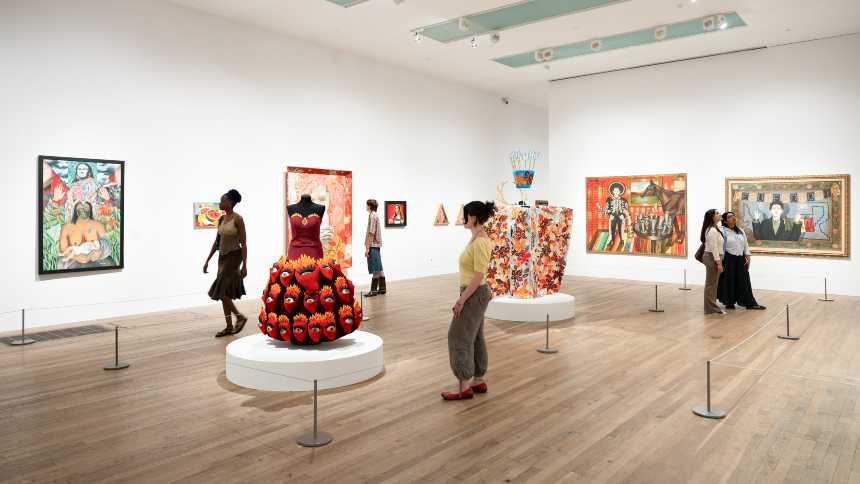
On display until January 2027, the exhibition explores the multiple facets of Kahlo's life—whether as an artist, intellectual, activist, rule-breaker, wife, or mixed-race woman of indigenous descent. It features more than 30 works by Kahlo herself, as well as clothing, jewelry, medical instruments, photographs, and personal belongings of the painter.
The exhibition also includes works by artists influenced by her — including some of her contemporaries and names from newer generations.
Everything is designed to help visitors understand what else contributed to Kahlo becoming such a well-known figure.
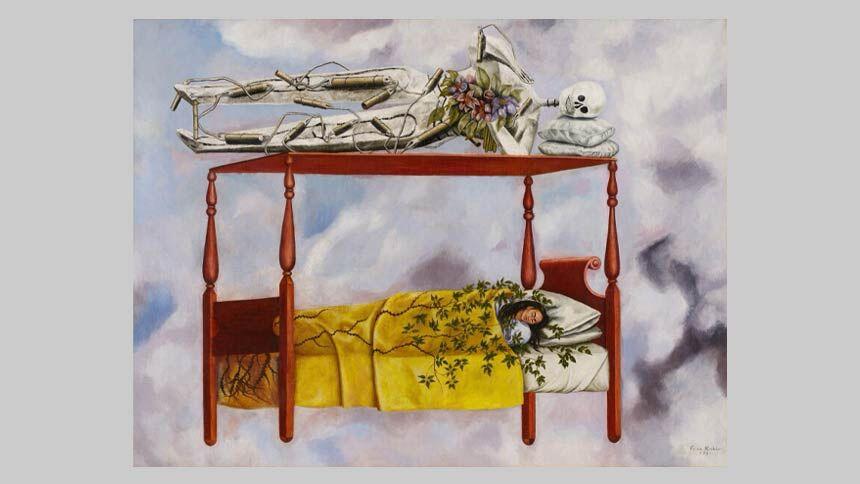
It is worth remembering that the self-portrait El sueño (The Bed) , painted in 1940, is the highest-priced work by a female artist at auction — since it was sold for US$54.7 million at Sotheby's in New York last November.
Born in Coyoacán, Magdalena Carmen Frida Kahlo y Calderón possibly became a cultural phenomenon by managing to channel all her physical and emotional suffering into art. And without evoking any trace of pity.
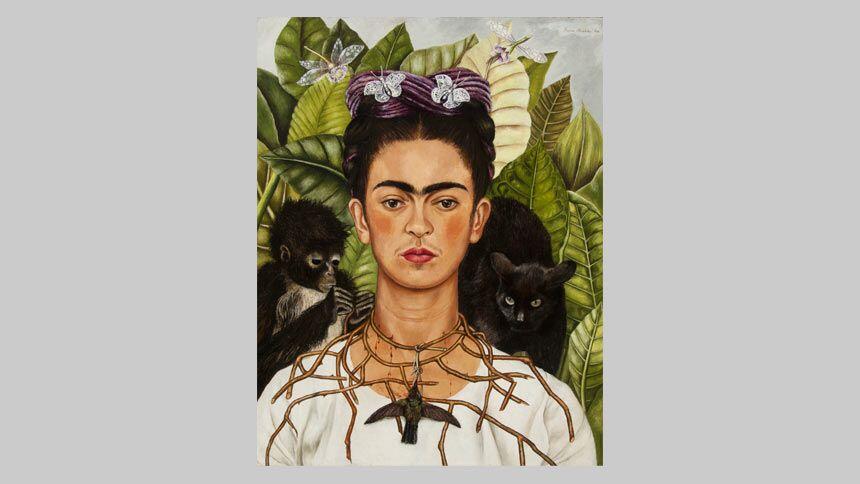
An example of how she transformed pain into something transcendental is the painting Self-Portrait with Thorn Necklace and Hummingbird , from 1940, which is in the Tate Modern collection.
The work was created shortly after her divorce from Diego Rivera , with whom she had a tumultuous relationship, and the end of a romance with Nickolas Muray. Despite the thorns piercing her neck, causing blood to flow, Kahlo's calm expression suggests strength, resilience, and dignity in the face of suffering. She never portrayed herself as a victim.
Pain became an intrinsic part of the artist's life early on. In childhood, she contracted polio and suffered lasting effects from the disease. Her health problems only worsened after a serious bus accident in her teens, resulting in limitations and pain for the rest of her life.
Photographs of Kahlo painting in bed are part of the exhibition, giving an idea of how she chose to deal with pain. The artist had an easel made with which she could work even while lying down. And, with the help of a mirror, she could observe herself, which resulted in so many self-portraits, always visceral.
What also helped Kahlo's work remain relevant over the decades was the artist's activism. She became a feminist icon by confronting the conservatism and sexism of her time. The painter broke taboos, addressing disconcerting issues such as abortion, childbirth, and breastfeeding in her work.
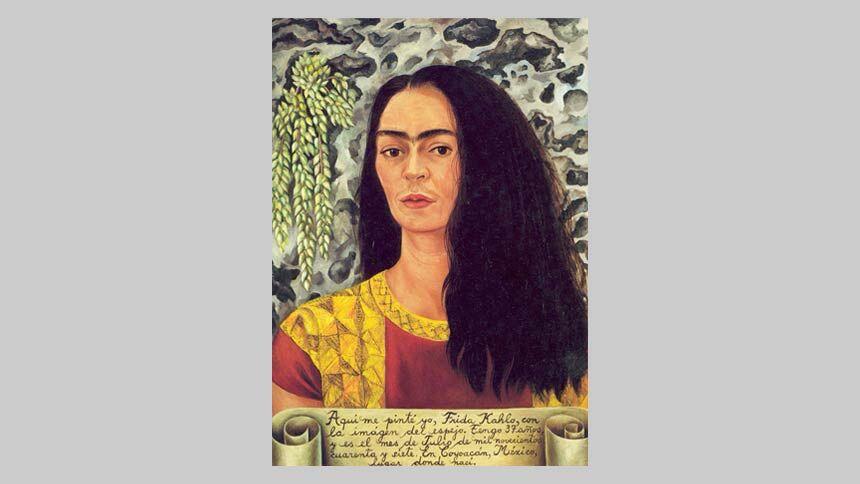
There was also a rebellion against beauty standards, maintaining thick eyebrows and a small mustache, as seen in the painting Self-Portrait with Loose Hair , created in 1947 and exhibited in London. Unlike her usual image, with braids and accessories that gave her an exotic appearance, the artist highlights here her genetic heritage and essence, without resorting to artifice.
Kahlo was still ahead of her time, fighting for her independence, dedicating herself to her career and openly living her loves, and acknowledging her bisexuality. Being mixed-race (the daughter of a German descendant and a Mexican woman of indigenous heritage), a person with a disability, and embracing her queer identity, Kahlo remains a reference point for minority groups to this day.
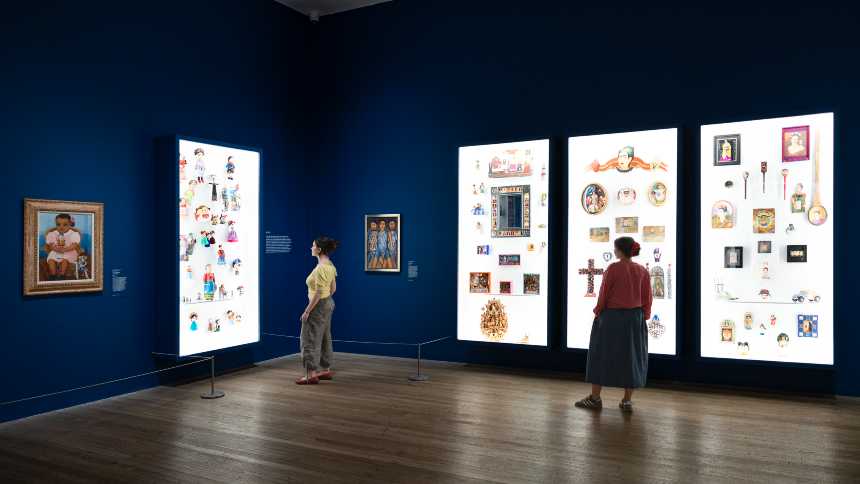
All these aspects contributed to the construction of a myth, leading the exhibition to explore, in the final section, Fridamania . It's as if, by celebrating her identity (whether in her personal style or her art), the artist managed to connect with millions of people around the globe.
This would explain the countless products bearing her face since the mid-1980s. The exhibition prefers to define Fridamania as a "democratic appropriation" and not merely as consumerism, which would reduce the artist to a commodity emptied of her meaning.
The items include clothing and accessories, mugs, bags, candles, notebooks, bottles, cushions, keychains, and makeup products, among others. The exhibition also features a variety of dolls, including the controversial Frida Barbie, launched in 2018 by Mattel.
Although the item is part of the Inspiring Women collection, the artist's most pronounced physical features—her thick, joined eyebrows and visible mustache, which she was proud of—have been softened here. In other words, a strategy to frame the artist's image within the aesthetic mold of the doll, promoting a Eurocentric standard, the exact opposite of what Kahlo advocated with her pursuit of authenticity.