


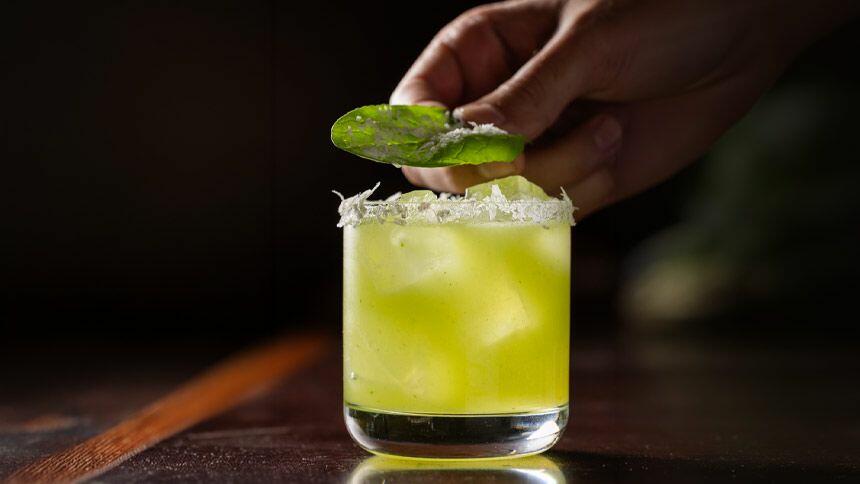
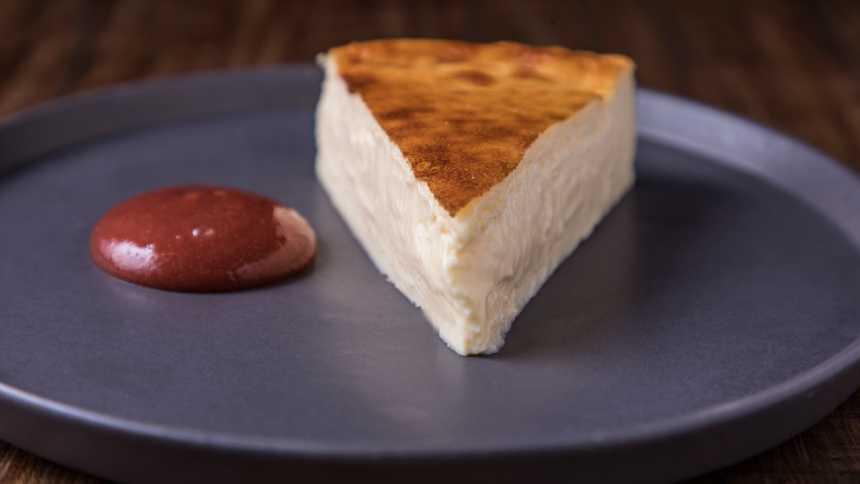
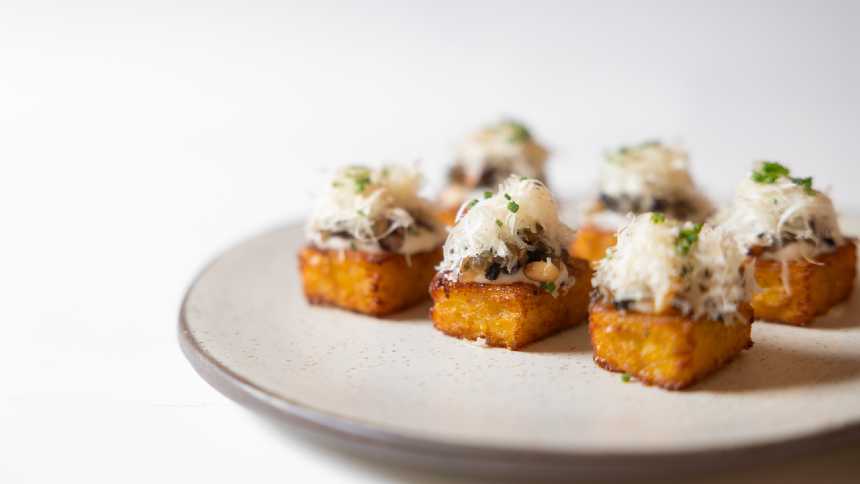
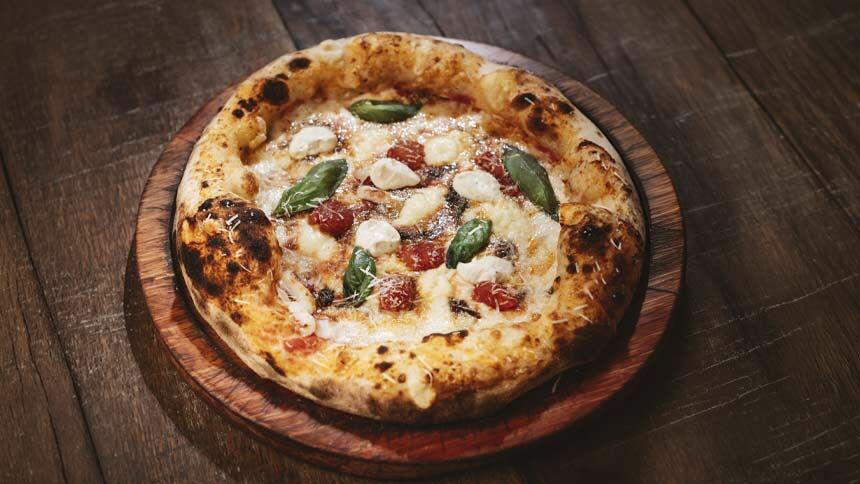
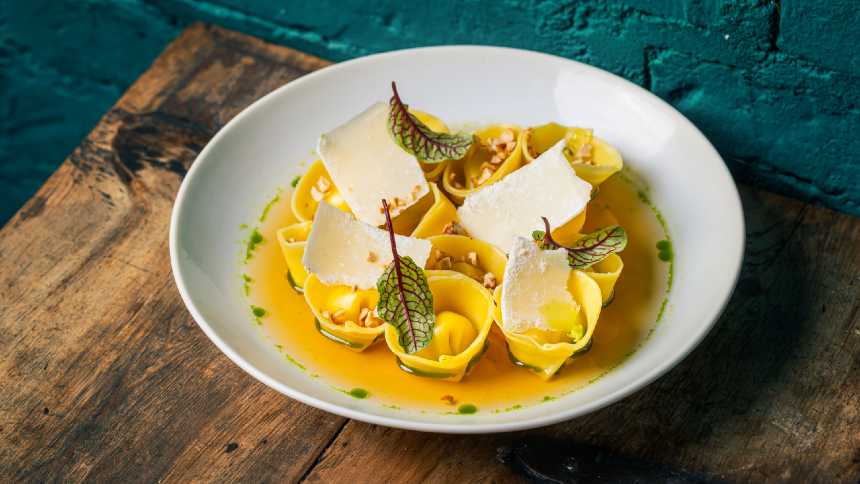
What do DOM's arugula caipirinha, Maní's fried pamonha, Bráz's 50 Top pizza, and Mocotó's Romeo and Juliet pie have in common? All four recipes use Tulha cheese as an ingredient.
Anyone who frequents gourmet restaurants in São Paulo has certainly seen this name prominently displayed on some menu — and it wouldn't be an exaggeration to say that, among the chefs of so-called "author's cuisine," Tulha is riding higher than Parmigiano Reggiano.
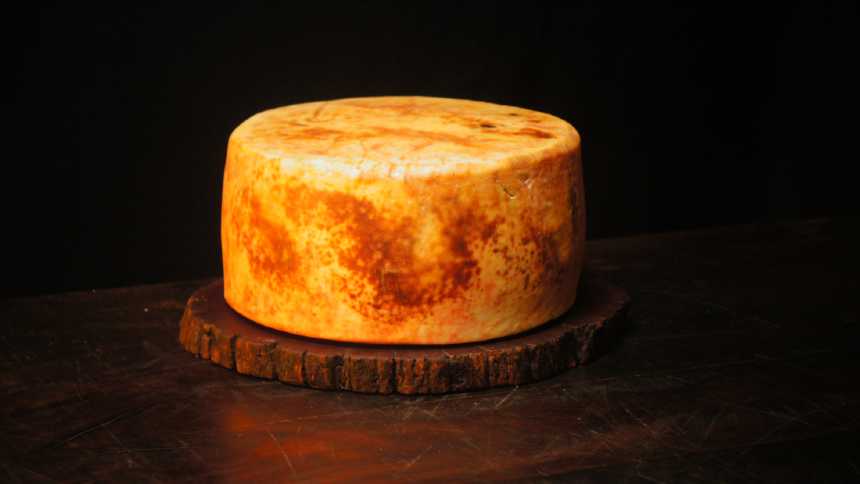
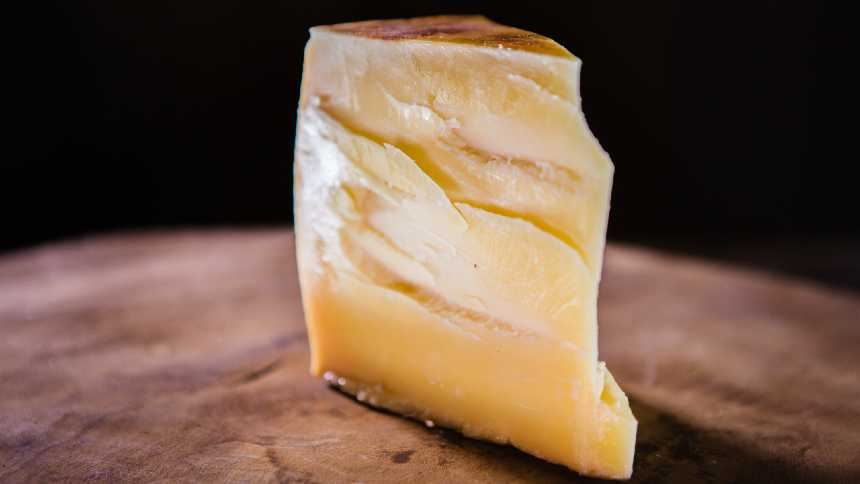
Matured for exactly 12 months in an old coffee cellar, Tulha also has a cooked texture and undergoes a liquid brine process, like the most famous Italian cheese. But it couldn't be more Brazilian, complete with a rustic accent from the interior of São Paulo state.
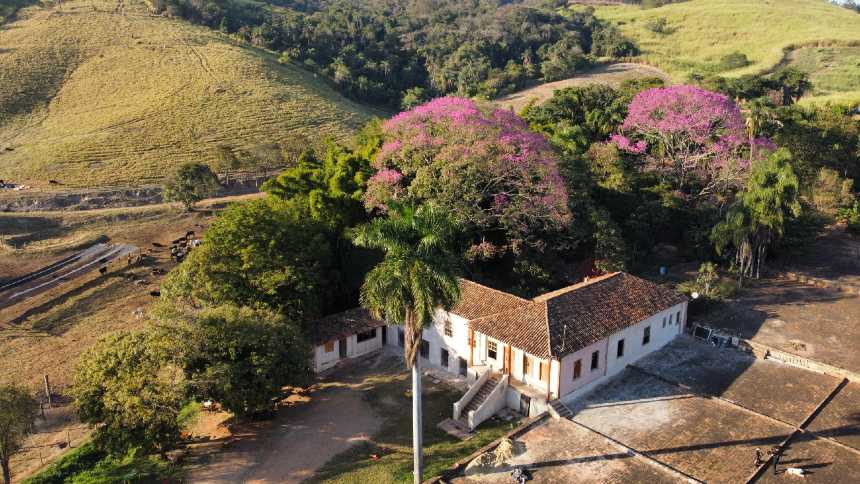
The creators of the delicacy are Paulo and Rosana Rezende, who inherited Atalaia , an old coffee farm in Amparo, and moved there shortly after their marriage in 1994.
He, an agronomist by training, planned to become a coffee farmer. The two even planted 300,000 coffee plants, but discovered that the project would be financially unviable, due to the rugged terrain that prevented mechanization and increased labor costs.
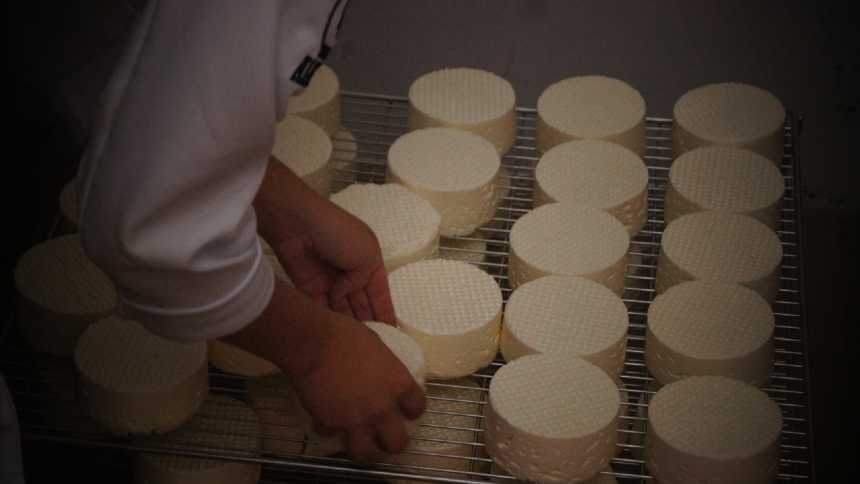
The cheeses , still in their fresh form, emerged as a solution to supplement the household budget. With the milk from the few cows that were part of the inheritance, Rosana ran the homemade production in her own kitchen and sold them to local markets.
“It didn’t help much, because it was a commodity product that everyone was making. Whoever had the cheapest cheese and the most eye-catching packaging sold more,” recalls Paulo, in a conversation with NeoFeed .
The pair concluded that aging, a technique that enhances aroma and flavor and raises the price tag proportionally, was the solution — but investing in a new facility was out of the question.
Thus, through improvisation, the idea arose to mature the cheeses in the old coffee storage sheds of the Atalaia Farm.
The rammed earth-built rooms met all the fundamental requirements. The thick mud walls kept the environments naturally cool, with humidity around 75%. The microorganisms, which had lived there for decades, provided a unique condition that gave the cheeses their identity.
After many tests, Paulo and Rosana arrived at a dark yellow product with a crumbly texture that revealed microcrystals when bitten. It resembled another famous Italian cheese, Grana Padano.
From Amparo to the world
In 2015, Tulha was officially launched, but the Rezende couple doesn't even consider the date important because the market, accustomed to fresh cheeses, didn't understand the concept.
“It was a product that was out of the ordinary for its time. To appreciate it, people needed to know about it,” believes Paulo, who then began to target another market niche: specialty stores and chefs.
He didn't do things by halves. He started by knocking on the door of DOM, then considered the 9th best in the world by the World's 50 Best Restaurants ranking. It worked; chef Alex Atala put Tulha in his kitchen.
Atala's endorsement was quite a calling card, but the major turning point for Tulha's trajectory was the first gold medal won in 2016 at the World Cheese Awards , one of the most important international competitions in the sector. It's no coincidence that Tulha's 10th anniversary is being celebrated now, in 2026 – with this award, the cheese was reborn.
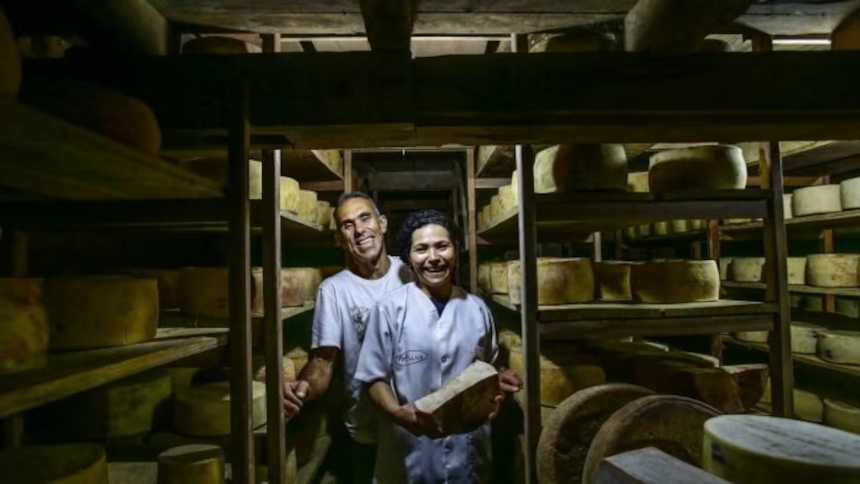
In marketing terms, what has happened since then is purely organic growth. Not particularly fond of marketing strategies or storytelling , Paulo and Rosana are the quintessential rural type. He only swaps his work boots for the rubber boots he wears around the corral, which are mandatory in the cheese factory environment.
She is the soul of the Atalaia kitchen, which has become a tourist magnet – the farm's lunch attracts up to 500 people per weekend, not to mention the highly sought-after breakfast, featuring only homemade items. Guided tours with tastings are already available from Tuesday to Sunday, at three fixed times.
“We never bought followers, nor do I understand much about social media. A client once asked me who had put together our promotional campaign. I replied that it wasn't anyone, we just know how to connect with people,” Paulo deflects.
In this quiet way, without much fanfare, the Rezende family became experts in business. The cheese factory consumes 17,000 liters of milk per week, of which 12,000 liters come from third parties, but the company's goal is to achieve self-sufficiency by the end of 2028.
Tulha accounts for 40% of production, but the portfolio includes other fresh and aged cheeses, including goat and sheep cheese, as well as curd, yogurt, butter, and dulce de leche.
Major clients in São Paulo, such as Casa Santa Luzia and the specialty stores Galeria do Queijo and Mestre Queijeiro, are served by the company's own fleet of seven refrigerated vans.
Their client portfolio also includes restaurants such as Cuia, by chef Bel Coelho, Le Jazz Brasserie and Lupe, and the wine bars Elevado and Clementina. In Amparo, the couple has already opened two of their own stores with restaurants — Casa Caram, inside the municipal market, and Origem Atalaia.
Rural tourism, which accounts for 35% of the farm's revenue, deserves special attention. The team has grown to 90 employees, but Rosana still insists on preparing breakfast personally and wakes up at 5 a.m. so that the cakes arrive warm at the table. The 1870 property is undergoing ongoing restoration, overseen by architect Marcos Tognon.
Paulo knows that Tulha cheese is traveling the world in the suitcases of chefs and foodies in general. "The other day, a guy received the cheese in Tokyo and sent me a photo," he says.
Last May, Atalaia's production manager, Meiri Cardoso, had the opportunity to present the cheeses to representatives from international airline catering companies — the event took place at the Le Cordon Bleu school in São Paulo, with simultaneous translation into English, French, and Spanish.
Fazenda Atalaia cannot officially export yet because it only has the state inspection seal. But internationalization is in its plans. "I know I won't have enough volume to fill containers," says Paulo. "But it will be nice to see my cheese in fancy shops in Paris and New York."