



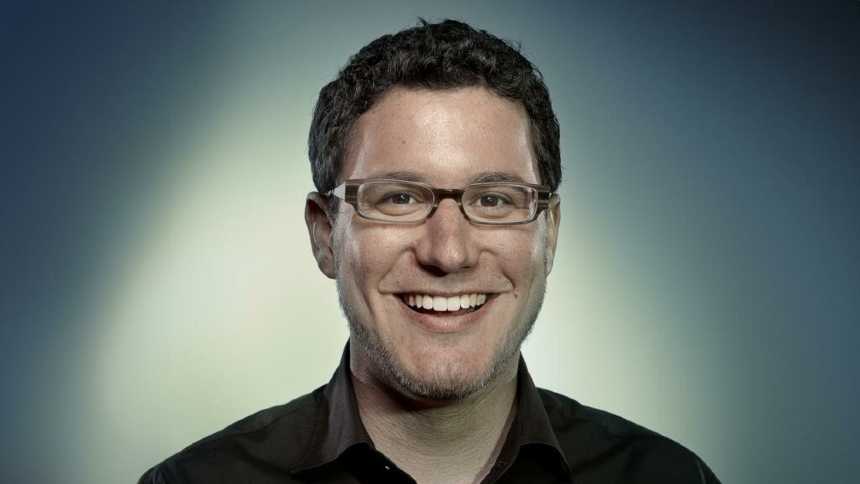
In 2018, on the verge of completing an artificial intelligence capable of redefining the future of medicine, a researcher sought out entrepreneur and author Eric Ries, creator of the lean startup methodology — one of the pillars of Silicon Valley's innovation culture.
This researcher's AI could be used to design drugs to fight cancer, Alzheimer's, and even diseases with pandemic potential. The promise was revolutionary. So was the nightmare.
In the wrong hands, the technology could be used to develop a biological weapon or a plague against which we would have no defense. “I think I’m about to ruin everything,” the professor said. This wasn’t science fiction, Ries observed.
The fear wasn't technological, but institutional: the fear of seeing a discovery created to save lives transformed into an instrument of exploitation by an organization lacking ethics, principles, or responsibility.
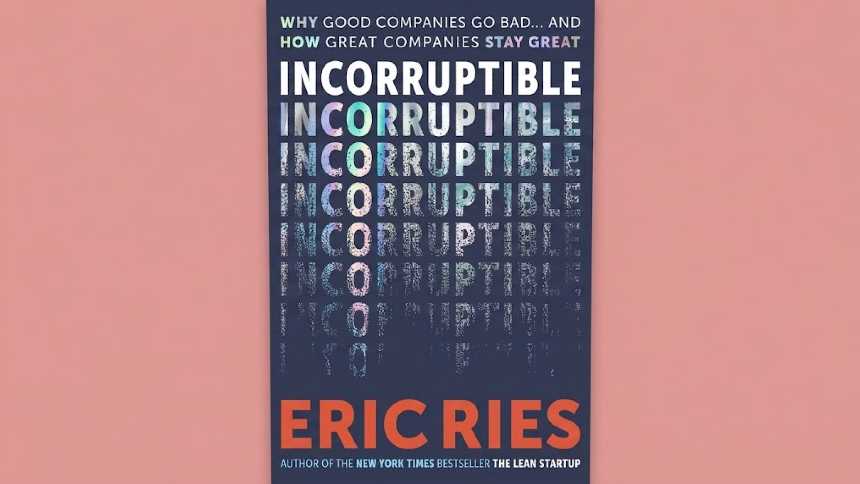
From that conversation, Ries built the thesis that runs through his new book , Incorruptible: Why Good Companies Go Bad and How Great Companies Stay Great .
Still unpublished in Brazil, the book poses a disturbing question: why do admired organizations end up betraying the very principles that made them successful?
Ries rejects the idea that the problem lies solely with bad leaders or greedy investors. According to him, there is a structural force that traps well-intentioned companies.
The goose that laid the golden eggs
“The more valuable the goose that lays the golden eggs, the greater the temptation to kill it,” he says. “We are all one acquisition, one IPO, or one board meeting away from watching something we love turn into something we hate.”
Defining this change as a "deviation from mission" or "bureaucracy" would be an understatement, the author states. "I call it by a simple, old name: corruption," he defines.
Profit is essential for a company's survival, but it shouldn't be the only criterion guiding its leaders' decisions. According to Ries, how that financial return is achieved also matters.
“Not every way of making money is equally good,” he writes. According to him, “the reality of our contemporary financial system is that it offers countless ways to make money without creating any value.” The mission, he argues, needs to be incorporated into the very architecture of the company.
Boards of directors, voting rights, corporate structure, and corporate culture begin to function as mechanisms to protect against deviations from the right path. Those that manage to preserve their "golden eggs," Ries dubbed " mission-locked" companies.
NeoFeed has selected some of the most iconic stories featured in Incorruptible .
At Novo Nordisk , for example, the ownership structure was designed to protect the company from immediate financial interests.
The Danish pharmaceutical company is controlled by the Novo Nordisk Foundation. Created in 1924, the philanthropic foundation holds the shares with the greatest voting power. This model keeps the company aligned with its mission to support advances in health through research, innovation, and sustainable development—combining a long-term mission with strategic control.
While Novo Nordisk protects its mission through its corporate structure, Anthropic relies on governance as a mechanism to protect its principles.
Founded in 2021 in San Francisco, the company was born with a commitment to developing safe AI for society. To that end, it was incorporated as a Public Benefit Corporation, a legal model that allows for the inclusion of public purposes in company bylaws. In this format, the mission ceases to be merely a statement of intent and gains institutional protection.
With Costco, Ries reinforces one of his most compelling arguments: protecting a company's mission does not mean sacrificing its profitability. The American discount club chain was founded in 1983 and built a model based on scale, operational efficiency, and recurring revenue.
This combination allows the brand to maintain tight margins, invest in employees, preserve competitive prices, and prioritize customer trust.
The famous hot dog and soda combo sold for US$1.50 became a symbol of this philosophy. Even with rising costs over the decades, since 1985, the company has maintained the price of the snack as a promise to the consumer—a decision that, while not particularly relevant to revenue in isolation, reinforces the perception of the company's value.
In addition to Novo Nordisk, Anthropic, and Costco, Ries cites many other companies in the book, such as Patagonia , Vanguard, Whole Foods, and John Lewis Partnership, to show that there are various ways to protect the mission and long-term vision without compromising the smooth running of the business.
When the mission is lost
The absence of this protection, however, helps explain why some companies succumb to their own growth, abandoning precisely what made them special.
One of the most compelling examples presented by Ries is that of FedMart, the American discount store chain founded in 1955 by Sol Price—incidentally, a source of inspiration for giants like Costco and Walmart .
The company prospered by putting customers and employees before shareholders, with reduced margins, above-average salaries, and rigorous ethical standards. After twenty years, to expand the business, Price sold control of the company. The new owners, however, reinstated old management practices. Seven years later, FedMart closed.
There are numerous cases where identity and values built over decades have clashed with financial pressures and changes in control—eroding intangible assets such as trust, reputation, and loyalty. Ries mentions Polaroid, Cadbury, Toys “R” Us, and Sears, among others.
Ries's concern with the challenges faced by innovative companies has been a constant throughout his 20-year career, during which he has worked alongside entrepreneurs, CEOs, and investors.
In 2011, with the release of *The Lean Startup: How to Use Continuous Innovation to Create Radically Successful Businesses* , he became one of the leading references in contemporary entrepreneurship. The book popularized concepts such as minimum viable product (MVP), the build-measure-learn cycle, and pivoting.
“But I couldn’t anticipate what came next,” Ries admits. “I taught people how to create something worth protecting, but not how to protect it.”
The author believed he had found this protection with the Long-Term Stock Exchange (LTSE). Approved by the SEC in 2020, the exchange was designed to encourage long-term investing practices, rather than the pursuit of immediate financial results.
“But I was wrong,” he writes. LTSE, on its own, would not be enough.
Companies don't protect their greatest assets simply by maximizing profits. They need to structure systems that keep them anchored in their mission, preventing their essence from being diluted as they grow.