

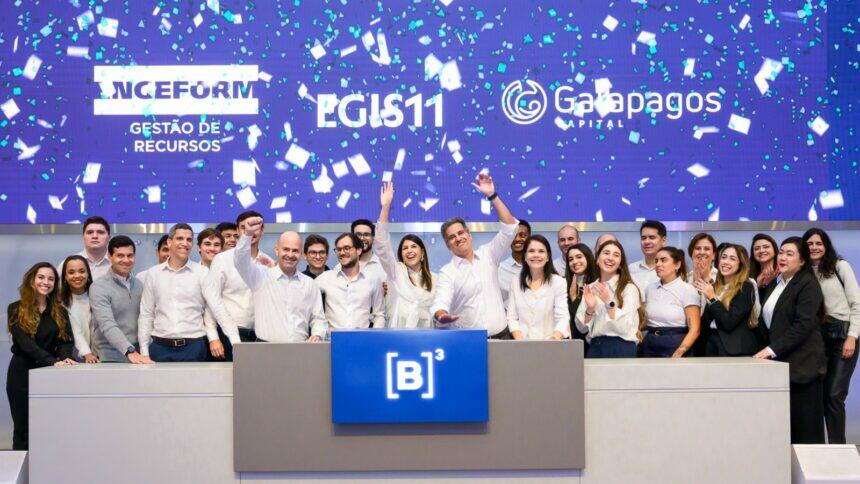
Engeform Gestão de Recursos and Galapagos Capital have completed raising R$190 million for a joint fund focused on social infrastructure. Structured as a FIP-IE — a type of investment exempt from income tax for individuals — the product brings together approximately 100 investors, including Galapagos clients and Engeform executives. The fund will be managed by an investment committee composed of representatives from both companies.
With a mandate to invest in PPPs in the education, health, and housing sectors, the fund is already an asset in operation: a 50% stake in the São Paulo Schools PPP, through a Special Purpose Entity (SPE) formed with the asset manager Kinea , a partner in the original auction won jointly with Engeform in 2024.
The project includes the construction and maintenance of 17 school units in 14 municipalities. Eight of the schools have already been delivered, with classes starting in August, and the final phase is expected to be brought forward; of the nine schools planned for 2027, six should be operational this year.
The early delivery has a direct effect on revenue, which begins to be paid by the public authorities when the school is ready to receive students. With this anticipated cash flow, managers intend to finance the capital expenditure of units still under construction or enter into new concessions.
The public-private partnership market experienced a record year in 2025, with 75 auctions on the B3 stock exchange and R$ 243.8 billion in investments — compared to 64 auctions and R$ 180 billion in 2024. In the first quarter, the B3 closed with 18 auctions held and R$ 42.4 billion in transactions, an increase of more than 40% compared to the same period in 2025, when the volume was R$ 30 billion.
Luciana Improta, director of management at Engeform, states that the fundraising should be sufficient for the fund to invest in up to three more projects. “We may eventually have smaller assets. But we will always have governance. The key point of the thesis is to be the majority shareholder, or the majority shareholder within the governance structure,” she affirms.
The fund is already in negotiations to enter into a new housing PPP. Thomas Averbuck, partner and executive director of Private Equity at Galapagos Capital, says the operation involves the potential purchase of a company that wins an auction in the sector.
The target of the negotiations cannot yet be revealed, but, according to him, there are good opportunities in companies with financial difficulties in honoring the concession commitments.
"We'll look at both: the auction and, eventually, opportunities in the secondary market—other players who have already won concessions and, at some point, want to exit that position. The goal is to allocate the fund, so strategically it makes sense for us to look not only at new auctions, but also at the secondary market."
The fund is closed-end and has a term of 15 years. According to the managers, the objective is to achieve a return of IPCA (Brazilian inflation index) plus 15% per year during that period.
To achieve this result, the strategy is one of capital gain: the fund enters the concessions during the construction phase, begins receiving concession revenue in the first years of operation, and exits by selling the mature asset, when cash flow is consolidated and operational risk is reduced.
The fund managers target projects comparable to buildings such as schools and housing, and avoid operationally complex assets. "Here we're talking about buildings, at the end of the day. Schools don't have the complexity of execution. It's different from building the Santos-Guarujá tunnel, which is a super difficult project, or a very long bridge," compares Averbuck.
In addition to low operational complexity, the selection process considers the credit risk of the public counterparty and the strength of the contract guarantees—a criterion that, according to managers, was decisive in choosing the São Paulo Schools PPP and continues to guide the analysis of new auctions and operations in the secondary market.
"There was an auction in the South, for example, which was a municipal PPP. We studied the case, but the bidding terms didn't give us comfort in terms of protection and guarantee structure. So we decided not to participate," says Improta.
Engineering indoors
Improta says that one of the fund's distinguishing features is the possibility of activating, when appropriate, the structure of Engeform Engenharia — the group's arm responsible for infrastructure projects — in the execution of its own assets.
This is what happened in the PPP for Schools: Engeform Engenharia competed in the bidding process for the construction of the 17 units and won with a BDI (indirect costs and profit margin) below that practiced by market construction companies, giving up part of the margin to make the investment more competitive.
According to the executive, the model has already raised questions about conflicts of interest, but she argues that having a construction company in-house provides greater security to the financial model presented in the auctions.
"Ultimately, we have an in-house construction company capable of executing the project at the price we specified for the auction. This provides a great deal of peace of mind, assuring us that we are being assertive in the modeling we do before participating in the auction," he states.
This is the second fund structured jointly by the two asset managers — the pair already have a partnership in a "boutique" real estate fund, also with Galapagos as a partner.
Seeking a partner for each area, instead of raising capital alone, is the model preferred by Engeform for bringing products to market. The same logic was applied by the asset manager in the credit area, where it recently launched a fund with Occam. Using this model, Engeform Gestão has already reached R$ 1 billion in assets.
From Galapagos' perspective, with over R$40 billion under management, Averbuck states that interest in FIP-IEs remains high, largely due to the income tax exemption for individuals. "It has been a very appealing product for our client base, which is mostly made up of individuals, and we have attracted high-quality partners, such as the Engeform team."