

Adidas was on the shirts of Spain and Argentina in the 2026 FIFA World Cup final. The German company would have emerged victorious from the MetLife Stadium pitch regardless of which team won. The problem is that after the final whistle, investors raised the red card to the three-stripe brand.
On Thursday, July 30th, Adidas' stock fell by as much as 19%, registering its sharpest drop in intraday trading since the company's IPO in 1995. The stock closed down 11.5% for the day, with a market capitalization of €28.5 billion.
The investors' reaction is curious. In recent years, the German brand had been urged to reinvest, focus on branding , invest in innovation, and compete in the football market with the same strength as its competitors.
CEO Bjorn Gulden bet precisely on this long-term marketing strategy by investing €212 million in campaigns linked to the World Cup, a 30% increase driven precisely by the global tournament.
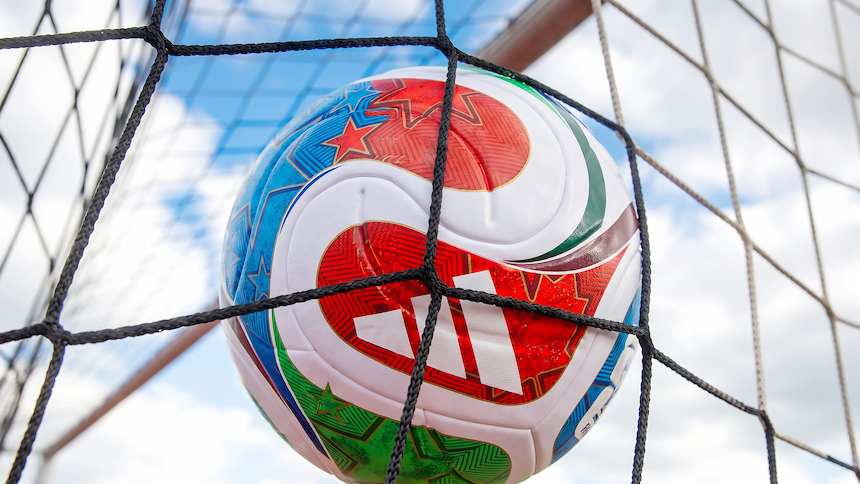
If the 2026 World Cup was the biggest in history, this is reflected in Adidas' results: the company sold four times more jerseys than at the Qatar World Cup, doubled sales of the tournament's official ball, and recorded record revenue of €6.74 billion in the second quarter, a 14% increase compared to the same period last year.
The financial report showed a company that continues to grow. In addition to record revenue, the company raised its sales growth forecast for 2026 to a range between 9% and 10%. Net profit also increased, to €398 million, while operating profit reached €574 million.
But what triggered the market's red card was the message Adidas sent. The company said the World Cup generated more revenue, but wouldn't produce (at least for now) the profitability expansion that had been priced in.
Operating profit fell short of expectations - the market had estimated something close to €623 million, and the company delivered €574 million, a growth of only 5%.
The guidance also shows a more cautious Adidas. The company kept its operating profit estimate for the year virtually unchanged, at around €2.3 billion.
Pink soccer cleats
Since taking over at Adidas in January 2023, Gulden has never promised a turnaround based solely on efficiency or cost-cutting.
The CEO's speech focused on rebuilding the brand, regaining market share, and making Adidas a leading player in global sports again.
The World Cup represented the biggest stage for this strategy of strengthening the brand and reaping results over the next few years. But not everything went as the executive had hoped.
The soccer cleats, for example, caused discomfort for both Adidas and its competitors. Virtually all manufacturers opted for pink cleats during the World Cup. And if the desired effect was to stand out, what was seen was the same visual uniformity.
"Pink is a beautiful color, no doubt. But the fact that we all showed up wearing the same color was strange," he said at the press conference, according to AFP .
"I think it was an accident. And honestly, I don't think anyone liked it," he added.
By the end of the second quarter, Gulden can say that he has managed to leave behind the problems caused by the end of the partnership with Yeezy . And that Adidas has returned to selling like a global giant, once again facing the advance of rivals Nike , On and Hoka.
But that game is now history, and investors want to understand the winning strategy for the coming quarters. And how Adidas will stand out from its competitors.
“We change the colors every quarter. When the season returns, you’ll see many boots that won’t be pink,” Gulden stated.