

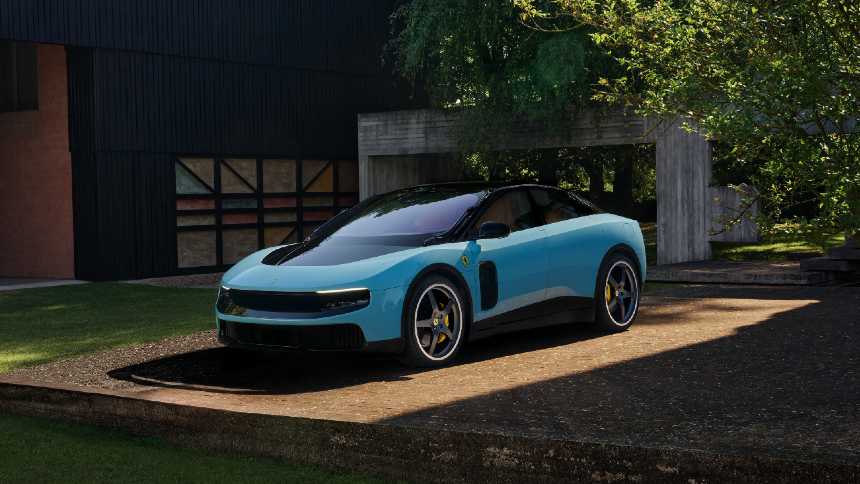
At the end of May, the launch of the Luce, Ferrari 's first 100% electric car, made as much noise as the iconic roar of the Italian automaker 's engine. But in a rather negative way, it translated into an avalanche of criticism and a stumble for the company in the capital markets.
However, it appears that the model bucked the trend of these controversies, achieving its annual sales target in just two months, driven largely by strong demand from China.
When it launched the vehicle, Ferrari did not disclose its target for the model in 2026. However, according to the British newspaper Financial Times , which cites two people familiar with these indicators, the plan was to sell just under 500 units in that period, a mark that was reportedly reached earlier this month.
With a starting price of €550,000, the Luce was designed by Jonathan Ive, the iconic designer who gained fame for his work at Apple, when the company was led by Steve Jobs and built its "aura" with consumers around the world.
Interestingly, besides CEO Benedetto Vigna, the vehicle's design was one of the main targets of criticism from analysts and fans at the time of its launch. On social media, the car's unconventional style was compared to much cheaper models available on the market.
This unfavorable reaction was further fueled by Luca Cordero di Montezemolo, former president of Ferrari, who stated at the time that if he said what he thought, he would harm the automaker. This did not prevent him from making his displeasure with Luce clear.
Among other issues, Montezemolo stressed that he deeply regretted the launch of the model and that it risked "destroying a myth." Along those lines, he said he hoped the automaker would at least remove the horse, the brand's symbol, from this model.
This series of controversies was followed by a drop of more than 8% in the company's shares on the first trading day of the Milan stock exchange after the launch. And, more recently, by the sudden departure of Enrico Galliera, the marketing director who had been in the position for 16 years.
Amid these controversies, Ferrari, which will release its second-quarter earnings report on Thursday, July 30, defended the Luce as a move to reach a new generation of high-income consumers – especially in markets already more receptive to electric cars , such as China.
According to the Financial Times , the automaker has set a goal of selling around 2,500 Luce units by 2030, or 600 units per year. This represents approximately 5% of the company's total annual sales and a volume considered feasible by analysts.
In this first stage, in addition to strong demand in China, the model reportedly found significant acceptance among technology entrepreneurs in the United States, a second profile that is part of the brand's strategy for Luce.
“Ferrari’s marketing and customer knowledge are on another level compared to many of its competitors,” Scott Sherwood, an independent analyst of luxury car brands, told the British newspaper, highlighting the automaker’s segmented approach.
Reinforcing this view was James Grzinic, an analyst at Jefferies, who, in a note to clients, observed that Ferrari has the potential to leverage the creation of new millionaires and billionaires through the valuation of technology companies linked to artificial intelligence (AI).
While Ferrari attempts to shift gears, the company's shares registered a slight drop of 0.54% on the Milan Stock Exchange around 5 pm (local time) this Wednesday. Year-to-date, the shares have accumulated a 6.5% increase in value, giving the company a market capitalization of €59.6 billion.