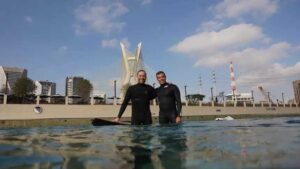


For years, Ana Oliva Bologna trained her body to endure events lasting almost 12 hours, including swimming, cycling, and running. For the president of the board of Grupo Astra, a Brazilian manufacturer of construction materials founded by her grandfather, the greatest legacy of the Ironman was not physical, but mental.
In an interview with Bravamente, a program presented by Carlos Burle in partnership with NeoFeed , the executive said that she manages corporate crises using the exact same logic she learned in sports: accepting that not everything is under control, focusing energy only on what can be decided, and never losing the ability to convey confidence to those around her.
Amid soaring raw material prices caused by international conflicts, suppliers began adjusting prices, putting pressure on the entire industrial chain. "My CEO would call saying that the supplier had increased the price of raw materials by 150%. My response was: buy it. I needed to reassure the team," he said.
In Ana's view, the role of leadership is to prevent insecurity from paralyzing the organization. "Of course I feel insecure. There are sleepless nights. But I can't transmit that to the team."
The executive compares this process to Ironman races. During the competition, she says, it's pointless to think about the nearly 226 kilometers still to go. The focus needs to be solely on the current stage. This mental discipline has also changed how she handles major corporate decisions.
"When I was swimming, I just swam. I wasn't thinking that I still had 180 kilometers of cycling and then a marathon to do."
The link between sports and leadership is proven by research. A survey by EY in partnership with espnW showed that 94% of women in C-level positions have played sports throughout their lives, while 61% say that their sporting experience was crucial to their career success.
The study indicates that competitive sports help develop skills such as resilience, decision-making under pressure, discipline, and teamwork—skills that are increasingly valued in the corporate environment.
Ana, a mother of two, says that sport is a non-negotiable value in her family's education. The children have been exposed to different sports from a young age and today choose those with which they most identify.
"You have to create people who are confident enough to know they can make mistakes. Competitive sports bring a lot of that out of you, because you learn to deal with frustration ."