


The collapse of the hedge fund Situational Awareness, created in 2024 by the young German Leopold Aschenbrenner – a former researcher at the OpenAI Foundation who, at only 25 years old, became a prominent voice in debates about the future of artificial intelligence – exposed the risks of transforming optimism about the rapid technological advancement of AI into highly leveraged bets in the stock market.
Aschenbrenner's fund accumulated losses of 67% in July, amid a fall in AI company stocks, forcing Situational Awareness, in a race to raise money and cover margin calls from its creditors, to unwind most of its stock portfolio in the last two days to Citadel -Ken Griffin 's investment fund, with US$71 billion in assets under management.
Several major Wall Street investment banks, including Goldman Sachs, JP Morgan Chase, Bank of America, and Citigroup, helped facilitate the deal between Citadel and Aschenbrenner's fund, which is known as the Nostradamus of AI.
On the morning of Friday, July 31, in a final chapter of the dramatic crisis, according to the American press, Situational abandoned a deal that had been in the works since the previous night to sell its $3.5 billion stake in the private AI giant Anthropic to a consortium of investors led by Greenoaks and Sequoia Capital .
The case caught Wall Street's attention because it showed that not even one of the most solid funds focused on technology companies is immune to the uncertainties of the stock market.
In less than two years, Situational surpassed $20 billion in assets, driven by accumulated returns exceeding triple-digit multiples, despite Aschenbrenner lacking a solid track record in the financial market.
His meteoric rise began long before Wall Street. Aschenbrenner entered Columbia University at age 15 and after graduating in 2021, worked as a researcher at OpenAI. He gained notoriety by publishing the essay " Situational Awareness: The Decade Ahead ," published in May 2024.
It is this document — lengthy, technical, and ambitious — that propelled Aschenbrenner to the center of the debate on advanced artificial intelligence, predicting that AGI-level systems could emerge by 2027 and that the race for chips, energy, and data centers would become the new geopolitical axis of the century.
The text circulated among investors as a sort of roadmap to the future, attracting capital from some of the most influential names in Silicon Valley soon after the fund's creation. The fund's strategy reflected this conviction: concentrated positions in AI infrastructure companies, from chip manufacturers to energy providers, supported by high leverage.
While the market continued its upward trajectory, the combination seemed perfect. But the July correction exposed the fragility of models that depend on continuous valuations and abundant liquidity. The mathematics of margin calls did not forgive overconfidence.
Exemplary week
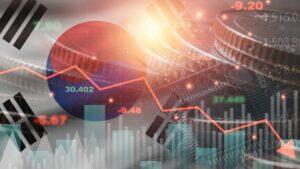
Aschenbrenner's case is not isolated. Throughout this week, the Seoul Stock Exchange also witnessed episodes of extreme volatility involving tech giants, with a 16% drop in two days.
SK Hynix and Samsung Electronics , both semiconductor manufacturers deeply exposed to the AI cycle, plunged into sharp declines following speculative moves by leveraged ETFs.
Shares of both companies plummeted on Wednesday, the 29th, and Thursday, the 30th, despite posting stratospheric profits in the second quarter – 577% for SK Hynix and 1,800% for Samsung – dragging down indices and prompting emergency interventions by local brokerage firms.
On Friday the 31st, however, both recovered a significant portion of the lost value, reinforcing the message that analysts have been repeating: the vulnerability of the sector lies not only in its fundamentals, but in the belief that AI companies can sustain unrealistic, ever-increasing valuations without facing violent corrections.
Aschenbrenner's story, viewed in retrospect, serves as a synthesis of this tension. He represents both the intellectual brilliance that drives the AI revolution and the inherent risk of transforming technological predictions into financial gambles of disproportionate magnitude.
The Citadel bailout, while preventing a complete collapse, does not eliminate the central lesson: in a market driven by almost messianic expectations, the line between genius and recklessness can be thinner than it seems.