

Rome — By choosing to spend his summer vacation at the Papal Villa of Castel Gandolfo, Pope Leo XIV not only revived a tradition interrupted during the pontificate of Francis.
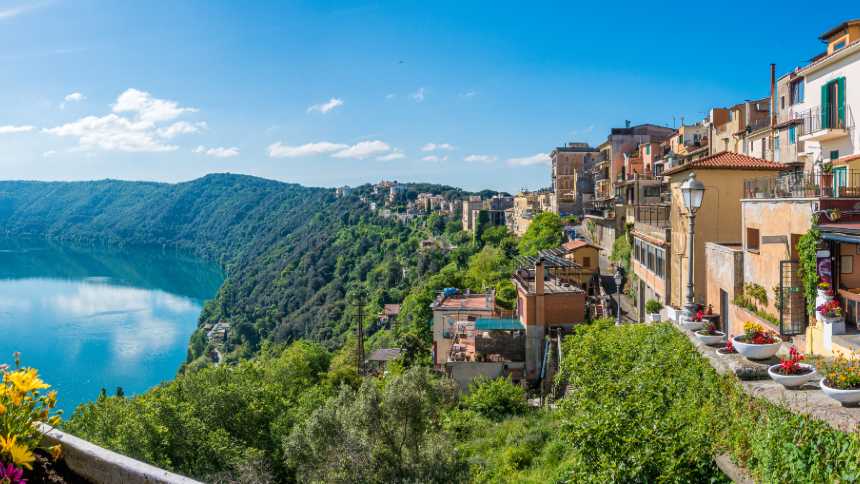
Scheduled to last until July 27, the trip marks the Holy See 's return to one of the most symbolic places in papal history, located in the Castelli Romani, about 25 kilometers from Rome — a region of hills and volcanic lakes, with a milder climate than the Italian capital.
The city is home not only to a palace, but also to a small, independent historical center, featuring the church of St. Thomas of Villanova, designed by Gian Lorenzo Bernini (1598–1680), as well as shops, restaurants, and permanent residents.
And what does the Holy Father do there, besides praying and resting from a busy schedule?
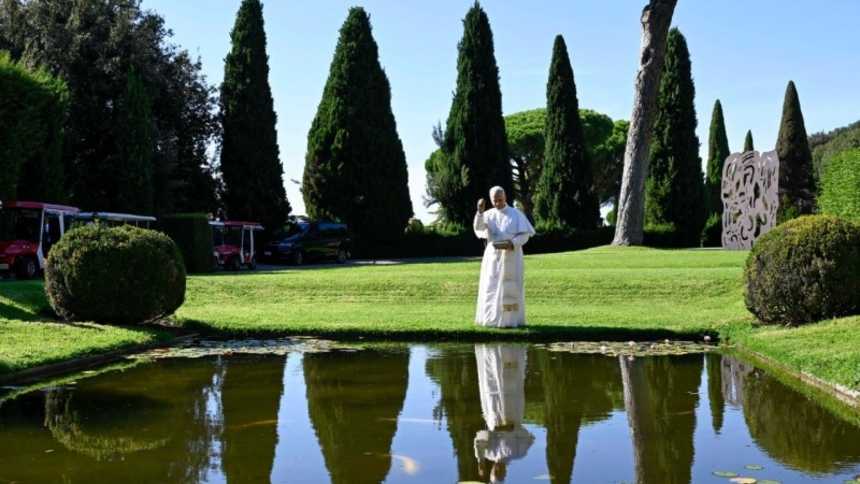
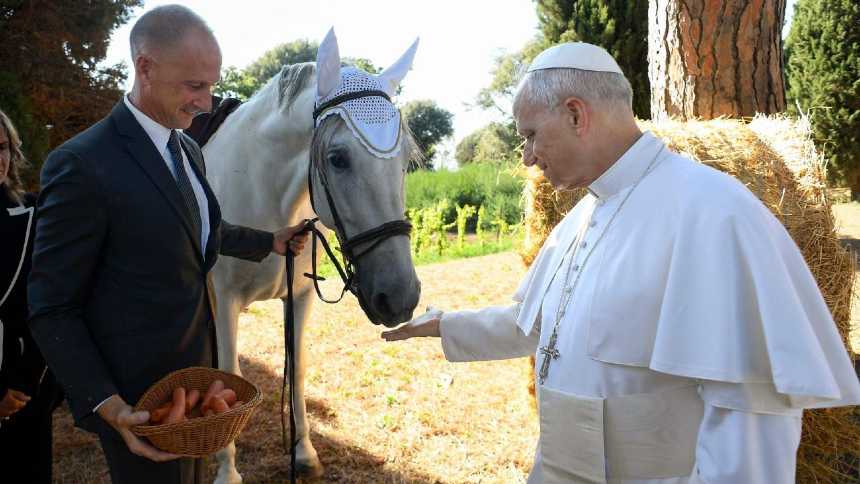
In his own words, as he once declared: “ Un po' di tennis, un po' di piscina ” (“A little tennis, a little swimming”), in addition to horseback riding and strolling through the gardens, which are the very expression of divine creation.
The property is managed by the Vatican , which has its own service and logistics structure. During Leo XIV's stay on the property, the operation includes closing streets, reinforcing security measures, and a series of adaptations to ensure the functioning of the papal villa.
This will be the Pope's second period of rest in Castel Gandolfo. Last year, in August, he stayed at Villa Barberini, which is part of the complex, but he was unable to completely disconnect from his duties, as he was still adapting to the papacy and maintaining commitments related to the Jubilee.
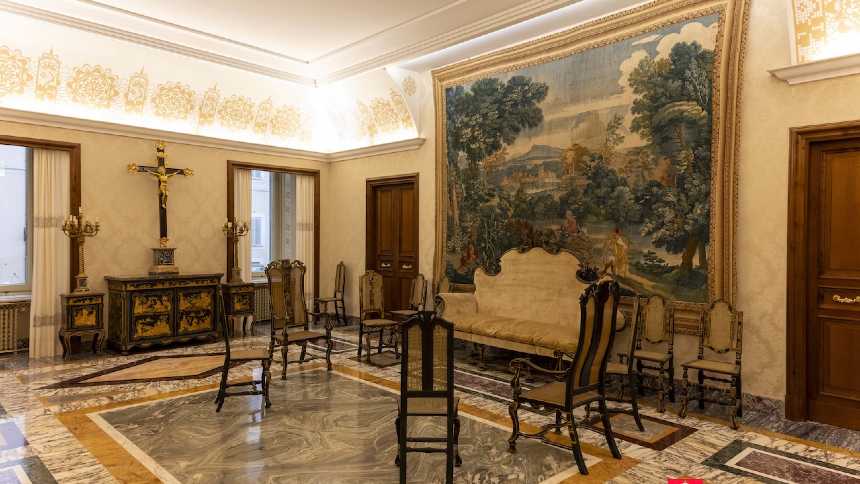
This time, the pontiff will stay at the Apostolic Palace, which has undergone renovations to once again accommodate him as a summer residence. The building houses reception rooms decorated with tapestries, religious paintings, and sculptures, among other works of art.
That's where the Gallery of Popes is located. Situated on the first floor of the palace, it displays a collection of official portraits of all the leaders of the Catholic Church since 1500.
Leo XIV's private apartment comprises a bedroom, office, library, living and reception rooms, and a private chapel. The decor is understated and the furniture is historic.
The great ecological project
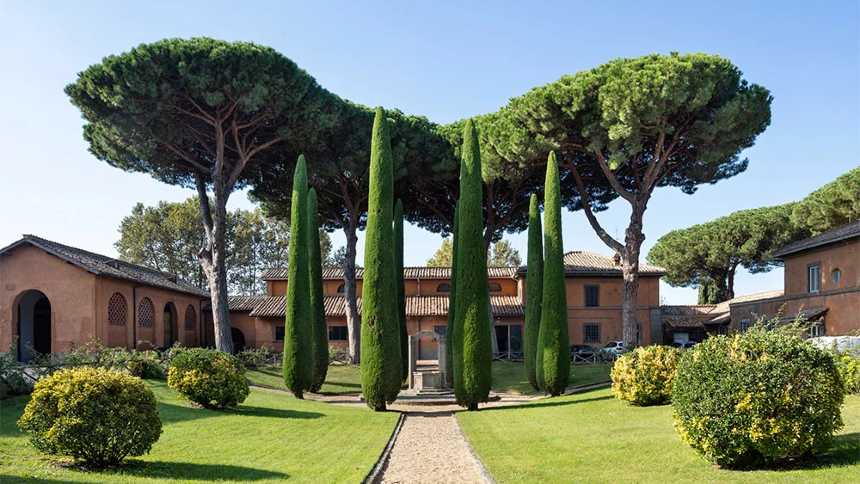
Set within a green area of 55 hectares, the Apostolic Palace and Villa Barberini occupy a space larger than the entire territory of Vatican City State. The complex includes historic Italian-style gardens, woods, vineyards, olive groves, vegetable gardens, greenhouses, and a farm, as well as the ruins of the ancient villa of the Roman Emperor Domitian.
It also houses Borgo Laudato Si', a center dedicated to training in sustainability and the circular economy, considered today the most contemporary face of the historic papal residence.
Inaugurated on January 31, 2023 by Pope Francis (1936–2025), the Borgo was named after the encyclical Laudato Si' , published in 2015, and embodies the concept of "integral ecology," in which environmental problems are addressed in conjunction with social issues.
In the Argentine's view, protecting nature and combating poverty were inseparable challenges, since the most vulnerable populations are usually the first to feel the effects of climate change, resource scarcity, and environmental disasters.
Among the goals associated with this agenda, the Holy See seeks to achieve climate neutrality, with initiatives aimed at reducing and offsetting carbon emissions.
The project functions as a living laboratory of environmental thought within the Vatican, bringing together sustainable agriculture, biodiversity research, organic production, environmental training, and educational programs in a space with vegetable gardens, vineyards, greenhouses, training areas, and a welcoming environment.
Part of the complex can be visited via guided tours, with tickets starting at around €25, depending on the chosen experience.
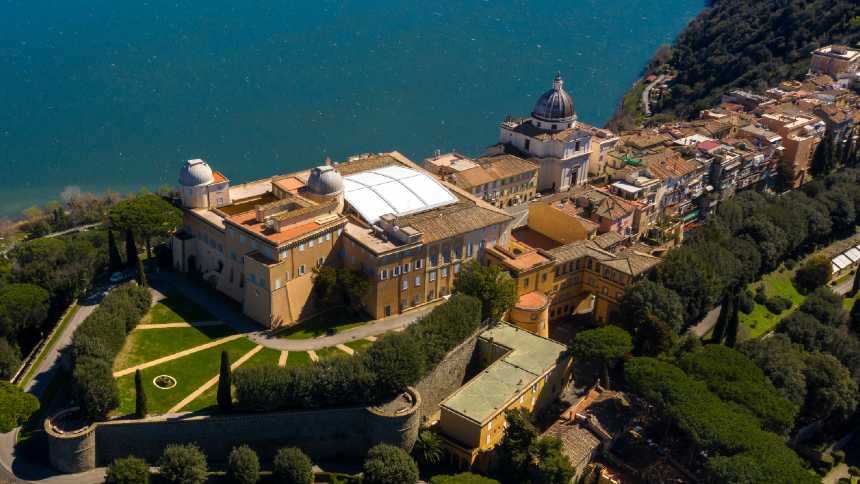
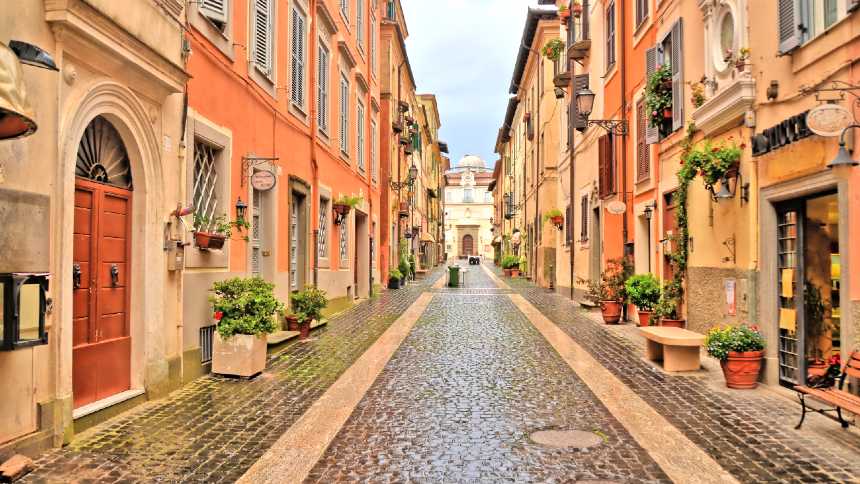
The papal villa of Castel Gandolfo occupies an area with roots in antiquity, built upon the ruins of the mansion of the Roman emperor Domitian (51–96 AD). The city's name, however, is medieval: it derives from the Latin Castrum Gandulphi — or "castle of the Gandolfo," in reference to the Gandolfi family, who erected a fortification on the site in the 13th century.
In 1596, the fiefdom was incorporated into the Papal States by Pope Clement VIII (1536–1605), after having passed through the hands of the Savelli family.
The definitive transformation into a summer residence occurred in 1626, when Pope Urban VIII (1568–1644) inaugurated the Apostolic Palace, designed by the architect Carlo Maderno (1556–1629). From that moment on, the continuous tradition of the residence's use by the pontiffs was consolidated, a cycle that will reach approximately 400 years in 2026.
Over the years, the city has become much more than a climate refuge: in the summer, it is cooler than Rome, which frequently reaches temperatures of up to 40 degrees Celsius. During the Second World War, by order of Pope Pius XII (1876–1958), the building housed thousands of refugees and served as a humanitarian refuge, with records of hundreds of births taking place within its walls.
More recently, the complex has returned to the center of the contemporary history of the Church. In February 2013, after announcing his resignation, Pope Benedict XVI (1927–2022) traveled by helicopter to Castel Gandolfo, where he remained until the election of his successor.
And, during his 12 years as Pope, Francis broke with the usual use of the summer residence and opened the Apostolic Palace to the public, transforming part of the complex into a museum and accelerating the cultural opening of the territory.
The landscape of Castelli Romani has also attracted the attention of cinema. In 2019, the film The Two Popes , directed by Brazilian Fernando Meirelles, used visual references to Castel Gandolfo to portray the relationship between Benedict XVI and then-Cardinal Jorge Mario Bergoglio.
The return of a pope to the summer residence reinforces the unique role of the space, where history, institutional tradition, and the new programmatic dimension of the Vatican, marked by Borgo Laudato Si', coexist.