

Whether it was a local amateur match or a World Cup final, football was always much more than just a game for Nelson Rodrigues (1912-1980). What happened between the lines represented for the journalist, writer, and playwright lives in despair, monumental glories, silent tragedies, and patriotism above good and evil.
When the subject was the World Cup, the drama doubled the moment he sat down to write a column. It's no coincidence that his most famous book on the subject is titled " The Fatherland in Football Boots ." Thus, Nelson became the greatest Brazilian sports columnist of all time.
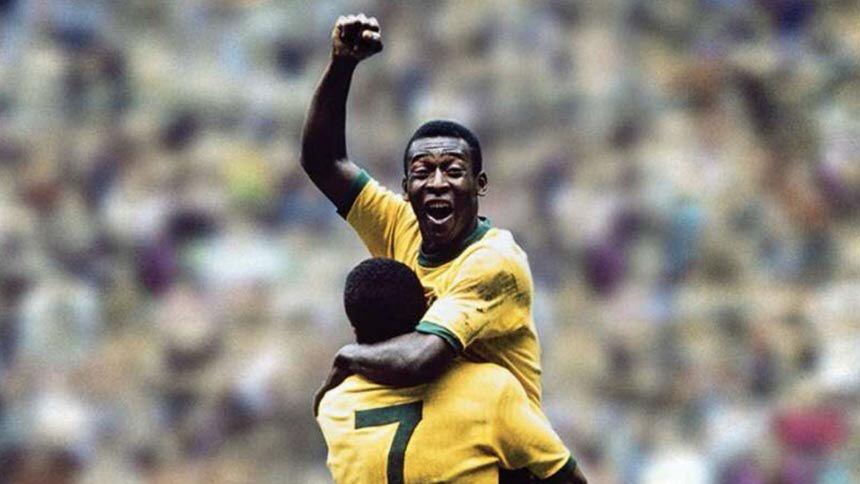
But life was kind to him. His greatest output came precisely during the period when the Brazilian national team shone brightest, between 1950 and 1970—when the country lost three championships but won three others, in 1958, 1962, and 1970. And Nelson had as his raw material the greatest stars of our football, such as Pelé , Garrincha , Didi, Djalma Santos, Jairzinho, Gerson, and others.
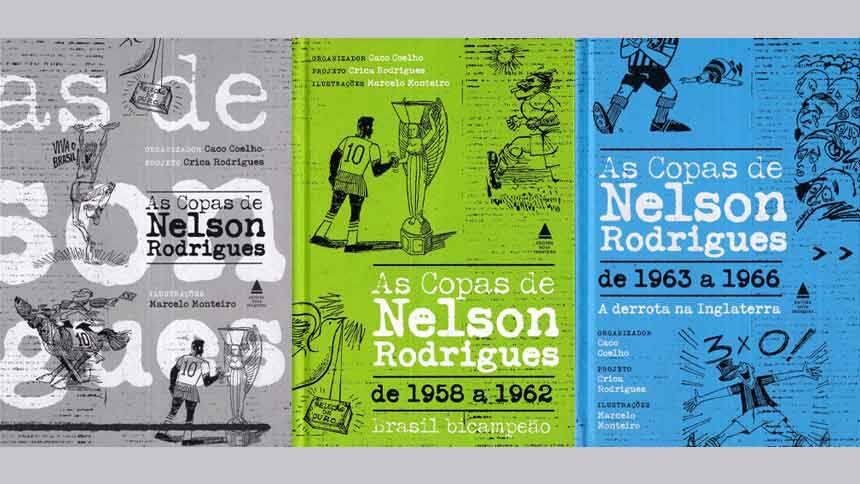
Because of his literary style, his texts have never lost their brilliance and relevance, as can be seen in the box set "The World Cups of Nelson Rodrigues." Published by Nova Fronteira, the anthology, comprising three books, is a gift from the gods for those who love football, Nelson Rodrigues, and well-written chronicles.
The collection recovers more than 150 previously unpublished texts in book form, originally published in the newspapers Última Hora and O Globo . It is organized by Caco Coelho, with illustrations by Marcelo Monteiro. The graphic design is by Crica Rodrigues, Nelson's granddaughter. The box set also includes prefaces by the three-time champions Gerson, the "Golden Left-Foot," and Tostão.
Exaggeration was the journalist's most common way of expressing his enthusiasm: "But we have a Didi. I say he looks like an Ethiopian prince on a ranch. And, in fact, Didi is playing in a robe," he wrote after Brazil's game against France in 1958.
Four years later, in the quarter-final against England, he highlighted Garrincha: “Imagine that, in the previous game against Spain, a colleague of mine gave Mané a score of six. Half a dozen. Now, to insinuate any objection against Garrincha in that game is a crime. If the maximum score was ten, Garrincha deserved at least 150.”
After the victory in Chile, Nelson remarked: “Throughout these last forty-eight hours, there hasn't been a single bad character in Brazil. The scoundrels have vanished. Or, to put it another way: even the scoundrels were wearing shiny, Franciscan sandals.”
In the 1966 elimination, the writer blamed the coaching staff: “All this under the astonished noses of a people. And 80 million people [the country's population at the time] are there, paying for the stupidity of others.” He classified the final between England and Germany as "anti-football"—a style of play based on physical strength, tactical defense, bureaucracy, and the coldness of mathematics.
Four years later, however, the joy returned threefold: "With Brazil's campaign, there were tears, and speed blossomed even in the most chaotic of wakes." And he concluded: "I wanted to finish by saying: for forty thousand years, there hasn't been a football like the Brazilian football of '70."
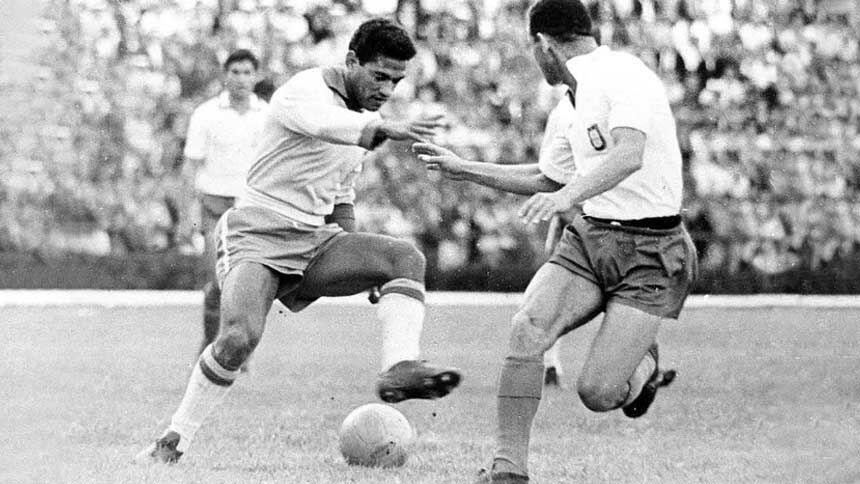
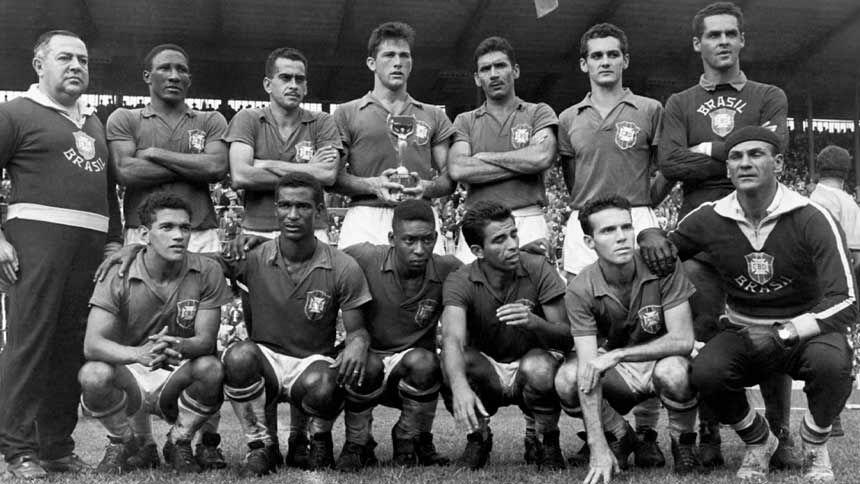
Nelson transformed matches into epics, players into dramatic characters, and the ball into an emotional barometer of an entire country. "In the texts selected here, he advances in short passes with history, dribbles past destiny, feints against the inferiority complex, and goes for the finish with phrases that find the top corner, true masterpieces echoing national memory," writes the organizer.
Thanks to his epic style, his chronicles make football the common thread in a broader narrative, as Coelho argues — the story of a victorious Brazil, starring the national team of stars, but also fans, clubs and great athletes from other sports, necessary supporting actors, never reserves, in the great championship of national life.
As a sports columnist, Nelson focused his writing on building a strong national team. He embarked on this mission in 1954, the year the Brazilian national team was, once again, defeated in a World Cup, after losing the 1950 final at the Maracanã, one of the greatest humiliations the country had ever suffered, according to him. "It was necessary to inflate the egos of the countrymen. To show that the best football in the world was played here," says Coelho.
Nelson's writings appeared in columns such as " In the Shadow of Immortal Football Boots ," " Nelson Rodrigues Says Good Morning , " "Football is Passion," and "The Battle ." One of them, however, became the longest-running of all: "My Character of the Week ," written over 12 years, in which he profiled football players and prominent figures from other sports.
The material researched for this release totaled 700 texts. Ten were selected per year, between 1959 and 1970, and ten about each of the four World Cups. They were chronicles of great impact due to the technological limitations of the time.
In 1958, for example, radio was the only way to transmit the matches. Films of the matches arrived much later. In 1962, videotape for TV arrived a few days late, as it did in 1966. Only in 1970 was there live transmission, and Brazil was able to witness its greatest achievement in color.
Nevertheless, the columnist's observations did not lose their force or brilliance. A large part of the nation "watched" the games through his writings. "Nelson Rodrigues was the greatest poet to sing of our fields, and 'My Character of the Week' is his greatest poem," assesses the organizer.
In the preface, Gerson states: “Writing these lines to open Nelson Rodrigues’ book is, for me, more difficult than competing in a World Cup final.” And he explains that, on the field, he always knew where to place the ball. “In words, I feel like an apprentice before a master who made the Portuguese language an art as precise as a well-placed pass.”
For him, Nelson never focused solely on football: “He wrote about man. About fear, vanity, courage, cowardice, love, hate, hope, and tragedy. He used football as a mirror because he knew that, inside a stadium, the Brazilian reveals himself completely. There are no characters there: there is truth. There are tears. There is laughter. There is drama. There is exaggeration. There is Nelson.”