


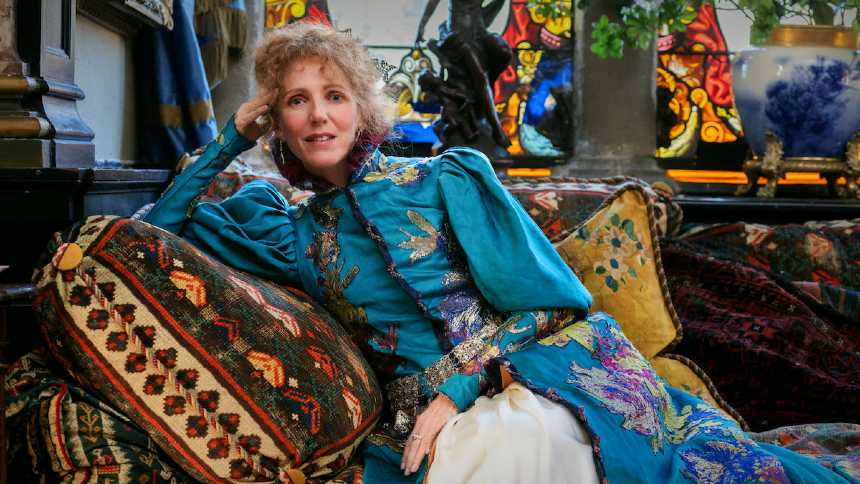

The French actress Sarah Bernhardt (1844-1923) is said to have inspired the expression "sacred monster," coined by Jean Cocteau in the early 20th century. Before her, no artist had ever achieved such mythical status or global recognition.
It's no coincidence that "the Divine One," as she was called, is considered the first celebrity in history. "Even in the most remote places, people will know my name," says the actress in the biopic scheduled to premiere in Brazilian cinemas on July 16.
Although the film directed by Guillaume Nicloux does not focus on Bernhardt's pioneering work, the passages from the actress's life chosen for The Divine Sarah Bernhardt illustrate how she created a model for constructing her own image and laid the foundations for the contemporary culture of fame.
Even in her private life, the actress was concerned with her personal brand, trying to impress those around her.
Eccentric, rebellious, feminist, and visionary, Bernhardt understood perfectly that the more she nurtured the mythology surrounding her figure, the more fascination she would arouse. And, meticulously, she constructed a public persona marked by quirks, transgressions, and excesses.
Thus, she guaranteed the attention of the public and the media—using and manipulating it to her advantage. The Frenchwoman's success, therefore, cannot be explained solely by her talent as an actress, even though she was capable of mesmerizing audiences with intense performances in classic French plays, especially tragedies.
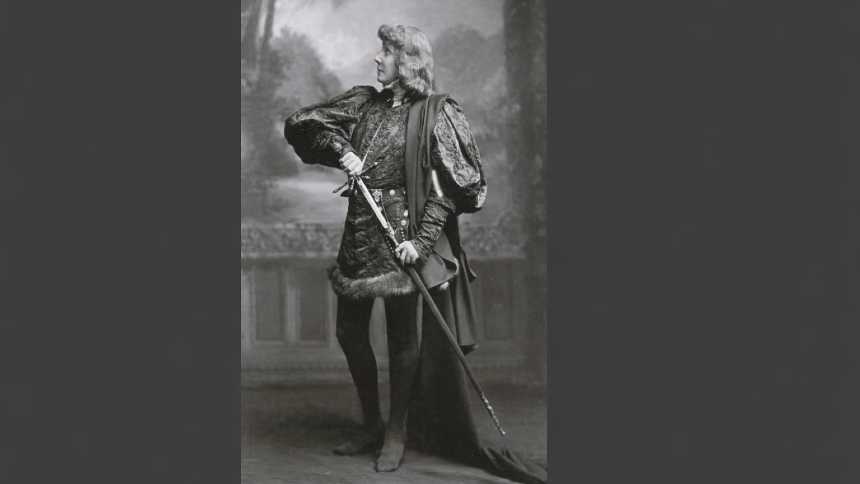
Her nonconformity led her to break gender barriers, causing scandals. This happened when she challenged the theater of her time by playing male roles, most notably the title character in William Shakespeare's Hamlet .
The ability to self-promote is clear in the scenes set in 1896, with the actress in her fifties and at the peak of her career, portrayed with the necessary extravagance by actress Sandrine Kiberlain.
Anything goes when it comes to cultivating a cult-worthy image, whether it's the opulence of her wardrobe or the bizarre aspects of her domestic life. Like sleeping in a coffin, which supposedly helps her prepare for her roles, or preferring exotic pets such as a cheetah and a boa constrictor.
Bernhardt made a point of behaving like a diva, precisely to cause a stir. Sexually liberated, which shocked the sensibilities of the time, the actress had a past as a courtesan and did not hide her (numerous) lovers. And she herself contributed to her reputation as a star with an explosive temper, even going so far as to slap a colleague at the Comédie-Française.
The actress still demanded exorbitant fees for her performances, charging between US$1,000 and US$1,500 per show—a fortune at the time. Since she managed her own contracts, she soon realized she could significantly increase her income by taking advantage of the off-season in French theaters to travel the world.
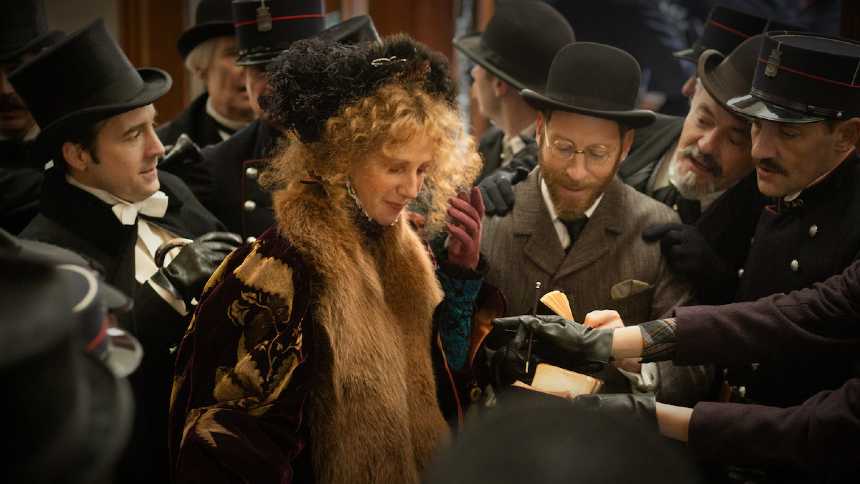
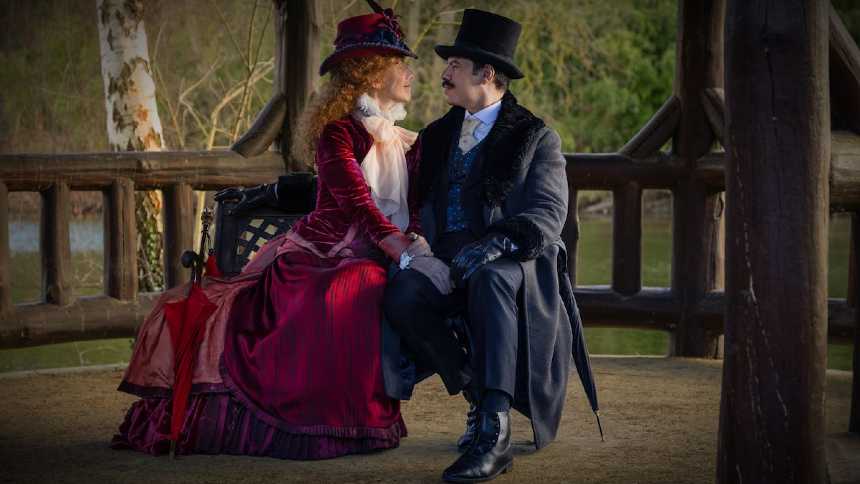
She was the first to undertake major international tours, traveling throughout Europe, the Americas, and Australia. As a result, her name became known even to those who had never seen one of her plays.
As his fame grew beyond French borders, he supplied the press with stories about his travels, moving around with 75 crates full of luxurious clothes and about 250 pairs of shoes.
Bernhardt visited Brazil three times, in 1886, 1893, and 1905. In fact, the accident that led to the amputation of her right leg occurred in Rio de Janeiro during her last visit to the country. In the epilogue of the play La Tosca , in the scene where the protagonist commits suicide by throwing herself from the top of a wall, the French actress injured her knee—the production forgot to put down the mattress that would have cushioned the fall.
This was the beginning of an ordeal that lasted for a decade and is highlighted in the film. Because Bernhardt refused medical assistance, her knee was never properly treated. The injury became gangrenous and, in 1915, she underwent amputation. But this did not prevent the actress from continuing to work.
Out of pride, she refused to use crutches. She began to perform, mostly seated—and continued to be acclaimed for her performances. The story reinforced her aura of courage and further contributed to her mythology.
In the biopic, the actress's greatest struggle was her turbulent and obsessive relationship with her colleague and lover Lucien Guitry (played by Laurent Lafitte). And this is the controversial choice of the screenplay written by Nathalie Leuthreau. With such a fascinating personal and professional trajectory, why put her romantic disillusionment under the microscope?
Despite its limited scope, the film paints a true portrait of a woman ahead of her time. Bernhardt not only left her mark as an actress, but took her influence to a higher level, becoming a global star.
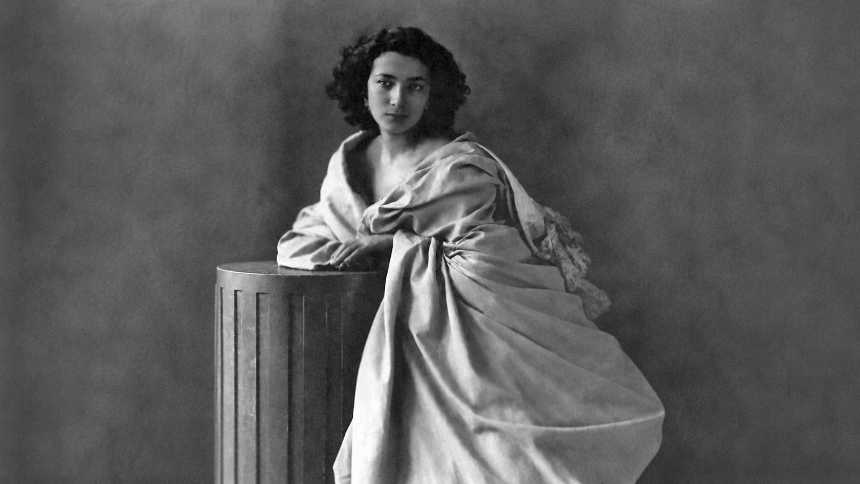
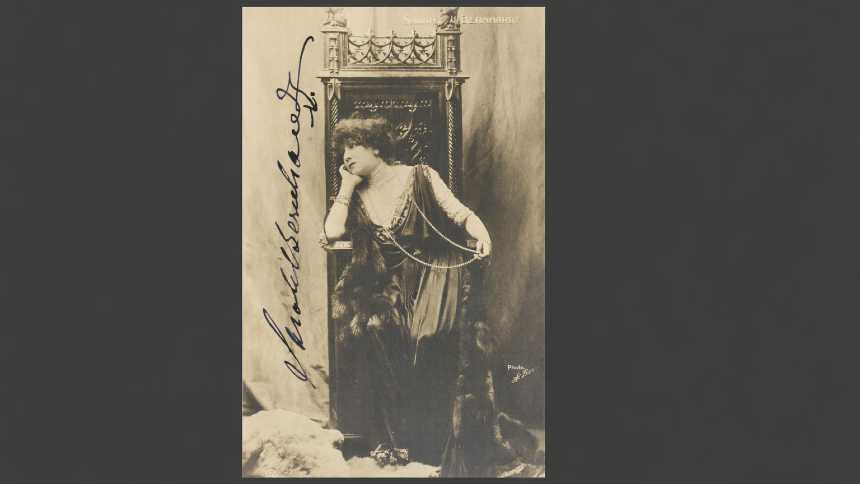
Long before social media, she fueled the collective imagination with photographs of herself idealized as works of art. Her partnership with photographer Napoleon Sarony, in particular, was historic.
With stylish and theatrical portraits, Bernhardt helped shape the image of a celebrity, receiving US$1,500 per session—at the time the highest amount ever paid to a model. And these photos (mass-produced in postcard format) were strategically sold as souvenirs around the globe.
Thus, even those who couldn't afford to see her on stage could buy a picture and create an intimacy with the actress, seduced by the luxury, glamour, and extravagance that Bernhardt evoked so naturally.