

After dethroning Tesla in the electric car market, the Chinese promise to open a new front in the dispute against another of Elon Musk's companies, currently his "darling": SpaceX .
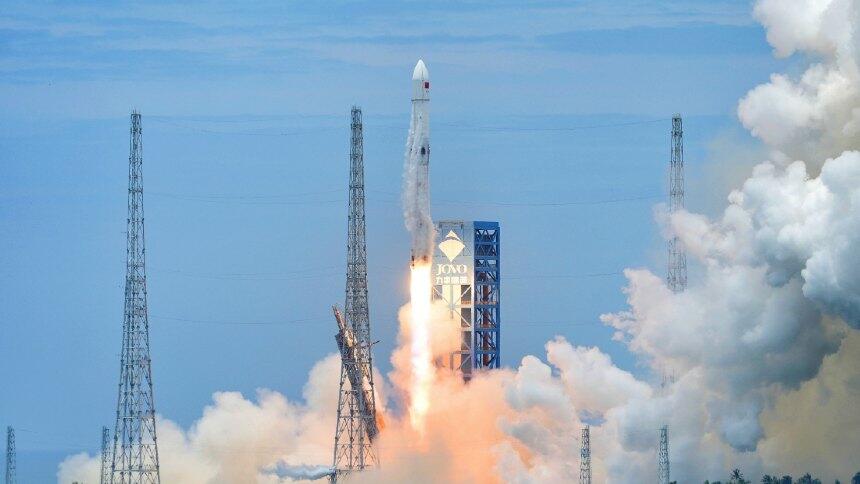
China successfully tested a rocket recovery system on Friday, July 10, according to state media reports. The Long March-10B was launched from a base in Hainan province, in the south of the country.
According to the state-run CCTV network, about six minutes after the separation between the booster and the upper stage, the booster returned vertically and was recovered on an offshore platform.
This was the first time China had successfully demonstrated rocket recovery technology, an important step in Beijing's plans to become a space power.
In recent years, the country has been increasing the number of astronauts. Another goal is to send astronauts to the Moon by 2030.
The successful launch "will establish a solid foundation for accelerating the improvement of the country's space access capabilities," stated the China Aerospace Science and Technology Corp., the state-owned company responsible for developing the rocket, according to The Wall Street Journal (WSJ).
The Long March-10B rocket was developed for commercial purposes and is capable of carrying a payload of at least 16 tons to low Earth orbit.
The result opens a new front in the competition for SpaceX, although the Chinese are still far behind Musk 's company. The billionaire and his team have been developing reusable rocket technology for over a decade, work that culminated in the creation of the Falcon 9.
SpaceX landed a Falcon 9 rocket for the first time after an orbital flight in December 2015, according to Reuters news agency. On its website, the company states that the rocket has completed 660 missions.
While the Falcon 9 lands autonomously on retractable legs on a land-based platform or a drone ship, the Long March-10B still needs to be recovered using a net.
But if what the Chinese have done in the electric car market is any indication, Musk should face increasingly strong competition in the reusable rocket segment in the coming years.
Through billions of dollars in incentives, Beijing has developed the world's largest electric car ecosystem, with hundreds of brands—even leading to saturation and bankruptcies in the Chinese market—and major battery manufacturers.
BYD , the country's leading automaker, has become the world's largest manufacturer of electric cars, surpassing Tesla. In 2024, the Chinese company overtook the American company in revenue and, a year later, also surpassed it in sales volume.
In 2025, BYD sold 1.76 million vehicles, while Tesla sold 1.63 million units.
With increased competition — considering that the Japanese are also expected to present a prototype of a reusable rocket this Saturday, July 11, in addition to the advances of Jeff Bezos ' Blue Origin — SpaceX is investing in the next generation of rockets.
Part of the $75 billion raised in its initial public offering , the largest in history, will be used to accelerate the development of Starship, a family of reusable rockets capable of carrying heavier payloads than the Falcon 9 and performing crewed missions. The company has already invested more than $15 billion in the project, according to a Reuters report published in March.