

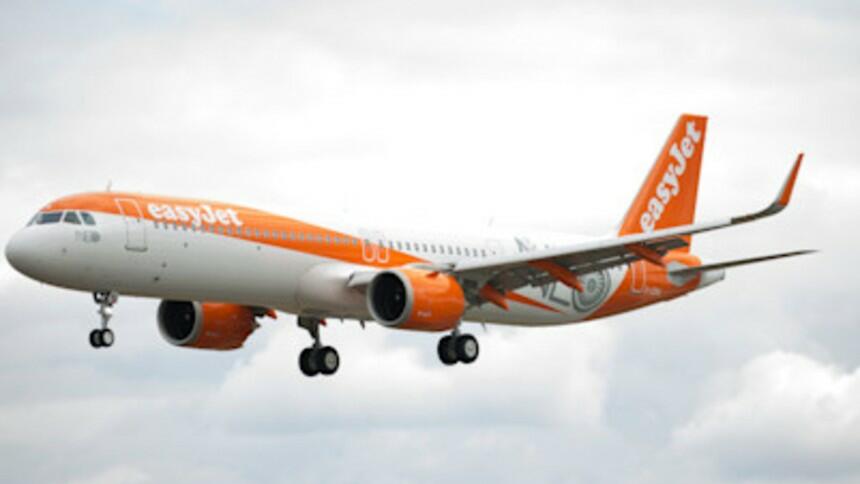
Four days after British airline EasyJet accepted a takeover bid from American investment firm Castlelake for £6.90 per share, in a $6.7 billion deal, following weeks of pressure, the M&A script changed.
On Friday, July 10th, the company reached an agreement with Apollo Global Management to accept a takeover bid of £7.15 per share, or US$9.59 each, valuing the business at US$7.6 billion. This turnaround represents a 3.7% increase in the offer's value per share, in British currency.
The financial market reacted optimistically to the low-cost airline 's change of plans. On the London Stock Exchange, EasyJet shares were up 14.6% on Friday, July 10, around 2:40 pm (local time), reaching their highest level in four years.
“The EasyJet board has carefully considered the proposed offer together with its financial advisors and has unanimously concluded that the financial terms of the proposal under consideration are at a level that would be appropriate to recommend to shareholders should a firm intention to make an offer be announced on such financial terms,” the company said in a statement released this Friday, the 10th.
The potential dispute comes at a time of turbulence in the aviation sector. The start of the war in the Middle East, stemming from the conflict between the United States and Iran , has raised aviation fuel prices, disrupted routes, and affected travel demand. In April, EasyJet issued a statement explaining the increased fuel costs related to the conflict.
Apollo's offer represents a 22% premium over Thursday's closing share price and an 81% premium over the share price on May 28, the last day before the start of Castlelake's bidding period.
In the proposal, the asset manager offers shareholders an alternative to the agreement, which would be entirely in cash from Castlelake, allowing the exchange of EasyJet shares for a stake in the investment vehicle that Apollo intends to use to buy the airline.
Apollo stated that it intends to retain the brand if the acquisition goes through and that it does not plan to alter its current licensing agreement with EasyGroup, a company owned by its founder Stelios Haji-Ioannou.
According to the LSEG data platform, the Haji-Ioannou family is the largest shareholder of EasyJet, with a 15.3% stake.
Although the proposal has been accepted by EasyJet, Apollo has until August 7th to formalize the agreement.
“It’s no surprise that a second interested party has emerged in EasyJet,” Chris Beauchamp, chief market analyst at investment and trading platform IG, told Reuters . “The potential of the business remains substantial, despite the disappointing performance of recent years,” he said.
Apollo plans to retain key airline employees to continue EasyJet's strategy of expanding capacity and developing its travel routes.
“The proposal not only increases the offer to shareholders, but also, from the perspective of EasyJet's board, supports the airline's current growth strategy,” says aviation industry analyst John Strickland.
The UK market has recently faced a wave of foreign takeover bids, driving a record number of M&As, as some analysts claim that British companies are undervalued.
In the first half of 2026 alone, the total number of offers to acquire British companies increased by 210% compared to the same period last year, reaching US$231 billion. More than half of the acquisitions were made by companies from the United States.
Apollo stated that it will seek to meet the necessary conditions for foreign investors to control a European airline.
Like Castlelake, Apollo is an American company, which means it cannot gain full control of EasyJet, as the airline operates under UK and European rules that require majority ownership and control by shareholders from the region.
The aviation sector is nothing new for Apollo or Castlelake. The company making the first offer was a co-investor in Air France-KLM's acquisition of the Scandinavian airline SAS.
Apollo, on the other hand, operates an aircraft financing unit that includes a leasing, management, and financing company with offices in New York, Dublin, and Singapore. The company's aviation platform finances more than 360 commercial aircraft and over 60 engines.