

Less than a month after the initial public offering (IPO) of Elon Musk's SpaceX in the United States, held on June 12th on Nasdaq, the financial market already sees great potential for growth in the value of the shares.
According to the Financial Times , the American investment firm Raymond James, which initiated coverage of the company, believes SpaceX's market value could soon reach $10 trillion.
“We initiated coverage of SpaceX with a strong buy recommendation and a price target of $800, as we consider the company one of the leading industrial infrastructure companies of the 21st century,” says a report from the Florida-based financial institution that participated in the company's IPO.
"Industrialized access to orbit and artificial intelligence (AI) are driving the most significant infrastructure convergence since the emergence of the internet," he adds.
The $800 price target is more than double the forecast of Morgan Stanley analyst Adam Jonas (target price of $300). And almost four times higher than the price target given by Goldman Sachs, one of the main banks in the IPO offering ($205).
In this way, SpaceX would become the most valuable company in the world, taking into account the current market capitalization of the main companies listed on the stock exchange.
In practice, the company would be worth more than Nvidia (US$ 4.7 trillion) and Apple (US$ 4.5 trillion) combined, the top-ranked companies.
It also reaches a value equivalent to at least 10 companies invested in by Warren Buffett's Berkshire Hathaway . That would be the same as the entire Chinese stock market, or the combined value of the French, German, and UK stock markets.
And, if it were a country, based on this assessment by Raymond James, SpaceX would be the third largest if its market value were Gross Domestic Product (GDP), behind only the United States and China, and ahead of Germany.
Today, SpaceX is worth US$2 trillion. Even so, since going public, the company's shares have fallen by 6.4%. On Thursday, July 9th, the shares were up 1.5% around noon (local time). And the stock was trading at US$150.5.
The assessment is based on Raymond James' projections that SpaceX's annual revenue will exceed $837 billion by 2031, while EBITDA will reach $696 billion, a scenario still far from reality.
Last year, Elon Musk's company achieved revenue of US$18.7 billion, accumulating a loss of US$4.9 billion. But the bet for this possible astronomical takeoff, according to the fund manager, lies in the company's new rocket model, the Starship, which will have its next test flight in July.
“Starship reduces the cost of transporting mass to orbit by more than 99%, while increasing payload capacity by an order of magnitude, transforming access to space from a scarce resource into an abundant industrial platform,” the manager states.
"We believe Starship represents the next inflection point, unlocking a total addressable market that we estimate to be close to $30 trillion," the text says.
The argument is also based on the fact that, as launch costs decrease, SpaceX will begin to commercialize infrastructure platforms that encompass connectivity, AI, national security, and transportation.
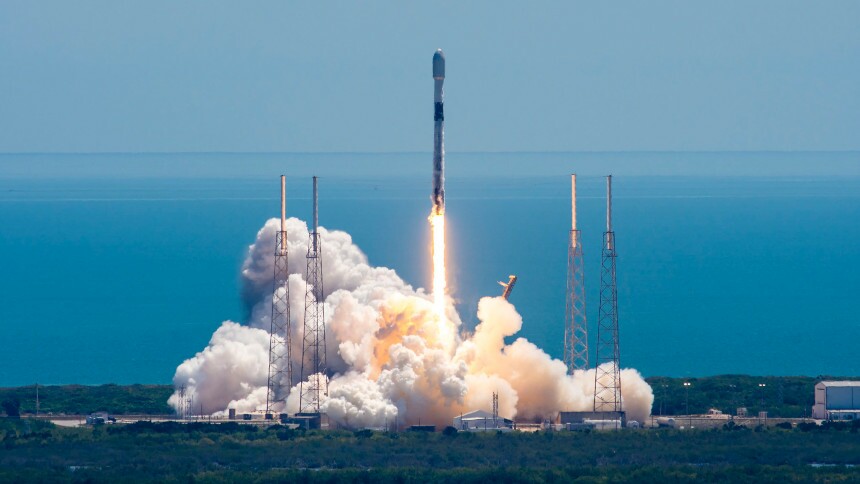
The vision is that SpaceX has indeed managed to create an important virtuous cycle of infrastructure. Each generation of infrastructure funds the next. The Falcon rocket family funded the Starlink satellite unit. This division helped fund Starship, which now enables the next generation of business units.
“As each platform scales, it generates the capital to finance the next one, while simultaneously increasing the value of each platform, creating a capital allocation mechanism that multiplies profits, company value, and competitive advantage,” says the manager.