


With direct operations in 14 states and a 13% market share in the diagnostic medicine market, the Fleury group has seen acquisitions as a strong avenue for growth in recent years. From 2017 to the present, the company has completed 22 M&As , with investments of R$ 2.4 billion.
This move caused the company to jump from a revenue of R$ 4.2 billion in 2021 to a total revenue of R$ 9.2 billion, considering the annualized scenario for the first quarter of 2026. The growth in the period reached 119%.
But today the scenario regarding new acquisitions is a little different. Given an even more challenging macroeconomic scenario, especially with the current Selic rate at 14.25% per year, the focus is on having an even more thorough "diagnosis".
In fact, from the end of 2024, when the interest rate effectively began to rise more rapidly until it peaked at 15%, until now, of the 99 potential acquisition proposals studied by the company, only five have materialized. Among them are the São Lucas group, Hemolab, and Femme. In these purchases, Fleury's total investment was R$ 480 million, precisely with smaller acquisitions.
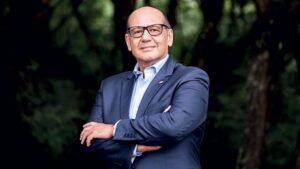
“Today the cost of capital is very high. The entire consolidation process across various sectors has slowed down with this rise in interest rates. Fleury hasn't stopped, but continues to make small acquisitions, starting with mature assets that already generate cash,” says Jeane Tsutsui , CEO of the Fleury group, in an interview with NeoFeed .
In this context, the company targeted businesses specifically in regions where it lacked a significant physical presence with its brand, such as the interior of São Paulo state, in order to gain market share. One example was the purchase of Confiance, located in the Campinas region, for R$ 130 million.
“In the city of São Paulo, we have a very high penetration rate. But there's also the interior. We've recently entered many cities, such as Rio Claro, Vinhedo, Hortolândia, and Campinas. Today, we are only in the major economic centers,” explains Tsutsui. “There are many municipalities to expand into.”
Despite its significant market share, the company currently operates in 65 cities across Brazil, demonstrating a strong concentration in major metropolitan areas. Fleury is specifically targeting smaller cities with strong economic potential.
Currently, the group controls 39 brands, although the main focus is on the Fleury name. In total, there are 570 service units in Brazil.
But with so many smaller brands coming under the umbrella of the diagnostic medicine company, there is a major challenge: maintaining the same profitability as the group's main brand.
According to Itaú BBA, the acquisition strategy raises concerns about maintaining profit margins. The bank forecasts that the company will register a 20 basis point contraction in EBITDA in 2026 compared to the previous year.
"Margin dynamics will be affected by mergers and acquisitions (M&A) in 2026. This topic remains a central point of discussion in Fleury's investment thesis," say analysts Vinicius Figueiredo, Lucca Marquezini, and Felipe Amancio in a report released in June.
They state that the acceleration of the Fleury brand will continue to support the company's profitability and that capturing administrative synergies and economies of scale will contribute to greater operational leverage. However, the expansion of other brands, with lower margins, is expected to reduce the company's consolidated profitability.
In its own first-quarter earnings report, the company indicates a stable EBITDA margin during the period, with no significant growth. The indicator reached 27.3%, compared to 27.2% in the first quarter of the previous year. For the consolidated results of 2025, the EBITDA margin showed zero growth.
That's precisely why each M&A deal is being scrutinized. With approximately R$2.2 billion in cash, the company evaluates three key points. The first is strategic: whether the asset is in a growing area with good penetration in the supplementary health market.
Another aspect is the cultural one, taking into account whether the brand is strong in the city, has a relevant history, and has a good relationship with patients and doctors. "Generally, we acquire the main or second largest asset in a given region," he says.
The third aspect, then, is the economic and financial one. “Buying at a high price can mean destroying value. Our multiple today [EV/EBITDA] is 5.5 times. If I pay above that, it's expensive. There are 22,000 laboratories in Brazil. But are they for sale or in a good region? That's the calculation that needs to be made,” he says.
In this context, there is still one important condition for the deal to actually go through: the size of the check signed cannot jeopardize financial discipline or affect the group's leverage, which is currently at 1 times the net debt to EBITDA ratio. If this variable is significantly affected, the deal will not go through.
"We should stay between 1 and 1.2 times [the initial investment] by the end of the year, with these small acquisitions. We have room, but a lot of calculations are needed. I don't need to buy. I'll buy if there's a good opportunity and if there's convergence in all the pillars," he concludes.
In 2023, the group acquired Hermes Pardini , in one of the company's largest transactions (the company celebrated its 100th anniversary in 2026), and expanded its operations in the B2B market, known as lab-to-lab .
In this segment, Fleury has partnerships with approximately eight thousand laboratories in 2,200 municipalities. Through this channel, the company serves other smaller laboratories, which contract Fleury and send samples for testing.
According to Fleury's CEO, acquisitions are important for expanding financial results, but the company also focuses on organic growth. In the first quarter, revenue grew 10.1% year-over-year, reaching R$ 2.4 billion. Profit was 12.2% higher than the same period in 2025.
Of the company's total revenue, 91% comes from its core business , which is diagnostic medicine. Within this calculation, the B2C segment, encompassing its own units and direct patient examinations, accounts for 70%.
Lab-to-lab sales currently account for 21% of revenue. The remaining 9% comes from the so-called "new links" segment, which includes other services in oncology, orthopedics, ophthalmology, and medication infusion.
The "no" to the purchase of Oncoclínicas.
Although the current strategy is to buy smaller assets, the company does not rule out the possibility of an acquisition considered "transformational," as was the case with Hermes Pardini.
It was precisely from this context of looking for greater opportunities that Fleury's initial interest in Oncoclínicas arose, a company that found itself involved in the Banco Master scandal, which directly affected its operations.
At the end of March, the company announced its adherence to a commitment agreement for the creation of NewCo, by Fleury and Porto , with investments of R$ 500 million from each. Oncoclínicas would contribute the assets and operations of the oncology clinics, and their liabilities valued at up to R$ 2.5 billion. However, less than a month later, the talks were terminated.
According to Tsutsui, there wasn't enough time for a more thorough analysis. The executive believes months would be needed for a detailed due diligence of the company's figures. "Porto came in and invited us to evaluate, because they know we understand the outpatient business. The company has a large reach, and it's a service that would make sense for us. But we only had three weeks to evaluate," she explains.
The CEO says the company even asked for more time, but Oncoclínicas' urgency in finding a solution to the crisis made extending the deadline impossible. "It's a large asset, with R$6 billion in revenue. We even asked, but it wasn't possible to negotiate. And we didn't want to interfere with their situation," she states.
In practice, Fleury already has a presence in this segment through Croma Oncologia, a joint venture in partnership with Beneficência Portuguesa (BP) and Atlântica Hospitais , which is now part of Bradsaúde . However, its market penetration is still small. Therefore, acquiring Oncoclínicas would make sense.
“It’s the same segment, but Croma has four units. And Oncoclínicas has 148. Outpatient units are precisely our DNA. It would be a way to grow faster. Where I can’t grow organically, I do it through acquisitions.”
With a 33% stake in Croma, Fleury does not include the financial results of the joint venture in its balance sheet. Now, for Fleury's CEO, Oncoclínicas is a closed chapter. With the end of negotiations, it is no longer a potential future acquisition.
Each year, the Fleury group processes 368 million laboratory tests. The largest volume consists of blood samples.
In the year to date, FLRY3 shares on the B3 stock exchange have registered a 5.5% increase. Over the last 12 months, the appreciation is 20.3%.
The second-quarter earnings report will be released on August 6th. The Fleury group has a market value of R$ 8.5 billion.