


On July 1st, after a long process of searching for strategic partners and, subsequently, buyers, the Brazilian brokerage firm Warren Investimentos announced the sale of its assets to the Argentinian platform Cocos Capital.
The financial terms of the acquisition were not disclosed. But it is certain that the deal added new figures to Seneca Evercore 's operations. Founded by Daniel Wainstein , former president of investment banking at Goldman Sachs in Brazil, the boutique firm focused on M&As , capital markets and restructurings advised Warren on the agreement.
Two months earlier, Seneca had already acted on the sell side of the transaction that sealed the sale of 40% of FS Bio, a corn ethanol producer, to Amaggi, in a US$1 billion deal. And for the remainder of 2026, its projection is to surpass its best performances in this area.
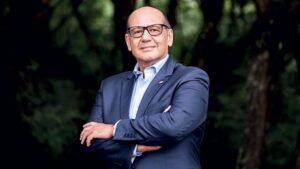
“We see the chance for a record year of M&As at Seneca,” says Wainstein, founding partner of Seneca Evercore, to NeoFeed . “We’ve already done around R$5 billion in the first half of the year, but we understand that we’ll have much more to announce in the second half.”
General data compiled by the boutique shows how the first half of the year went. During this period, there were 330 M&As in the country, which moved US$ 30.4 billion (R$ 157 billion), a 6% decrease compared to the financial volume in the same period of 2025, when 420 agreements were registered.
Despite this setback, Seneca's optimistic projections for 2026 are based on the perception that, after a sharp slowdown in the consolidated figures for 2025, there has been a restart of talks in the first six months of this year. And that this recovery should be reflected in actual agreements in the second half of the year.
This perception within the boutique firm that it's possible to beat its own record, set in 2023 when it acted as an advisor in M&As totaling R$ 15.5 billion, is fueled by the volume of over 30 mandates on its desk. A large portion of these are on the sell side and have varying ticket sizes.
“We have transactions that we can announce worth R$300 million, R$400 million. And others of R$3 billion. The range is quite broad,” says Wainstein. Contrary to the 2025 forecast, he emphasizes that the list of sectors in Seneca's pipeline is also more diverse.
This relationship includes many potential business opportunities in the financial market – in the areas of asset management, wealth management, and fintech. As well as in segments such as technology, alternative energy, education, and services.
According to Wainstein, the motivations behind these potential deals are diverse. The main one, in his view, is the appetite of foreign companies seeking Brazilian assets, a movement he attributes to the country's position in the current geopolitical context.
“China has become an inaccessible market for American companies, for example. And India is a place where there has already been a lot of investment,” he says. “So, Brazil becomes an interesting destination for foreign companies that are looking for markets where they can grow.”
He also cites sales due to succession planning and divestments made by companies experiencing liquidity difficulties in equity stakes or non-core businesses. And, on the other hand, well-capitalized companies are taking advantage of this context for consolidation.
Other factors fuel Wainstein and his peers' optimistic view of a busy M&A agenda in the second half of the year, even in the face of some potential setbacks in that schedule. Among them is the level of the benchmark interest rate.
According to the Seneca partner, this issue is already priced into the market and, as long as there is no unexpected spike in the Selic rate, there will be no negative impact on transactions. This is also the outlook regarding the elections.
“We are assuming that the scenario where populist discourse is not coming strongly from either side is in place,” says Wainstein. “If this continues, I don’t foresee a major impact like we’ve had in the past, precisely because of the radicalization of the discourse.”
IPOs going against the trend
This same combination, along with other elements, explains, however, the less optimistic outlook on another platform: initial public offerings of shares. In May, Compass broke a four-year and five-month silence on the B3 stock exchange, raising R$ 3.2 billion in its IPO .
At the end of 2025, B3 itself fueled expectations by announcing that 54 companies were in the waiting list, awaiting an opportunity to go public. However, Wainstein doesn't see this as the starting point for a new wave of companies to follow the same path as Compass.
“I really don’t believe in a stock market recovery. It’s certain that it won’t happen by the end of the year,” he says. “It depends a lot on the elections and what the incoming government will propose as an agenda. Eventually, we might see a cautious opening in the first half of 2027.”
According to him, the proximity of the elections will bring greater volatility to the market, which, in turn, will drive away a significant portion of foreign investment, whose flow grew substantially in the first months of 2026, but is already showing signs of slowing down.
This package also includes issues such as the map of ongoing geopolitical conflicts in the world, as well as the trajectory of interest rates in the Brazilian market, which continues to favor investment in fixed income, while simultaneously inhibiting stock offerings.
“With interest rates at this level, obviously any equity story is much more complex. The valuation of a company planning an IPO has a very large discount,” he says. “And the fact that the track record of the last crop of Brazilian IPOs is very poor also works against it.”
A second alternative
According to Wainstein, in addition to strengthening M&As as an option, this scenario with no window for IPOs and high credit costs has reinforced another alternative for companies seeking financing sources: debt issuance operations via fixed-income securities.
Some data from Anbima, mostly focused on these instruments, help to provide an overview of how they have been gaining momentum. According to the association, the country's capital market accumulated a fundraising of R$ 236.1 billion from January to April of this year, an increase of 15.5% compared to the same period in 2025.
Although debentures represent a significant portion of the total 918 transactions during the period, raising R$ 119.7 billion, there is also greater diversification within this portfolio. One of the highlights was the Investment Funds in Credit Rights (FIDCs), which totaled approximately R$ 24 billion.
According to Sarah Balestero, managing partner of capital markets at Seneca, independent advisory firms, such as Seneca, have been gaining ground and momentum due to the growing demand from companies for financing with longer terms.
“When a project has a longer cycle, you need to match it with a security that also has a longer profile,” says Balestero. “And the capital markets have the flexibility to accommodate this type of operation, where banks are more rigid.”
Following this path, Seneca's capital markets area, created two years ago, has already moved more than R$ 1 billion in 2026, advising on operations such as the R$ 400 million commercial note from Beto Carrero World and a R$ 250 million real estate receivables certificate (CRI) from FGR Incorporações.
Despite the positive momentum seen so far in this area, Balestero warns of a trend towards a weaker second half of the year, again, due to uncertainties generated by the political calendar of the period.
“The second half of the year is an unknown. We have companies that are already talking about postponing their emissions until 2027, as well as others that are planning to bring them forward to now, precisely because the market may tighten its purse strings,” says Balestero.
Faced with this impasse, Wainstein concludes with a short and direct piece of "advice": "In this context, the most prudent thing to do is, if you have a demand, do it now."