

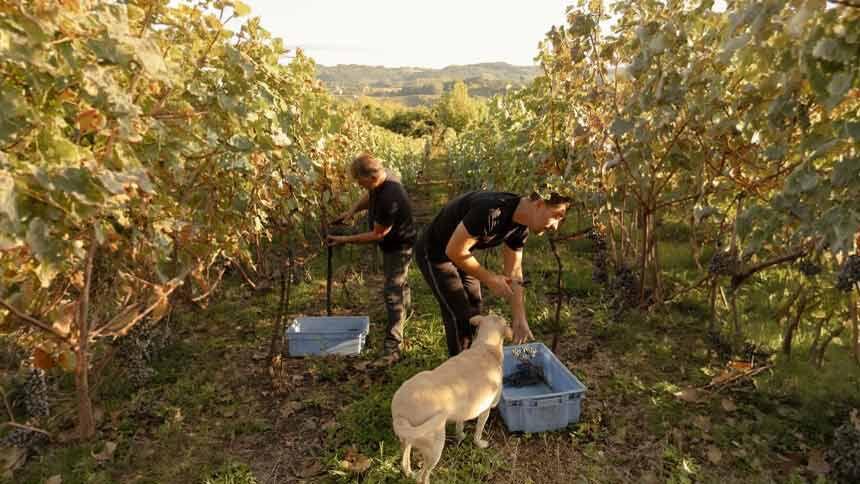

During their childhood and adolescence in the 1990s, they witnessed firsthand some of the first wineries in the Serra Gaúcha region move away from bulk wines to produce fine labels. Those "kids" grew up, studied oenology, and today run their own wineries, where they get their hands dirty, personally harvest the grapes, and bottle authentic wine.
Colleagues from the Federal Institute of Rio Grande do Sul (IFRS), this new generation of winemakers is breaking with the obsession with emulating European wines that marked previous generations of Brazilian winegrowers. And it was this spirit, matured in barbecue conversations and text message exchanges, that led them to create the Rota Singular (Singular Route) at the end of 2025.
The project has gained momentum throughout this year with a wine tourism circuit of just over 21 kilometers, connecting five wineries from this new group in the municipalities of Bento Gonçalves, Santa Tereza, and Monte Belo do Sul.
"It doesn't make sense to copy what's produced in Europe. We're on another continent, we have a different climate and soil," argues Gabriel Fontanive, 30, head of Artisti Vinhos, founded six years ago in Bento Gonçalves. "There, they have excellent labels, but we manage to make very high-quality wines here, and in our own way," he adds in an interview with NeoFeed .
In general, these winemakers share a similar business model: they sell a good portion of their production during visits to their wineries, supplementing sales with orders placed via WhatsApp and Instagram , some on their websites or in partner stores. Even so, each one insists on developing their own style of wine — whose prices range from R$90 to R$250 per bottle.
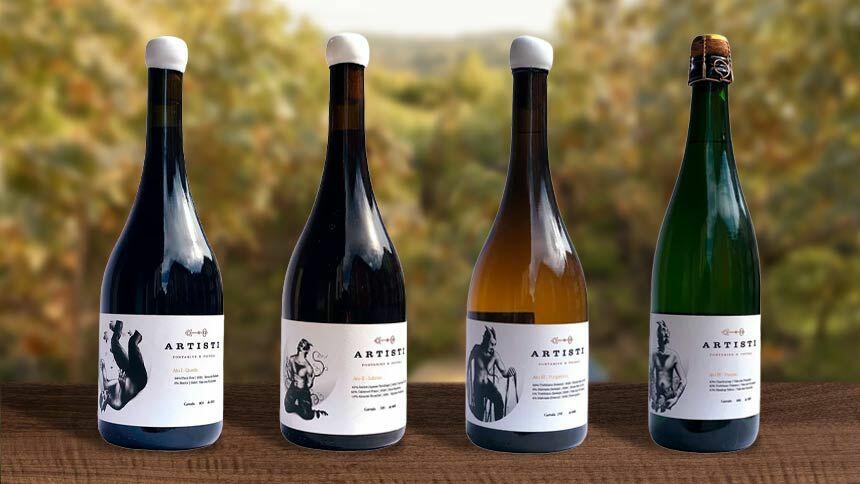
A fan of Dante Alighieri's Divine Comedy , Gabriel attempts to translate parts of the work into color, aroma, and flavor. His Artisti label produces four labels with only 500 bottles each, about 2,000 per year. Act I – The Queda label features Pinot Noir aged in French oak barrels and Teroldego with Merlot, which rest together in a concrete tank, imparting freshness and minerality.
Act II – The Inferno bottle is a blend of three grapes, each aged in a different type of wood: Cabernet Sauvignon in American oak barrels, Teroldego in chestnut oak, and Rebo in French oak. "The French oak brings spices and chocolate; the American oak, vanilla and coconut; and the chestnut oak, which few people use, is difficult to define because it's something new, but I notice hints of nuts and smokiness," he describes. The result is a wine with an intense color, higher alcohol content, full-bodied and with present tannins, all in keeping with the idea of hell.
Act III — Purgatory blends Trebbiano and Malvasía grapes, vinified partly as white wine and partly as orange wine — when the white grapes ferment with their skins. Act IV — Paradise is a light and fresh extra brut sparkling wine, made from Chardonnay , Trebbiano, and Riesling, reflecting how people imagine Heaven.
The grapes grow on one hectare, with about 1,200 vines, on the 10-hectare property where his immigrant grandfather settled in 1878. "My father continued making wine at home, and it was from him that I learned everything," says Gabriel. "The course, of course, opened my mind and made me want to move away from the conventional."
He works at Laurentis and then takes care of Artisti. There, the cultivation is 100% organic: there's no irrigation or much handling. "Our land is hilly, we don't have machinery, the harvest is manual. Only my father and I take care of everything," he says. "Every harvest is an unknown. But that's the magic: each year I make a different wine, but one that is an expression of our terroir."
Also in Bento Gonçalves, 29-year-old Matheus Zilio follows a similar logic. "My wines don't have a standard. I want one vintage to be different from another," he tells NeoFeed . His Teroldego 2023, for example, matured in whiskey barrels and French oak, resulting in floral aromas, good acidity, and an unctuous palate; the next batch will go into American oak barrels, in search of vanilla and caramel.
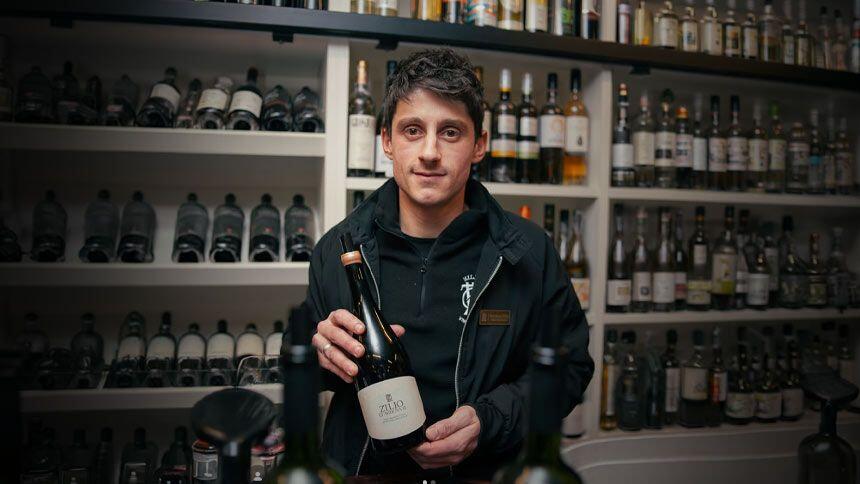
Having graduated in oenology from IFRS, he spent some time working at Herdade do Rocim in Portugal before returning and taking over, alongside his father, the winery that previously belonged to him and his uncle and was called Bodegone, renamed last year as Zilio Vinhos Únicos.
Besides his winery, he works at Pizzato and dedicates himself to his businesses in the evenings and on weekends. His property produces 3,000 to 4,000 bottles a year, made in small batches of 300 to 600 units.
On his four-hectare property, Matheus cultivates Prosecco, Moscato , Merlot , Rebo, Teroldego, Chardonnay, and Tannat . Thanks to manual harvesting, they can select the best bunches, which are packed in 17-kilogram boxes and vinified immediately to preserve freshness. Among the winery's highlights are the Gran Reserva Zilio Teroldego 2022 and the Bodegone Zilio Gran Reserva Rebo 2022, which matures for 18 months in French and American oak, resulting in a powerful wine with good aging potential.
In Santa Tereza, Cristian Corbelini and Lucas Berra run Berra & Corbelini on just two hectares, at altitudes of up to 485 meters. The winery operates with minimal intervention, with spontaneous fermentations and no chemical corrections. They produce an average of 7,000 bottles per harvest, with microlots of 300 to 600 bottles.
Less than 20 kilometers away, in Monte Belo do Sul, cousins Pedro, Lucas, and Leonardo Tasca run Adega Giovanni Tasca, the fourth generation of the family in the region. On 12 hectares, they cultivate 21 different varieties. About 75% of the production still supplies large wineries in the local market, while the remainder becomes their own wine. They have fifteen labels, focused on expressing the basaltic terroir of the region.
Henrique Dal Castel, 29, also has wine in his roots, a legacy from his grandfather who already cultivated his grapes there, on ten hectares in Bento Gonçalves. "I took a course in viticulture and oenology, but I really learned through practice," he tells NeoFeed , recalling his time at Miolo, Valduga, and Alma Única before registering, in 2023, the winery that bears his name — today with an average production of 10,000 bottles per year.
On his own half-hectare plot, he cultivates Cabernet Franc, Merlot, Tannat, and Malbec, and complements the variety with partners from Monte Belo do Sul, Garibaldi, and Encruzilhada do Sul, from whom he buys Chardonnay, Riesling , Rebo, Teroldego, and Marselan.
For Henrique, the secret to a good wine lies in the soil and the climate, not just the process. "I don't want to be a winemaker. In the world's great wines, viticulture is what matters, not the winemaker. The wheel has already been invented, and I don't want to reinvent anything; I want my wines to express the terroir," he says provocatively. That's why he works with grapes harvested at the peak of ripeness, in small batches of about 300 liters, producing 4,000 to 5,000 bottles per year.
One of his favorites is the 2022 Merlot, which has menthol notes. "Ah... I'm going to save a few bottles of these to open in eight years: it will be world-class, but with its own identity," he celebrates. "I have to let go of my labels, I know. But when we worked the land, saw the grapes sprout and made the label, it's difficult. I confess I'm a little possessive."