

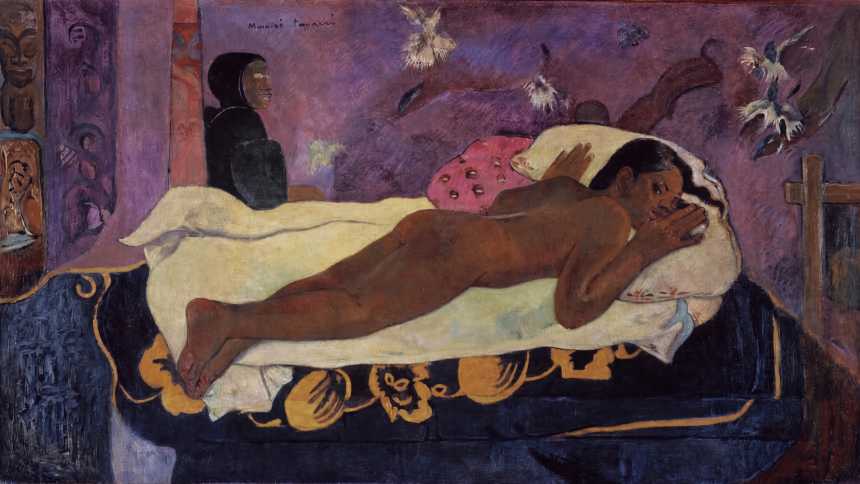

Time is often unforgiving to biographers. The further back in time the subject lived, the more complicated it is to achieve historical accuracy. This limitation, however, does not detract in any way from the richness of content and the precision of the book Wild Thing: A Life of Paul Gauguin .
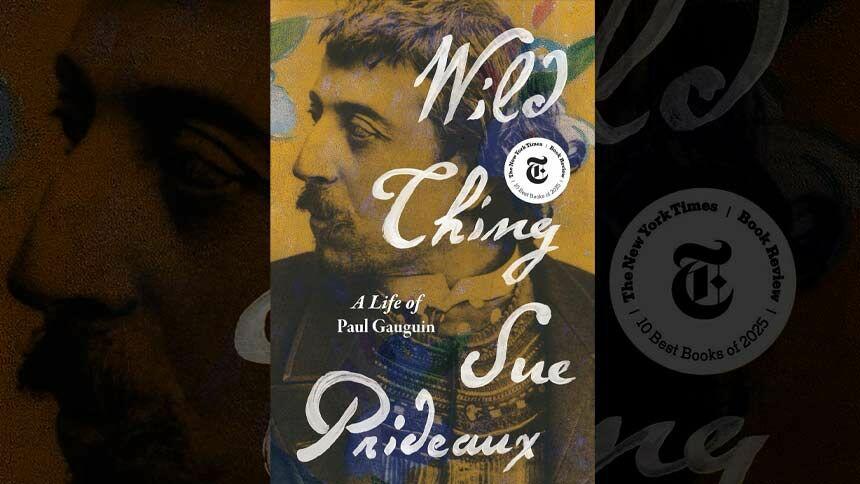
With no release date yet set for Brazil, and acclaimed by international critics as the best biography of the French painter, the work by English author Sue Prideaux dares to propose a new perspective on the artist—demystifying much of what has always been thought about the post-impressionist.
The research relies on relatively new materials, some of which are previously unpublished. One of them is the manuscript Avant et Après ( Before and After ), which resurfaced in 2020. Written a few years before the artist's death at age 54 in 1903, the document reveals insights into his life, relationships, thoughts, fears, and beliefs.
Another source is a little-known text by Émile, Gauguin's eldest son, about his father. There are also scientific analyses of four of the Frenchman's teeth, carried out in 2000, indicating that he never had syphilis.
“The recent appearance of so much new material, coinciding with contemporary debates about its controversial truth, has made it important to re-examine Gauguin’s life—not to condemn, nor to absolve, but simply to shed new light on the man and the myth,” writes Prideaux in the preface to Wild Thing .
If the theory of the transgressor who spread syphilis throughout the South Seas isn't true, what else about him isn't also legend? The path now opens to understanding the artist more directly, without the distortions accumulated over time.
Celebrated as an innovative genius, Gauguin was one of the main figures responsible for laying the foundations of modern art. However, he was also heavily criticized for his arrogance, egocentrism, and personal choices.
Throughout history, the image of the stubborn artist capable of abandoning his wife and five young children to, at the age of 42, leave for French Polynesia in search of a "primitive paradise" as inspiration for his painting, has become entrenched. And there, he would become involved with girls of 13 or 14 years old, while promising to return to his family—a commitment, incidentally, that he never fulfilled.
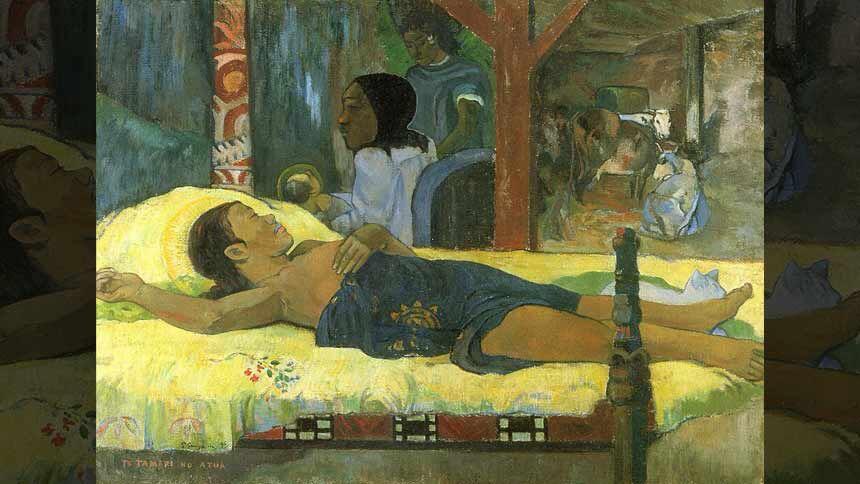
When Gauguin arrived in Tahiti in 1891, the region was under French rule. Some contemporary critics argue that he benefited from colonial structures and transformed the supposed "exoticism" of the landscapes, myths, and local population into aesthetic raw material—a central theme of his work.
This debate, however, is not limited to the French. Artists such as Eugène Delacroix and Pablo Picasso have also been reinterpreted from similar perspectives. In Gauguin's case, however, the fact that he lived for years among the Polynesians and had relationships with native teenagers makes the discussion particularly sensitive.
Although, at the end of the 19th century, the age of consent in France and its colonies was 13, these relationships are now also analyzed from the perspective of power and maturity inequality. The historical fact helps to understand the legal context, but it does not eliminate the moral question.
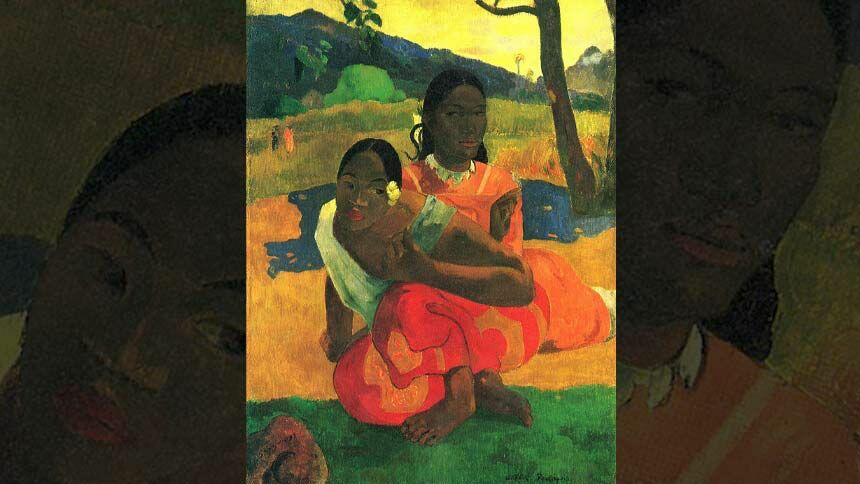
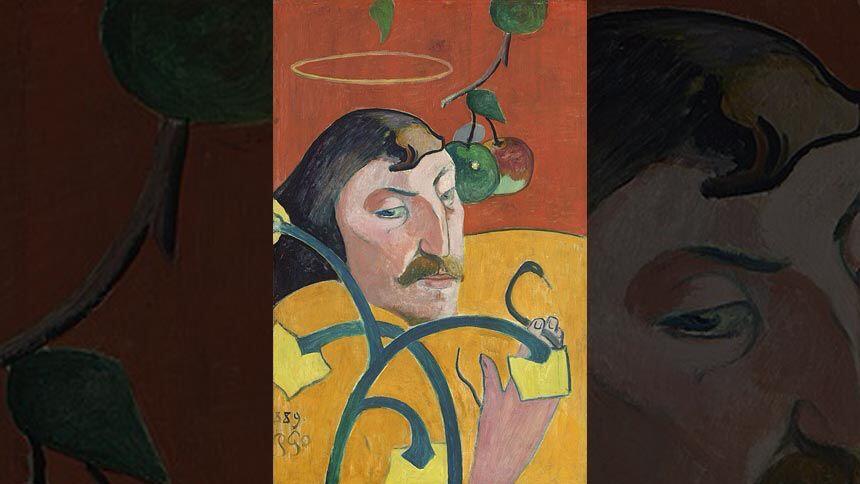
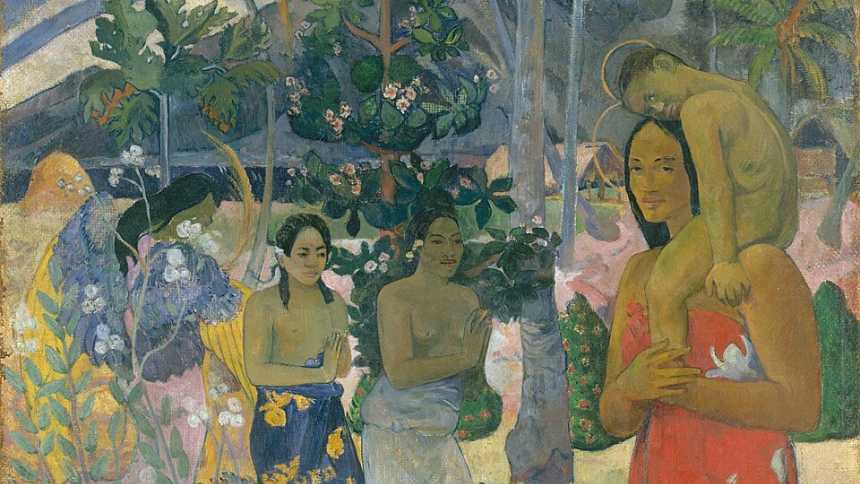
However, one of the central theses of Wild Thing , supported by the manuscript Avant et Après , is that Gauguin was indeed critical of colonialism. He worked consistently to expose the tragic effects of the French presence in the archipelagos. He fought for the rights of indigenous peoples, denounced injustices, combated corruption, and acted as a defender of Tahitians in colonial courts.
His commitment came from home. His father, a French journalist, and his mother, a Peruvian writer, sympathized with republican and socialist ideals. So much so that, in 1848, faced with the rise of Napoleon III, the family left France for Peru. Gauguin was still a baby.
During the trip, his father died suddenly. He, his mother, and his older sister lived in Lima for about six years. In Wild Thing , his grandmother, Flora Tristan, is presented as a central figure.
A pioneer of feminism and socialism in the 19th century, Flora endured an abusive marriage, fought for custody of her children, and wrote against social injustices. In her grandson's eyes, the writer and thinker was a "beautiful socialist-anarchist." An example of "moral courage" that Gauguin would carry with him for the rest of his life.
The painter's maternal family belonged to the elite of Peruvian society, and thus the artist's childhood passed peacefully. Living within a culture so rich and so different from European culture, and at the same time so unequal, was fundamental to Gauguin's development. Contact with pre-Columbian traditions helped shape his interest in spiritual and symbolic themes.
Prideaux highlights the "detached and hallucinatory" nature of the memories from this period, which Gauguin defines as "the dream." The idea of a spiritual world underlying material reality guided his artistic pursuit. "I have the feeling of something endless, of which I am the beginning," he wrote in Avant et Après .
To reduce the painter to the darkest episodes of his career would be to ignore the importance of his art. His painting influenced names such as Henri Matisse, Edvard Munch , and Picasso, as well as movements like Fauvism and Expressionism.
“He broke with the established Western canon, ignoring rules set for centuries, exchanging the traditional Renaissance perspective for a multipoint perspective, distorting scales and favoring decorative lines over realistic solidity, using cores in an emotional rather than naturalistic way, and pioneering the incorporation of indigenous themes into Western art,” explains the writer.
The new biography does not end the controversies surrounding the painter—nor does it intend to. Instead of offering definitive answers, it exposes the contradictions of an artist who was crucial to modernity.
It's hardly surprising. After the success of I Am Dynamite!, about Friedrich Nietzsche, Prideaux returns to tackle a multifaceted character, full of antagonisms and nuances. In Wild Thing , the biographer restores complexity to a figure that time has simplified.