

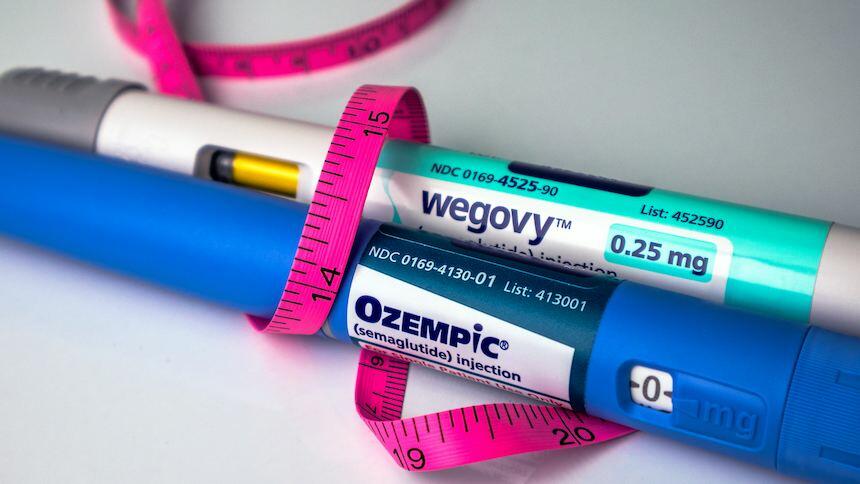

The Danish pharmaceutical company Novo Nordisk , manufacturer of the Ozempic and Wegovy pens, which have semaglutide as their active ingredient, has found two ways to try to regain ground in the Brazilian market after losing its sales leadership in Brazil to Mounjaro, a pen based on tirzepatide, from the American company Eli Lilly .
Novo Nordisk's first plan is to insist on the inclusion of semaglutide in the Unified Health System (SUS), which was denied last year. The second, and more controversial, plan, which caused a great deal of commotion, was the start of direct sales of the pens on a platform, bypassing pharmacies.
A survey by Close-Up International Brazil shows that, in the 12-month period from May 2025 – when Mounjaro arrived in pharmacies – until May of this year, the pharmaceutical company's product took the lead in sales in the national retail market.
During this period, the market reached R$ 13.3 billion, with Mounjaro achieving R$ 8.5 billion in sales. This represents 64% of all sales in the LPG-1 segment in the country during the analyzed period.
Wegovy came in second, with R$3.7 billion, followed by Ozempic, with R$1.1 billion. This means that, alone, Eli Lilly's product now sells almost twice as much as the combined sales of Novo Nordisk's two pens.
In terms of volume, the difference is also significant. Over the past 12 months, Mounjaro grew by 2,070%, going from 208,000 units in May of last year to 4.5 million boxes in the same month of 2026. Wegovy grew by 18.7%, going from 2.2 million units to 2.6 million.
And it is precisely with this strategy in mind—to curb the competitor's advance and gain more market share for its own pens—that Novo Nordisk has targeted its plan.
In early July, the Danish company announced that it would begin selling its pens through the NovoCare Pharmacy platform, with commercial operations conducted via the AS Medicamentos website. In practice, the product would no longer need to be sold over the counter in pharmacies.
The problem is that the pharmaceutical retail sector did not accept the initiative. The Brazilian Association of Pharmacy and Drugstore Chains (Abrafarma), which brings together the country's main retailers, strongly opposed the pharmaceutical industry's measure.
In a statement released three days after the start of Novo Nordisk's digital operation, the association stated that it had received with "apprehension" the Danish company's strategy of using, according to them, a distribution company not authorized as a pharmacy open to the public, thus violating Collegiate Board Resolution (RDC) 44/09 of the National Health Surveillance Agency (Anvisa).
The resolution establishes the criteria and conditions for the operation, dispensing, and sale of products in pharmacies and drugstores, and determines mandatory actions, such as the presence of a pharmacist responsible for the unit.
“We are facing an episode demonstrating myopia and a short-sighted vision. This is when health becomes a business, with people saying ‘anything for money,’ going against all the requirements that guarantee the rational and correct use of medication,” says Sérgio Mena Barreto, CEO of Abrafarma, in the document.
According to the organization's executive, it would be dangerous to reduce the safety of the care offered by pharmacies. "Digital transformation is welcome and we are part of it, but this movement cannot happen at the expense of patient safety," Barreto added.
Behind the scenes, the information is that Novo Nordisk was startled by the negative impact of the measure on retailers. Sources consulted by NeoFeed confirmed that the company expected some friction, but that the reaction was greater than anticipated.
“It’s a margin defense move, since that index fell after the patent expired. With this, they wanted to recover part of that margin with the pharmacy revenue, which would be theirs,” says a pharmaceutical market executive with experience at the Danish company. But, six days after the program was announced, Novo Nordisk backtracked and suspended the sales channel.
What caught the attention of many people in the pharmaceutical sector is the fact that the idea of direct sales only emerged after the patent for semaglutide expired in Brazil in March, which removed the exclusivity of the production and marketing of the products in the national market.
“No one in the industry understood why they made this move now, six months after the patent expired. If they had done it earlier, the retail sector wouldn't have had much room to react, as long as it was within the law,” another pharmaceutical retail expert told NeoFeed .
Beyond the legal issue, according to the point raised by Abrafarma, there is also a directly financial issue at stake. The impact of a possible migration of sales from pharmacies to a website managed by the industry itself would have a huge impact on the revenue of retail chains.
A report by Itaú BBA, published at the end of June, showed that the LPG-1 market reached R$ 14.6 billion in the annualized scenario up to April 2026, a growth of 110% over the same period of the previous year. The expectation is that the formal market for these lines will reach R$ 19 billion by the end of the year.
In this context, according to the document signed by the team led by analysts Rodrigo Gastim and Vinicius Figueiredo, the slimming pen segment already represents 5.7% of total pharmacy sales in Brazil, according to IQVIA data.
In the major retail chains, the impact is even greater. At the first-quarter earnings conference, the CEO of RD Saúde (Raia and Drogasil), Renato Raduan, stated that LPG-1 now accounts for 12% of the company's revenue. And the trend is for growth, with new players entering the market.
“Our gross margin on this molecule is growing. When there is a monopoly, the player has more pricing power . When another one enters, the first one has to start moving to become more competitive. With similar products, the competition between them increases and improves the retail margin,” Paduan explained at the time.
In the case of the Pague Menos chain, sales growth of slimming pens between January and March of this year reached 153%. The retail company also reported that this type of product already represents 9.1% of the company's revenue.
At Panvel , GLP-1 medications accounted for more than 10% of the company's revenue in the first quarter. The category showed 80% growth compared to the same period of the previous year. According to the company, between 1% and 2% of its customer base buys the pens.
In practical terms, GLP-1 added three percentage points to the growth of the formal pharmaceutical market in the last 12 months. Without the regulations, the sector would have grown 8.6%, instead of the 11.7% observed. This partly explains the outcry against the measure announced by Novo Nordisk.
"The category's share of pharmaceutical market growth is among the highest we have observed for a single therapeutic class in the Brazilian pharmaceutical retail sector," explain analysts at Itaú.
According to industry experts, the natural tendency would be for Eli Lilly, owner of Mounjaro, to try something similar in Brazil, as it already does in the United States, since, unlike Ozempic, the patent for tirrizepatide only expires in the Brazilian market in 2032. But this move did not happen.
That's why, for the sector, the measure sought to guarantee more profit margins for Novo Nordisk. "They wanted to remove the pharmacy from the process. But it didn't work," explains the source.
Insisting on the SUS (Brazilian Public Health System)
The other measure adopted by Novo Nordisk was also seen by market experts as an alternative to recover market share, but in a belated move, especially in a context where other products have already appeared on the shelves.
Novo Nordisk itself launched a cheaper version of semaglutide last October, the Poviztra pen, marketed in Brazil by Eurofarma . In June, EMS launched Ozivy.
In early May, the owner of Ozempic resubmitted a request to the National Commission for the Incorporation of Technologies in the Unified Health System (Conitec), linked to the Ministry of Health, for the incorporation of Wegovy into the public system.
This would be a way to guarantee revenue, which would come directly from the federal government, and from potential purchases by state and municipal governments.
Last year, Conitec vetoed the request, arguing that the move would represent too high a cost for the public sector. Technicians from the Ministry of Health claimed at the time that the adoption would represent an extra cost of R$ 3.7 billion for semaglutide alone over five years. In practice, this would make the government's approval unfeasible.
Now, the company is offering a 59% discount on the previous price. In this case, the claim would include obese patients who have already suffered a heart attack, focusing on the prevention of new cardiovascular events. According to the company, obesity currently affects 60 million Brazilians.
“Our goal is to offer a path that is clinically relevant and financially viable for the SUS,” says Leonardo Bia, vice president of corporate affairs at Novo Nordisk in Brazil, in a statement to NeoFeed .
Today, the company is already conducting pilot projects, with restricted access to a small group of patients, with the Municipal Health Department of Rio de Janeiro and with the Conceição hospital group, a federal public hospital in Porto Alegre, Rio Grande do Sul. In the case of the unit in Rio Grande do Sul, there will be 250 people with severe obesity who are candidates for bariatric surgery.
The company plans to use these studies as part of its arguments to justify the drug's impact on the target audience. However, according to market executives, this move comes at the wrong time, as there are now cheaper medications available in pharmacies.
Novo Nordisk informed NeoFeed that it has "temporarily suspended operations of the NovoCare Pharmacy platform to incorporate the lessons learned during the pilot phase." "This will allow for the development of a model more integrated with the pharmaceutical retail sector," it added.
However, it did not respond to the harsh reaction from the association representing the main networks in the sector. Nor did it say whether it intends to bring the online platform back at some point.
Also contacted, the Ministry of Health confirmed to NeoFeed that "the request for analysis of the incorporation of semaglutide into the SUS (Brazilian Public Health System) was filed on May 5th, and the decision deadline is up to 180 days, extendable by another 90 days."
This means that if Conitec uses all the available time to analyze Novo Nordisk's request, a decision would only be reached in early February 2027.