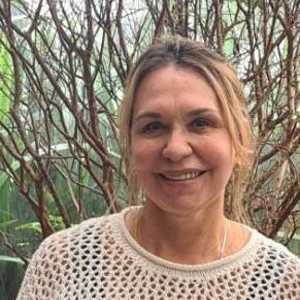


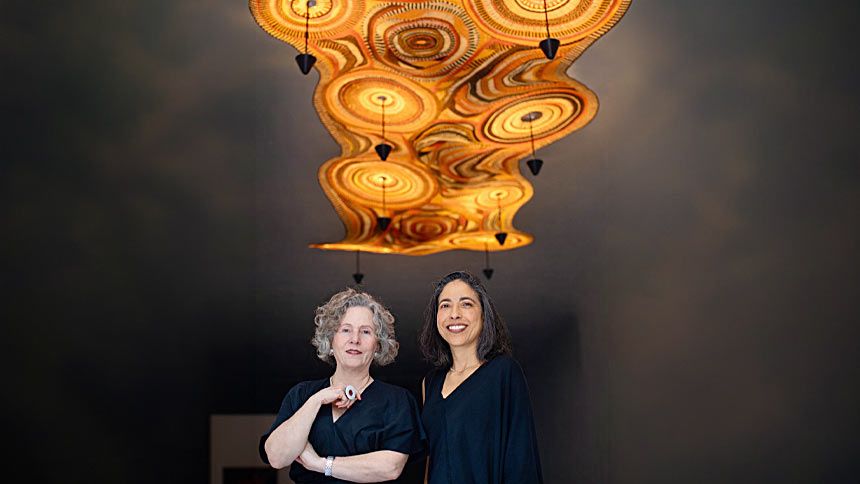
Art in Brackets is the name of a company run by two Brazilian women who, for the past four years, have been dedicated to bringing Brazilian and Latin American artists into the world of New York collectors. Fernanda Mazzuco, 65, was born in Santos, on the coast of São Paulo state, and has lived in New York for 21 years. Luciana Solano, 54, is from Rio de Janeiro and moved to the city in 2012.
For the first time this year, they have a space open to the public on Walker Street in Tribeca, the current mecca for galleries. The exhibition, which runs until the end of May, features a collective of artists and has as its theme the African diaspora and transatlantic connections.
Fernanda and Luciana met in New York, and a connection developed that led to the opening of the company in 2022. Art in Brackets is not an artist agency. It is a consultancy and art advisor , a specialty known as that of "wall curators." They work in partnership with various galleries and their primary function is to connect collectors with the market and assist in the purchase of artworks, whether for enjoyment or investment.
This exhibition functions like an art cabinet organized in a way that tells a story and creates interrelationships between the works on display. In this case, it is an intimate exhibition that brings together varied forms of expression.
“We brought together paintings, sculptures, design, photography, and antique textiles from the West African coast, which experienced this great migration and transatlantic movement to Brazil and the United States,” says Fernanda, in a conversation with NeoFeed .
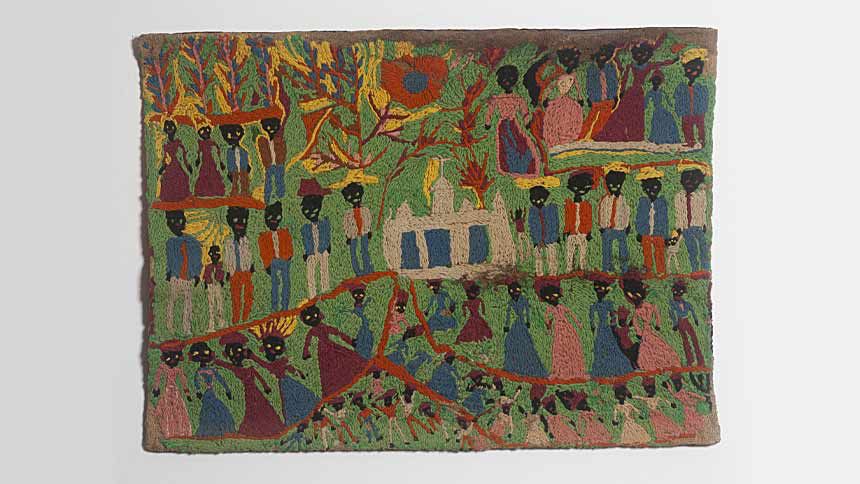
Among the works on display, it is possible to buy, for US$3,800, a monotype by Santídio Pereira, a contemporary engraver and painter from Piauí. The most expensive work costs US$140,000 and is a tapestry by Madalena dos Santos Reinbolt (1919-1977), a self-taught artist from Bahia who, in Rio de Janeiro, worked for years as a cook in the home of the Rio de Janeiro architect and urban planner Lota de Macedo Soares and the American poet Elizabeth Bishop.
“This work by Madalena is difficult to find on the market because those who have it don't sell it. It came to us through Galeria Estação, and we didn't want to miss the opportunity to bring it here, as her name is already known around here, especially after the exhibition that took place last year at the American Folk Art Museum,” says Fernanda.
Taking advantage of this visibility is important, since the market for Brazilian and Latin American art in the United States has been growing, according to them. "Since the beginning of our company, we have noticed this interest, although Brazil's presence in this market is still minuscule," says Luciana.
“But we are noticing much more interest from museums and curators going to Brazil more frequently, trying to meet artists and galleries. New York is a little different from Miami, where there are more Latinos and more important Latin American collections,” he adds.
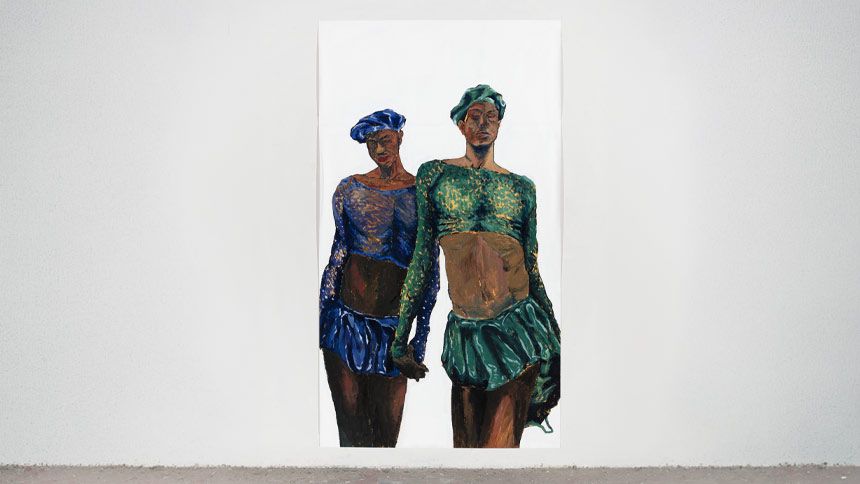
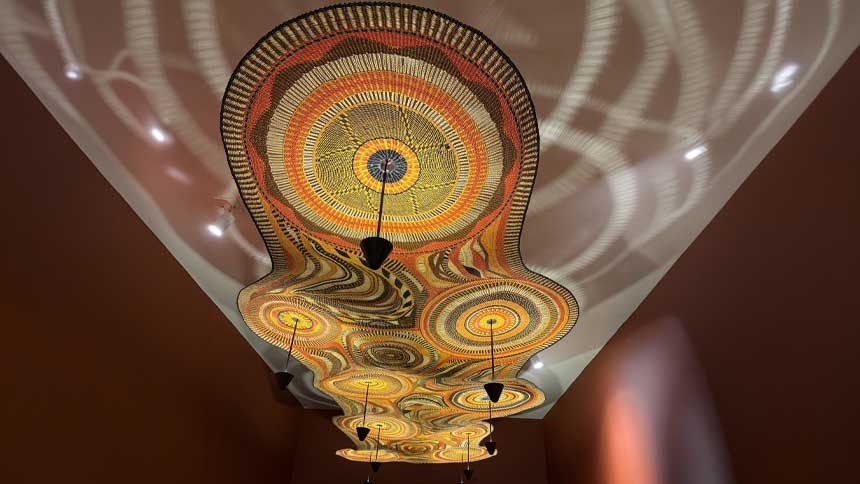
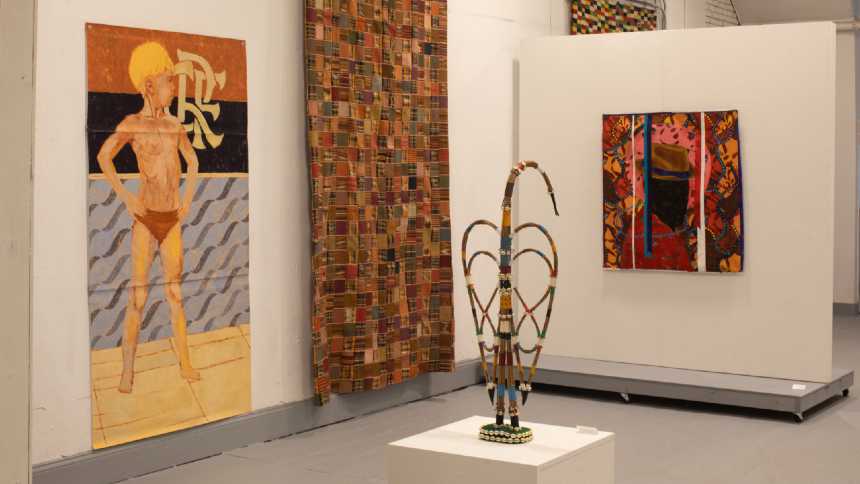
In line with this growth, museum exhibitions of Latin American artists are becoming more frequent. MoMA featured Lygia Clark , the Jewish Museum presented Burle Marx , a Brazilian modernist , with paintings, sculptures, maquettes, stained glass, and jewelry designed by the landscape architect. And even a less well-known institution on the tourist circuit, the Museo del Barrio, exhibited Mestre Didi: Spiritual Form , with fundamental works by the Bahian sculptor, a spiritual leader of Afro-Brazilian culture.
Moreover, this Afro-Brazilian conversation permeates the Art in Brackets exhibition. “We have artists here from Nigeria, Burkina Faso, Cameroon, textiles from Togo and Ghana. I believe this contributes to art being seen in a more integrated way and not just as a pocket-sized piece,” says Luciana. Also for sale are books from the Familia Editions publishing house, created by Maria Lago, which produces unique works with Brazilian artists.
Right at the entrance of the space, a five-meter-high ceiling light fixture catches the eye, blending PET bottles and natural fibers, a project by Spanish designer Álvaro Catalán de Ocón, who was inspired by the dwellings of Ghana (US$ 40,000).
Another important piece is by the Rio de Janeiro artist Maxwell Alexandre, who was born and raised in the Rocinha favela and whose presence is increasingly significant on the international art scene. The painting, which can be seen prominently in the background, belongs to the series New Power: Passability , costs US$70,000 and is made on paper, the artist's trademark.
When Art in Brackets started, it was already holding similar exhibitions in the Park Slope Historic District in Brooklyn, but they were by invitation only because they took place at Fernanda's house.
“This type of closed event, in which we invite a group of artists to show their work two or three times a year, is fundamental to attracting American collectors, our largest clientele, but the open experience changes everything,” they say.
"We are now located opposite Mendes Wood, next to James Cohan and David Zwirner, which are important galleries."